
Forestry Service Glasgow
If you’re responsible for an estate, a stretch of commercial woodland, or a site with more trees on it than a domestic garden crew can reasonably take on, you need a forestry service built around plant machinery rather than just climbers with chainsaws. That’s the gap CNJ Tree Services fills for landowners across Glasgow and Central Scotland: woodland management and large-scale tree operations delivered by a team that owns its own forwarders, skidders, 360 excavators and timber cranes outright, rather than hiring machinery in job by job. For everyday tree work on smaller sites, our full range of tree services covers pruning, felling and stump work at a domestic scale.
The company was founded in 2019 by Callum Jackson, who grew up around forestry (his father and grandfather both worked in the woods) before an early career in healthcare and a return to the trade he trained in – he’s now been running a chainsaw professionally for around 18 years. What began as a one-man climbing operation has grown into a mechanised outfit that can dismantle a storm-damaged block, extract timber from a wet hillside, or manage a sporting estate’s woodland stock without waiting on subcontracted plant to become free.
At a Glance
- Owns its plant fleet outright – forwarders, skidders, 360 excavators and timber cranes – so large jobs aren’t held up waiting on hired-in machinery
- NPTC Professional Tree Inspector-qualified BS5837 surveys and risk assessments, carried out in-house rather than farmed out to a separate consultant
- All timber extracted is processed locally – larger material seasoned for our own woodfuels division, smaller branches chipped for biomass and landscaping
The Practical Scope of an Estate or Commercial Forestry Contract
- Estate-wide tree stock risk assessment and BS5837 tree surveys, carried out by our NPTC Professional Tree Inspector for planning applications and insurance and liability purposes
- Selective thinning and continuous cover forestry-style management for estates that want an ongoing woodland rather than a one-off clear-fell
- Clear-felling of commercial timber blocks where that’s the right silvicultural choice, using chainsaw crews backed by mechanised extraction
- Commercial timber forwarding – moving felled timber from the stump to a roadside collection point using low-ground-pressure forwarder trailers
- Tractor-based timber winching for steep, wet, or otherwise inaccessible ground where a forwarder can’t get a wheel on
- Large-scale tree planting and afforestation, including grant-linked establishment schemes
- Long-term estate woodland management plans covering multi-year thinning, replanting and habitat cycles
- Coordination with gamekeepers and estate managers so felling, extraction and planting windows fit around deer stalking, grouse and pheasant shooting calendars
- Windblow and storm-damage clearance – our 24/7 emergency response covers a 50-mile radius with typical arrival under two hours for dangerous or blocking timber
- Hedgerow and habitat management, including work timed to avoid the bird nesting season where that’s a factor
Not Included / Costed Separately
- Statutory felling licence applications aren’t something we issue ourselves – these are granted by Scottish Forestry, not by CNJ; we’ll flag when a licence is likely to be needed and can work alongside your estate’s forestry agent on the paperwork, but the licensing decision sits with them
- Formal Scottish Forestry woodland grant scheme advisory (the financial and carbon modelling side) isn’t a service we offer directly – if your estate is exploring a grant scheme we’re happy to carry out the physical operations to a spec your grant advisor sets, but we’re not the ones writing the funding application
- Protected species licensing such as bat roosts, red squirrel drays or badger setts is an ecological consultant’s remit – we’ll pause work and flag a suspected protected species on site, but we don’t hold or apply for species licences ourselves
- Sawmilling, kiln-drying or further timber processing beyond initial seasoning isn’t part of the service – timber goes to our woodfuels division or is chipped, not milled to order
- Small one-off domestic tree removals are priced and delivered differently to estate contracts – see our standard tree services page if that’s closer to what you need
From First Call to Last Load: How a Forestry Contract Actually Runs
- Initial call and site background: You talk us through the site – its acreage, species mix, access, and what’s prompted the work, whether that’s a felling licence condition, storm damage, or an estate management review. We’ll ask about vehicle access for forwarders and any known Tree Preservation Orders or Conservation Area designations early, since that changes the whole plan.
- Site visit and ground assessment: Callum Jackson or a senior team member walks the site to check terrain, ground bearing capacity, tree condition and access routes for tracked plant. For planning-linked work this is where the NPTC-qualified BS5837 survey happens; for sporting estates we’ll also talk to the gamekeeper about timing.
- Written proposal and scheduling: You get a written scope and price, not a verbal estimate. Larger contracts are phased, since felling, extraction and replanting rarely happen in one visit, and we build breeding-season and shooting-season restrictions into the schedule up front rather than discovering them mid-job.
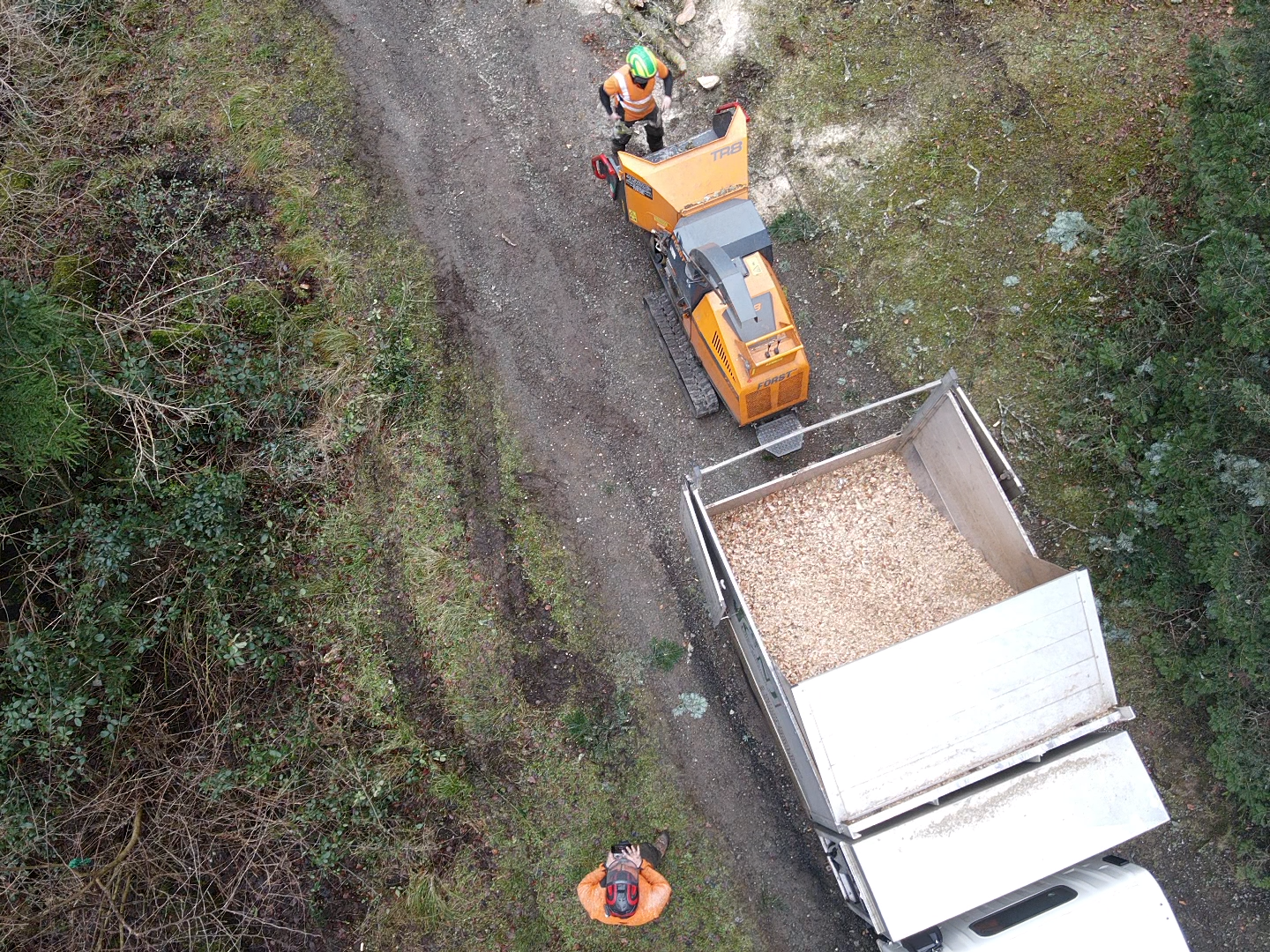
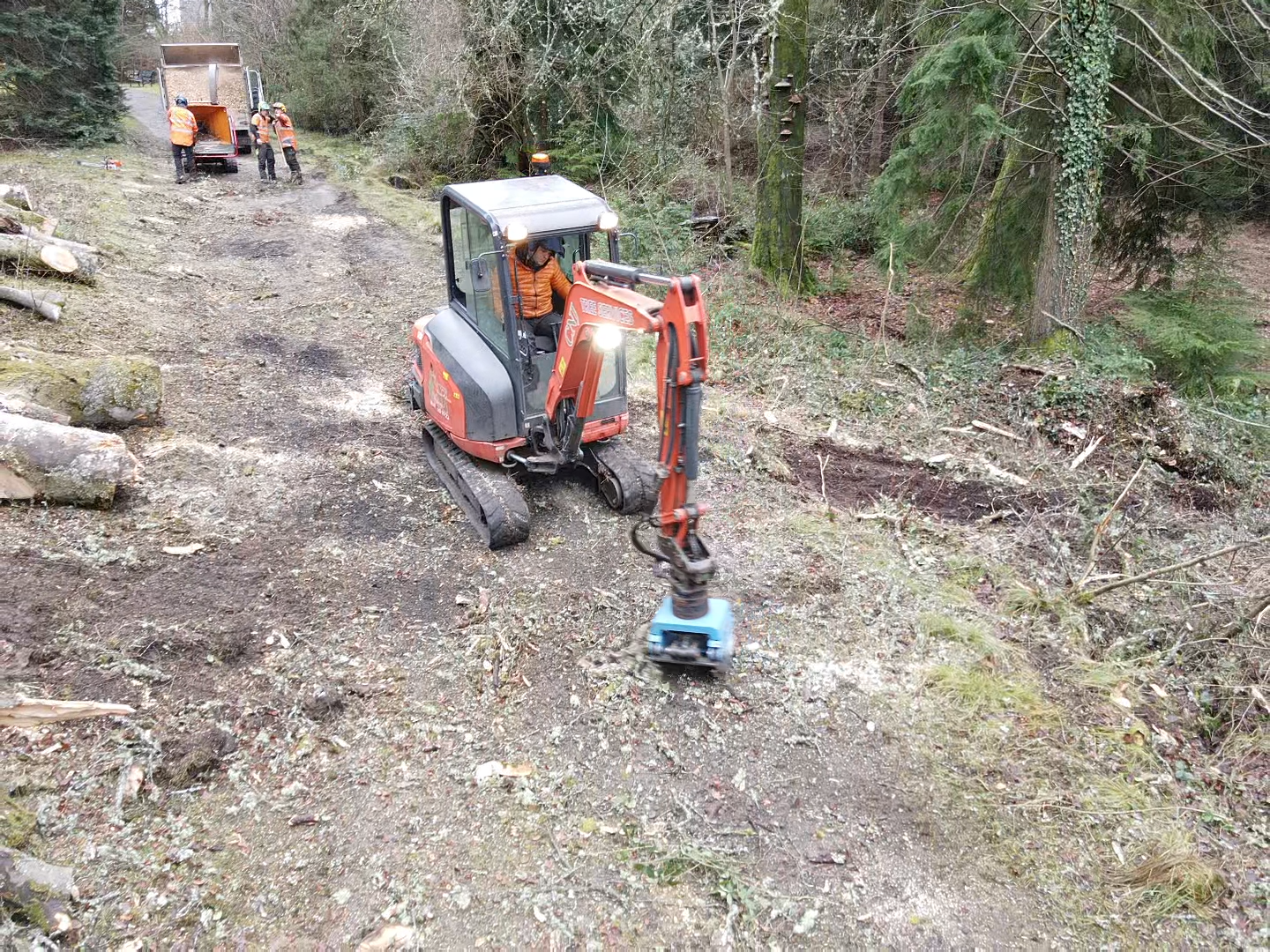
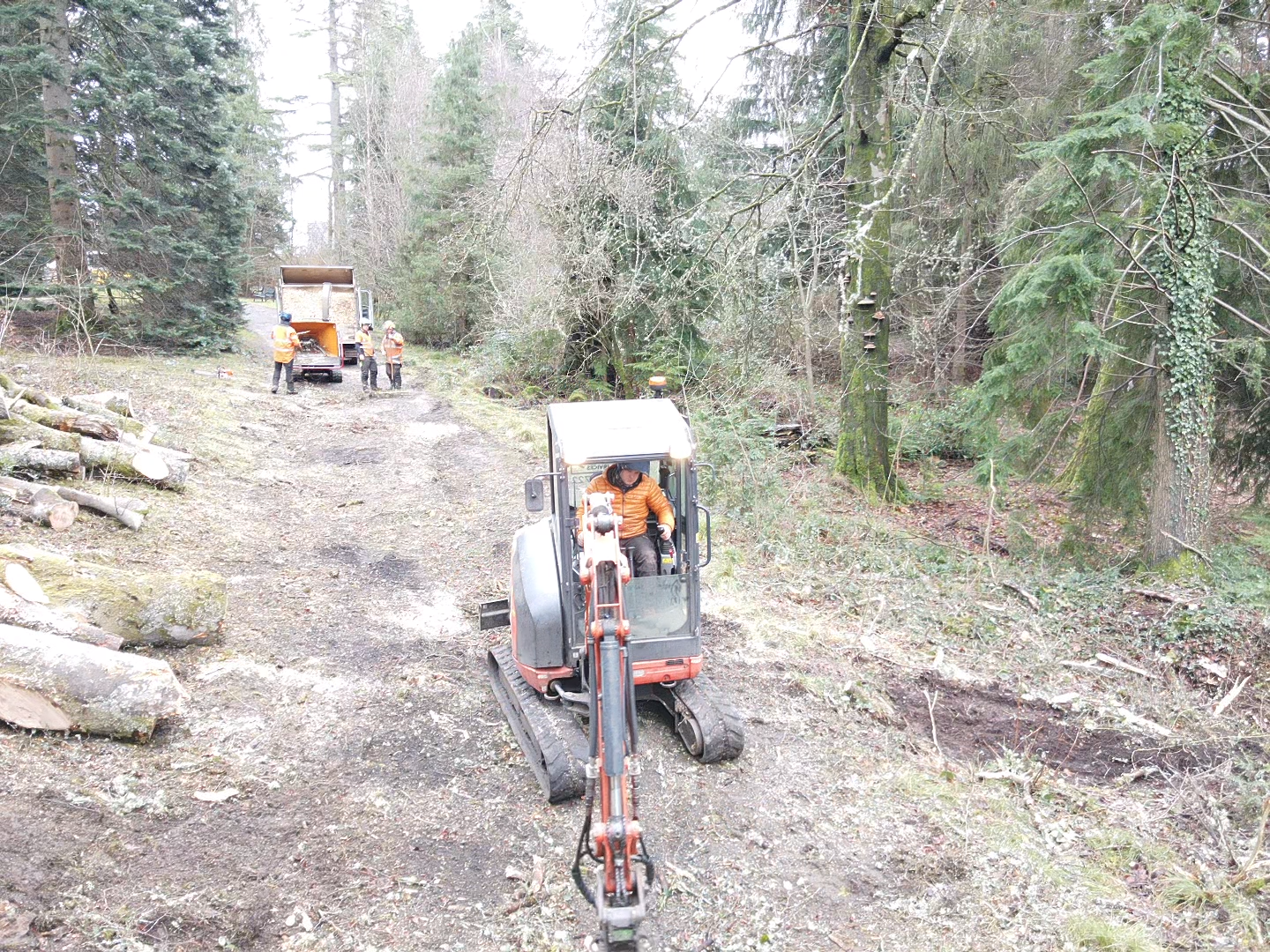
- Felling and extraction: Chainsaw crews fell to plan; forwarders, skidders and the 360 excavator move timber to roadside or a designated stacking area. Low-ground-pressure tracks limit rutting on wet estate ground and parkland turf, which matters as much on a golf course fringe as it does on a hill farm.
- Timber handling and site clearance: Extracted timber is graded, stacked and either sold on, seasoned for our woodfuels division, or chipped for biomass and landscaping, so effectively all of it stays in use rather than going to landfill. Brash is cleared or windrowed per the agreed spec, and access routes are reinstated.
- Sign-off and ongoing management: For estate contracts we’ll leave you with a management note covering what was done and what’s due next, whether that’s replanting, a follow-up thin, or a re-survey date, rather than treating a single visit as the end of the relationship.
Why a Forestry Quote Can’t Come Off a Rate Card
Forestry and estate work is priced per site, not per tree, because a felling and extraction contract on a two-hectare commercial block, a continuous-cover thinning programme spread across a season, and a one-off windblow clearance after a storm are three different pricing conversations – driven by timber volume, ground access for forwarders, distance to a stacking or collection point, and whether the timber has resale value that offsets the labour cost. Planting and afforestation work is priced by area and stock density instead. The one figure that’s genuinely no help here is the domestic average: UK tree felling pricing guides quote somewhere around £500 a tree, which tells you nothing useful about a multi-hectare contract, so we don’t lead with it. None of this can be quoted honestly over the phone – a proper price needs a site visit so we can see the ground, the access, and the timber itself, which is why every forestry enquiry starts with that visit rather than a number pulled from a rate card.
In-House Machinery Versus a Subcontracted Forestry Crew
| What matters on site | CNJ Tree Services | A crew that hires in plant or subcontracts extraction |
|---|---|---|
| Machinery availability | Forwarders, skidders, 360 excavators and timber cranes are owned outright, so a start date isn’t held up by a hire company’s availability | Plant is booked per job; delays with the hire firm become delays on your site |
| Ground protection | Low-ground-pressure tracked machinery reduces rutting on lawns, parkland and golf-course fringe ground | Standard wheeled plant is more likely to compact wet or soft ground |
| Planning survey | BS5837 surveys carried out in-house by our NPTC Professional Tree Inspector | Survey work is often outsourced to a separate consultant, adding a step and a second invoice |
| Timber outcome | Timber is seasoned through our own woodfuels division or chipped for biomass and landscaping, so little goes to waste | Timber disposal arrangements vary by subcontractor and aren’t always traceable |
| Estate coordination | Felling and extraction windows are scheduled directly around gamekeeper and shooting calendars | Coordination with sporting estate activity depends on the individual subcontractor |
Why Estate Contracts Don’t Stall Waiting on Hired Plant
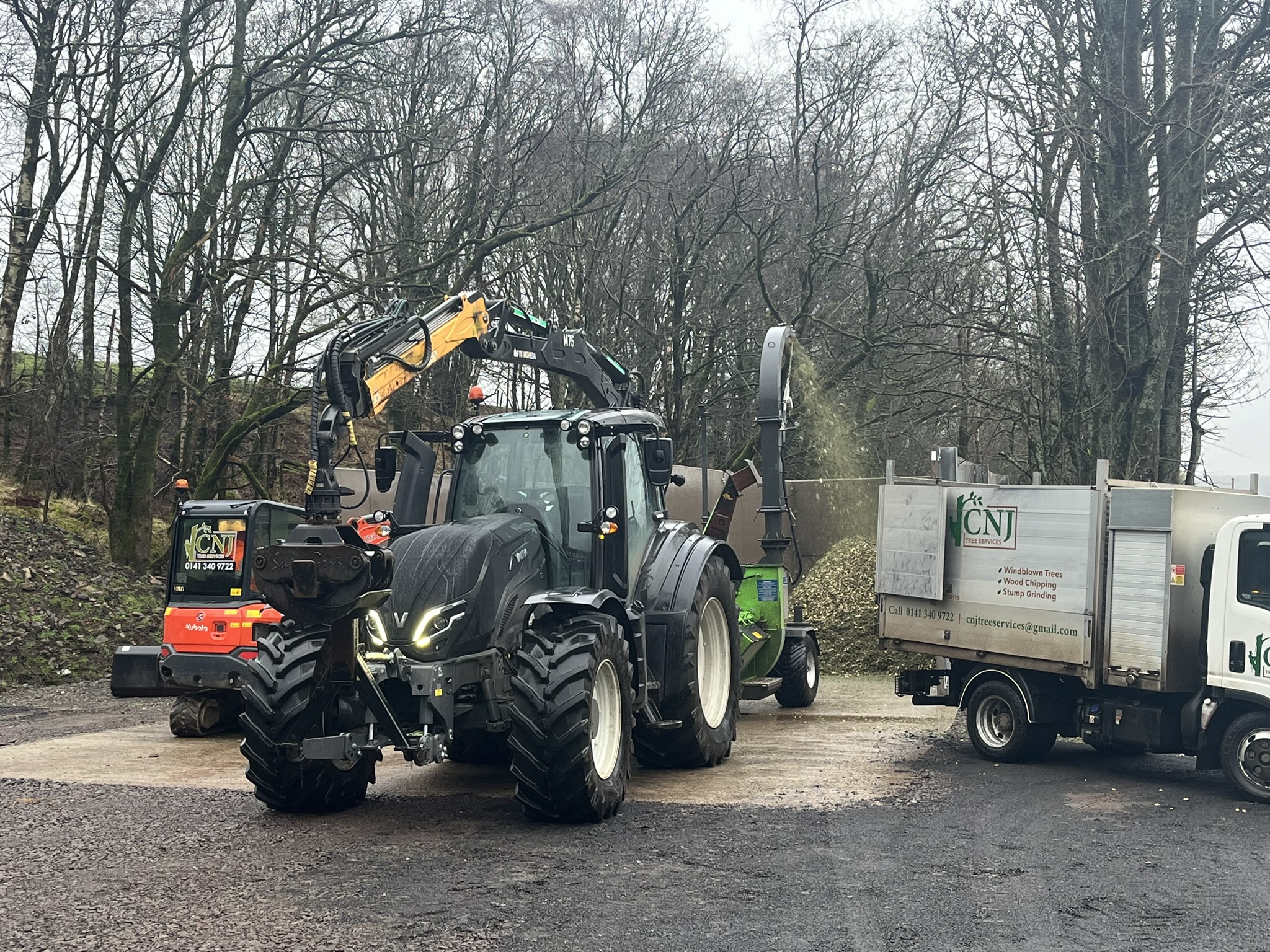
Estate and forestry contracts tend to go wrong on logistics rather than on chainsaw skill – a felling programme that stops moving because a hire company’s forwarder trailers are booked out on another site that week, or a planning application that stalls because the BS5837 survey is sitting in a separate consultant’s diary. CNJ Tree Services is set up to remove both of those failure points rather than to be a smarter-dressed version of a garden tree surgeon. The forwarders, line skidders, 360 excavator and timber crane on a job are ones we own outright, so a multi-week extraction programme doesn’t stop because someone else’s plant is out on another contract, and low-ground-pressure tracks mean a wet hillside or a golf-course fringe isn’t left rutted once the machinery’s gone. Planning-linked estate work goes through Callum Jackson, NPTC Professional Tree Inspector-qualified since 2023, so the BS5837 survey and risk assessment a felling licence or planning consent depends on is carried out by the person actually running the contract rather than handed off to a third party and a second invoice. FMO licensing covers the forwarders and skidders themselves, IPAF and NPORS cover the cherry-picker and excavator operators, and First Aid +F training means a crew working a remote extraction site can respond to a chainsaw-specific bleed injury without waiting for an ambulance to find the access track – all of it running under £5 million public liability insurance and to BS3998 and BS5837. Timber coming off an estate isn’t a disposal cost either: it’s seasoned through our own woodfuels division or chipped for biomass and landscaping, which matters to anyone balancing a felling programme against a replanting or conservation budget. The business also puts time and money into Modern Apprenticeships and woodland regeneration work across Central Scotland, worth knowing if you’d rather a management contract went to a company reinvesting in the trade rather than one just moving through a job list.
From City-Fringe Woodland to Estates the Length of Scotland
CNJ Tree Services is based at Newton Place in Glasgow’s West End, and that’s where the standard 10-mile domestic tree-work radius is measured from. Forestry and estate contracts aren’t held to that boundary, because the job travels to wherever the timber and the client’s ground actually are, not just the streets around the office. Some of that work is close to home: fringe woodland sitting inside a Glasgow City, East Dunbartonshire or East Renfrewshire planning boundary, where a Tree Preservation Order or Conservation Area designation decides what can be felled and when a BS5837 survey needs doing before consent follows. Other contracts are a sporting estate several hours further north, reached by single-track roads that rule out a standard low-loader, meaning forwarder trailers and skidders sometimes have to be driven in under their own power rather than trailered the whole way. Weight-restricted rural bridges are a genuine constraint on some estates too – a loaded timber lorry that a B-road bridge won’t take means routing extraction to a different collection point altogether, which is exactly the kind of detail a site visit catches and a map doesn’t. Multi-week contracts away from the Glasgow base get scheduled around that travel and access reality from the outset, not worked out after the crew and machinery are already committed to site. You’ll find more on how the business started on our home page.
Images
Frequently Asked Questions
What does a forestry service actually involve, compared with ordinary tree surgery?
Tree surgery is usually one tree, or a handful, on a domestic plot: pruning, felling, stump grinding. Forestry work is about the woodland as a system – felling and extraction across a block, replanting cycles, habitat and species management, and coordinating with whatever else the land is used for, whether that’s a sporting estate, farmland, or a development site. It calls for different machinery (forwarders, skidders, timber cranes rather than just a chipper and a chainsaw) and a different way of pricing, because you’re managing a resource over years rather than removing a single hazard.
Do you manage large estates as well as individual gardens?
Both, but they’re handled as separate services. Estate and commercial forestry work – felling, extraction, planting, management plans – sits under this forestry service. Individual garden and residential tree work is priced and scheduled differently through our standard tree services. If your site is somewhere in between, like a large private garden with a wooded boundary, tell us the scale on the first call and we’ll point you at whichever makes sense.
What's a forestry felling licence, and do I need one?
In Scotland, felling above certain volumes generally needs a licence from Scottish Forestry, part of Forestry and Land Scotland’s remit, before work starts. There are exemptions for small volumes, thinning, and some garden or amenity trees, but the thresholds catch more commercial felling than people expect. We’re not the licensing authority and don’t apply for licences on your behalf, but we’ll tell you early in the site visit if your job is likely to need one, and we’re used to working to whatever spec a licence or felling plan sets once it’s granted.
How is pricing worked out differently for commercial forestry versus a single tree removal?
A domestic felling job is priced roughly per tree, based on height, access and disposal. Forestry work is priced per site: timber volume, terrain and forwarder access, distance to a stacking point, whether the timber has resale value, and how many phases the job needs. Two sites with the same acreage can come out very differently priced depending on ground conditions alone, which is why we don’t put a number on estate work without walking it first.
Can you clear woodland ahead of a development site?
Yes, though timing and permissions matter more than on a standard felling job. Development-linked clearance often overlaps with planning conditions, Tree Preservation Orders, and sometimes ecological survey requirements – bird nesting season checks or protected species surveys – that need to be cleared before machinery moves in. We’ll work to whatever the planning consent or arboricultural method statement specifies rather than just clearing on request.
Do you offer ongoing woodland management contracts, or is it one job at a time?
Both. Plenty of estate clients want a single intervention – a thin, a felling programme, storm clean-up – and that’s fine as a one-off. Others want a management plan that sets out thinning cycles, replanting and habitat work over several years, which we’ll put together and revisit on a schedule rather than waiting for you to call again.
Do you do continuous cover forestry, or is it always clear-fell?
Where the site and the client’s objectives suit it, yes: selective thinning that keeps a permanent woodland canopy rather than clear-felling and replanting from scratch is often the better fit for amenity woodland, wind-exposed estate ground, or sites where visual continuity matters. Clear-felling still has its place for even-aged commercial timber crops or where a stand’s condition doesn’t leave much choice. Which approach fits is part of what the site visit is for.
What biosecurity measures do you follow between sites?
Plant and chainsaw equipment gets cleaned down between sites where there’s a known disease risk. Ash dieback is the one we see most often across Central Scotland woodland, and Phytophthora turns up in wetter ground. If a site has a confirmed or suspected outbreak we’ll adjust the extraction route and equipment cleaning accordingly rather than treating it the same as a clean site.
What machinery do you actually bring to a large site?
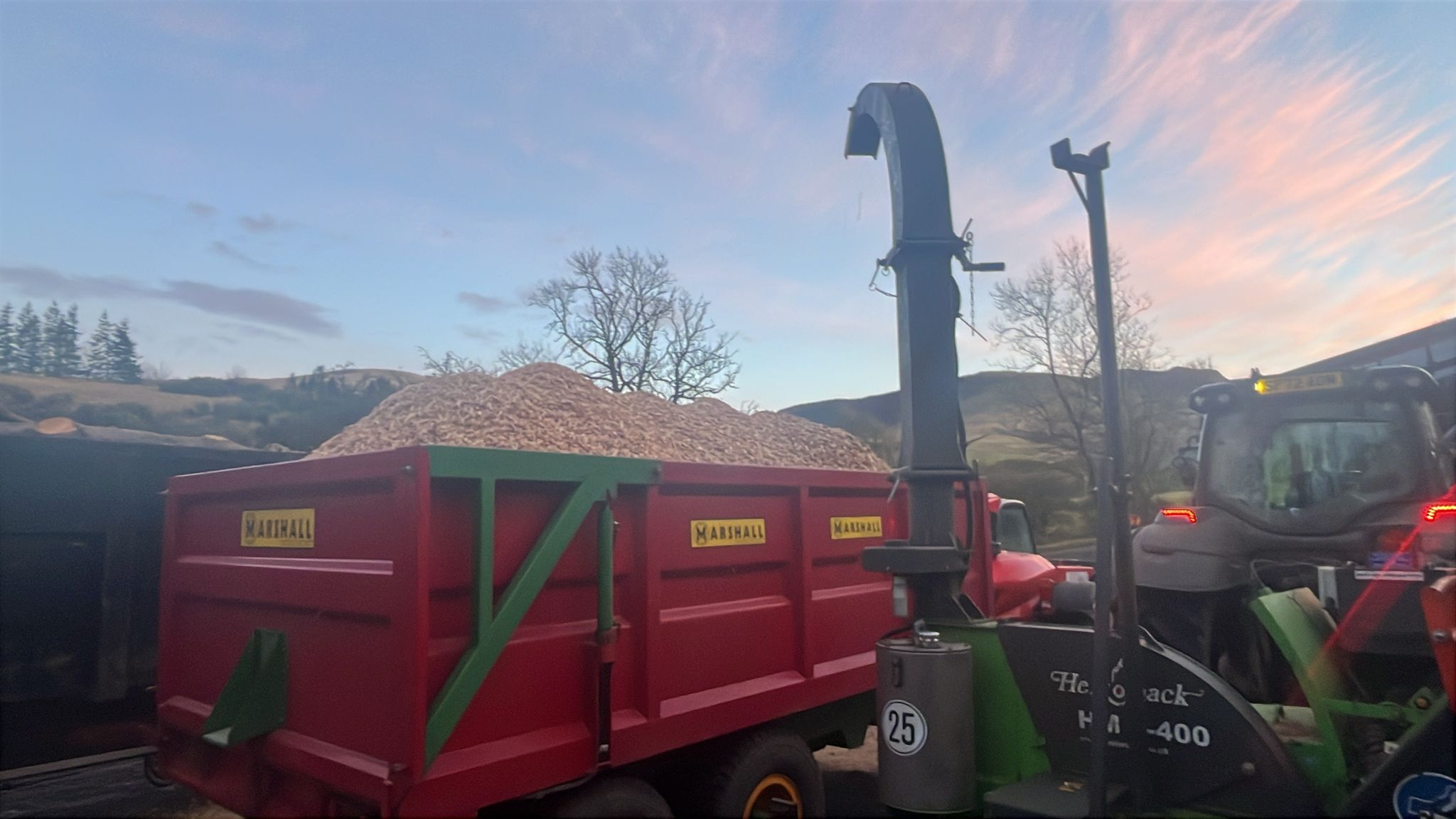
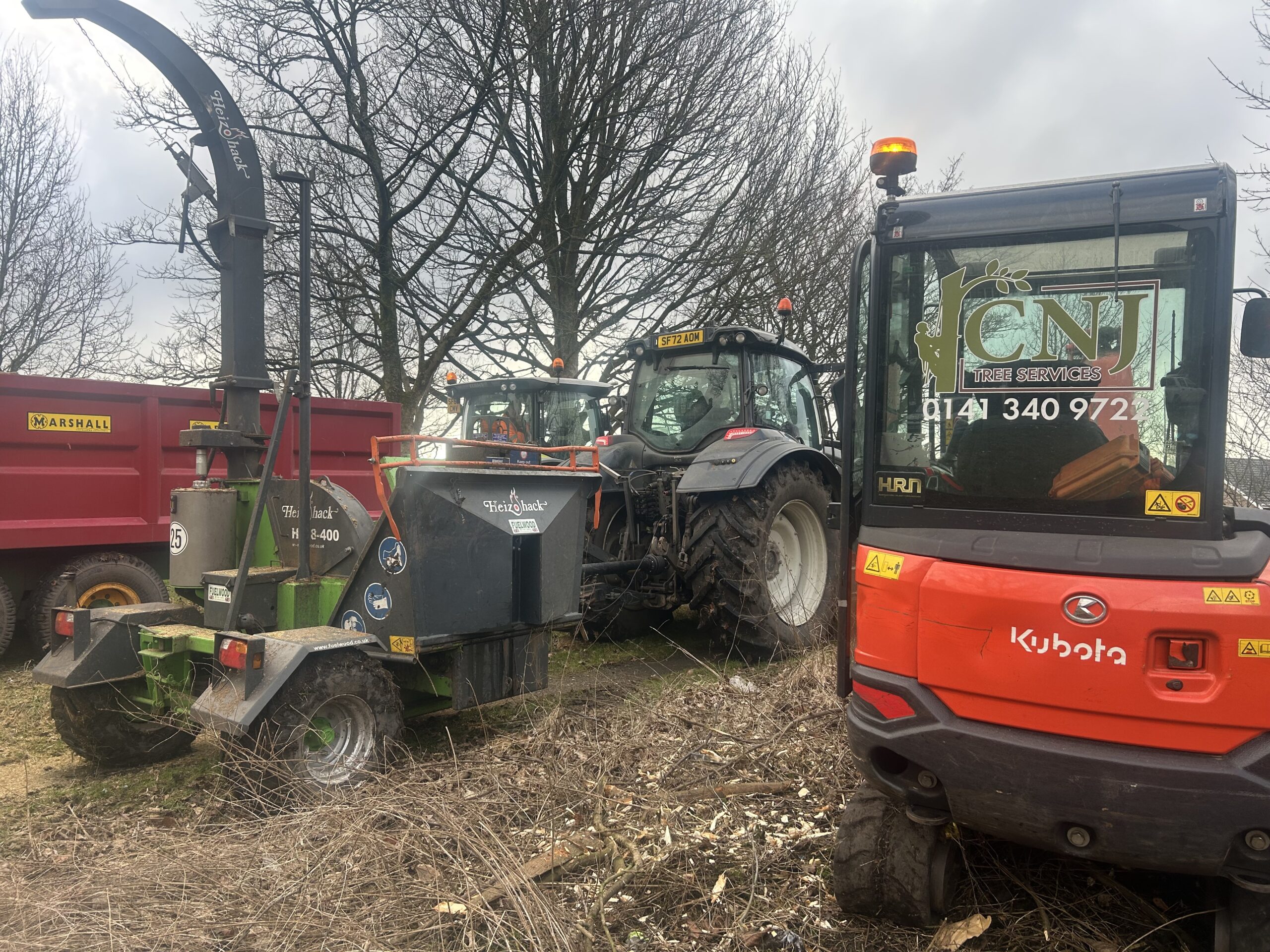
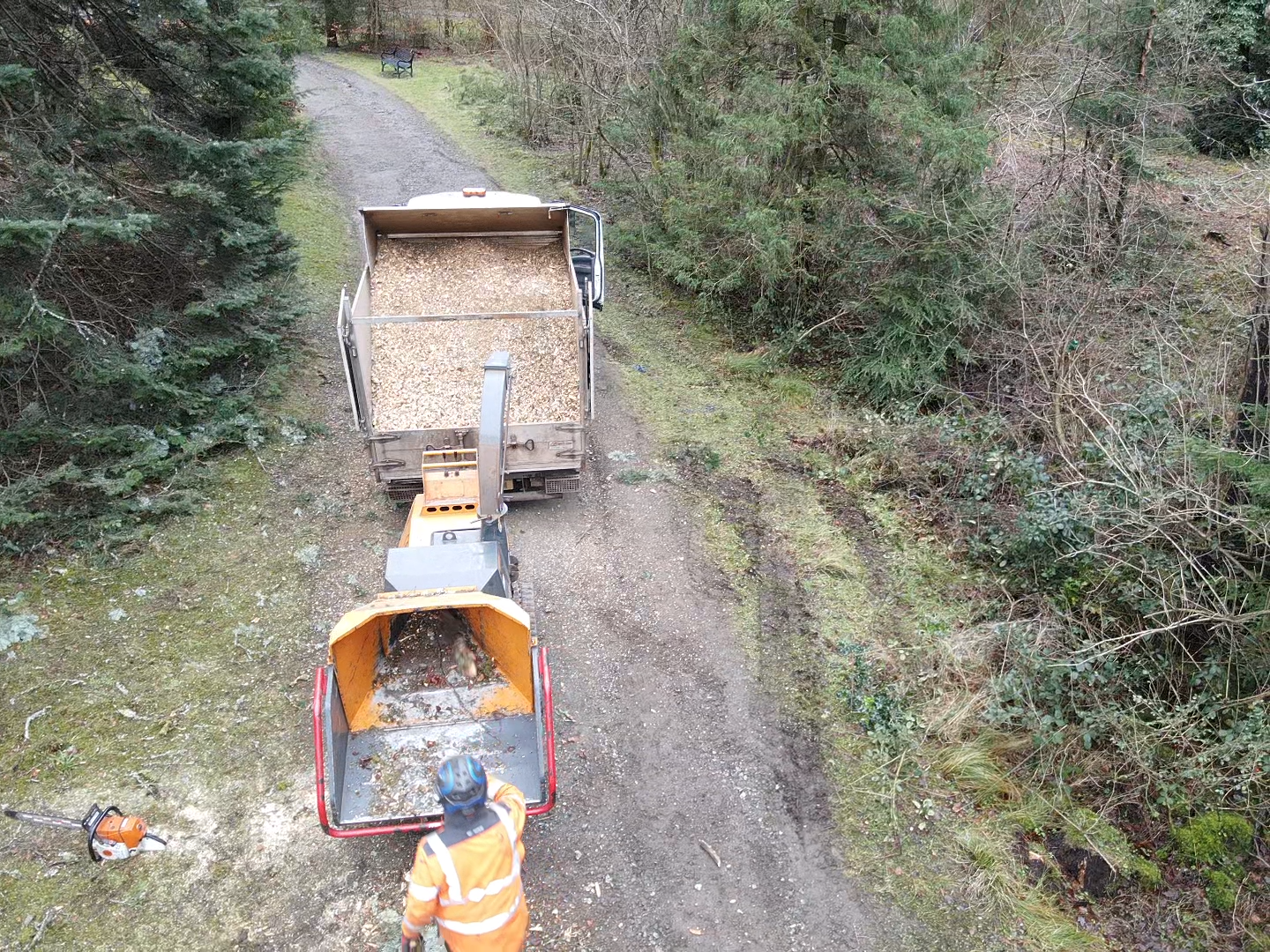
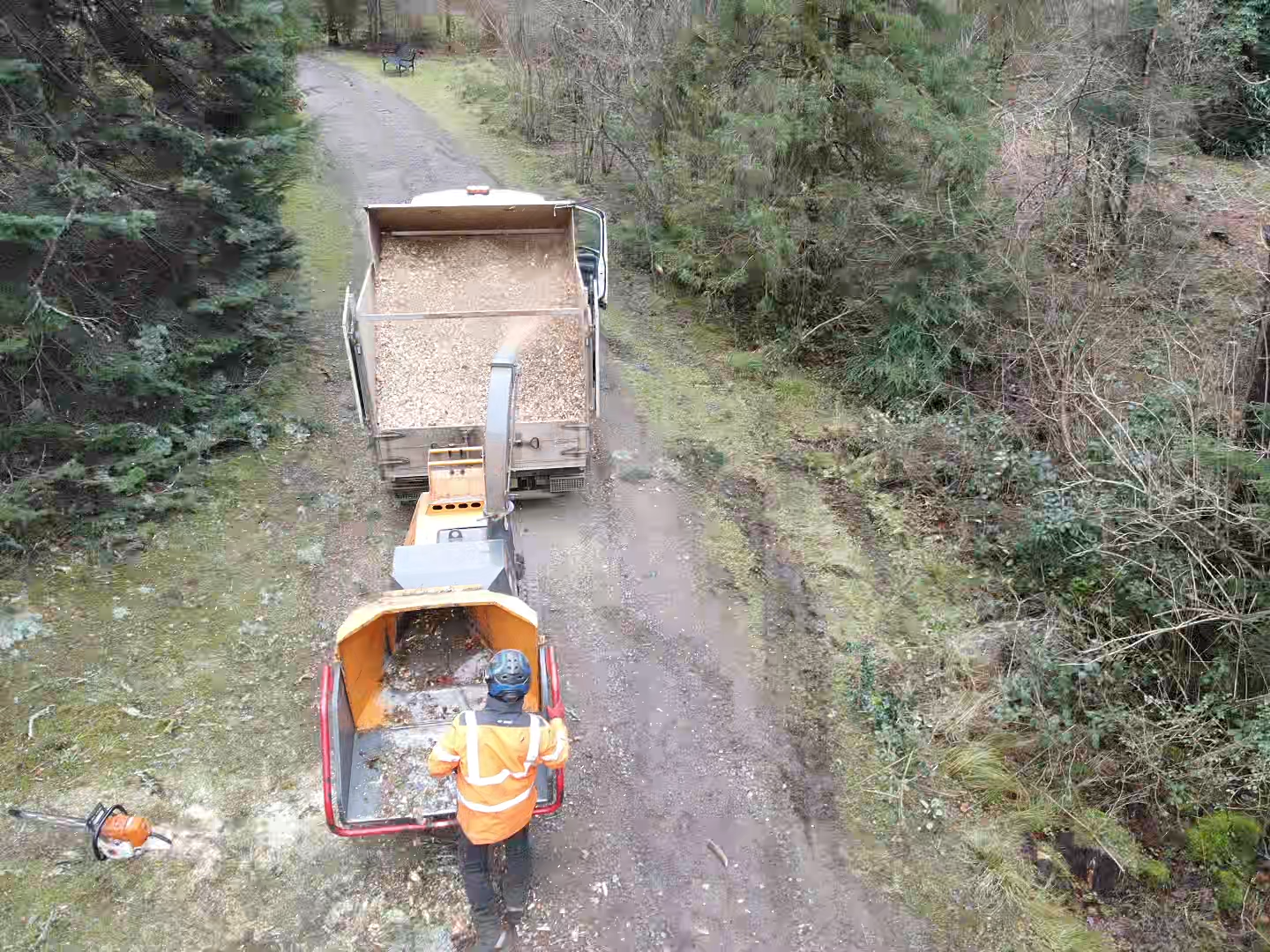
Depending on the job: a tracked spider lift cherry picker for aerial dismantling without a climber, low-ground-pressure forwarder trailers and line skidders for extraction, a 360 excavator, a timber crane, and heavy-duty woodchippers for brash and smaller material. All of it is owned by the business rather than hired in, which is also why we can move fast on emergency windblow work instead of waiting on a hire company.
Get a Forestry Site Visit Booked
Estate and commercial woodland work is never accurately priced from a phone call, so the next real step is getting someone out to walk the ground with you. Whether it’s a felling and extraction programme, a stalled planting scheme, or storm-damaged timber that needs clearing before it does more damage, get in touch and we’ll arrange a site visit and a written proposal rather than a guess.
Why Choose CNJ Tree Services?
Scotland's leading comprehensive tree and property service company.
60+ Specialist Tree Services
From basic pruning to de-vegetation and complex ecological assessments
30+ Years of Experience
Core team made up of highly experienced third-generation tree surgeons
24-hour Availability For Emergencies
Average response time under 2 hours
Up to £5M
Insurance Cover
Comprehensive cover for complete peace of mind
Professional Credentials
NPTC, Lantra, FMO and NPORS certified professionals ensuring the highest standards of safety and expertise on every project.
Environmental Expertise
Ecological surveys and compliance specialists
What Our Clients Have Said About Us
Jackie Breen
From the first time getting in touch with Callum, the service was fantastic, he came out gave us a great quote and was able to do the job very quickly. The boys that came to carry out the work were professional, friendly and worked non stop to get the job done, they were so careful with machinery on the property as well and left the garden and paths spotless before they left. I would highly recommend them.
Alan
Callum and his team arrived on the agreed day & time, carried out the tree felling with impeccable professionalism and cleared up after. The work was done at the quoted price and they were very pleasant guys with no bad language. I highly recommend CNJ and I will certainly be using Callum and his 5 star tree fellas again.
Robin Campbell
Callum and his team felled four 40-foot+ trees in our garden, facing particular challenges (2 trees hanging over our LPG tank, one menacing a precious rhododendron). They worked incredibly hard, were great to deal with and we would thoroughly recommend them.
Our Service Areas
We Cover All of Glasgow and West Scotland
Primary Coverage
- Balfron
- East Dunbartonshire
- Glasgow City
- Killearn
- Renfrewshire
- South Lanarkshire (selected areas)
- Stirling
- Strathblane
- West Dunbartonshire
Key Locations
• Balfron • Bearsden • Bothwell • Bridge of Weir • Cambuslang • Clarkston • Coatbridge • East Kilbride • Erskine • Giffnock • Hamilton • Kilsyth • Kirkintilloch • Milngavie • Motherwell • Newton Mearns • Paisley • Rutherglen • Stirling • Uddingston
Contact Us Today
CNJ Tree Services
Address
Office 1, Technology House,
9 Newton Pl, Glasgow G3 7PR, United Kingdom
Phone: 0141 340 9722
Email: [email protected]