
Our Work Portfolio in Glasgow
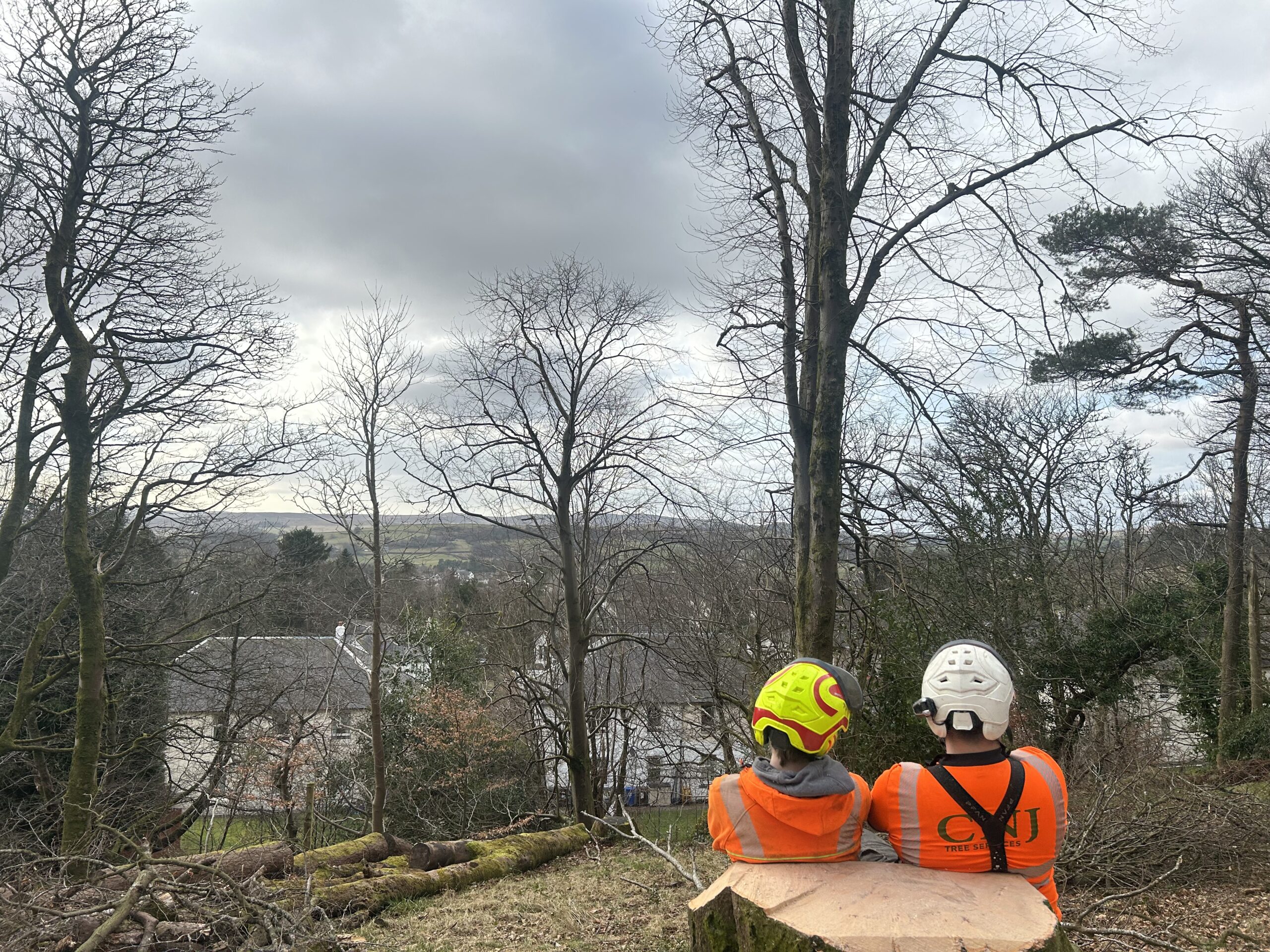
This is a working record of tree jobs completed across Glasgow and the surrounding towns, not a gallery dressed up for effect. Our work portfolio in Glasgow below shows real sites, real risk assessments and real outcomes – from a Tree Preservation Order yew in a West End-style garden that could only be pruned from a tracked platform, to a wind-exposed Douglas fir felled beside a woodland footpath using a boring cut and dogs-tooth technique to keep it under control on the way down. When you’re weighing up who to call for a tree that’s genuinely awkward – cracked stems, tight tenement back-court access, roadside felling next to live traffic – what a company has actually done tells you more than what it says it can do.
The jobs pictured span the ordinary and the difficult in roughly equal measure: hedge reductions running to a hundred metres, an ash dieback removal next to a family home, a crown lift agreed on-site with a photograph and a line drawn across it, and a stump grinder working through a mature oak base that hand tools would have taken half a day to shift. Between them they show the access method, the machinery and the judgement calls behind how a tree actually comes down or gets shaped – the part a written quote alone can’t show you.
At a Glance
- Every job pictured here was carried out by our own crew under £5 million public liability cover, not subcontracted out
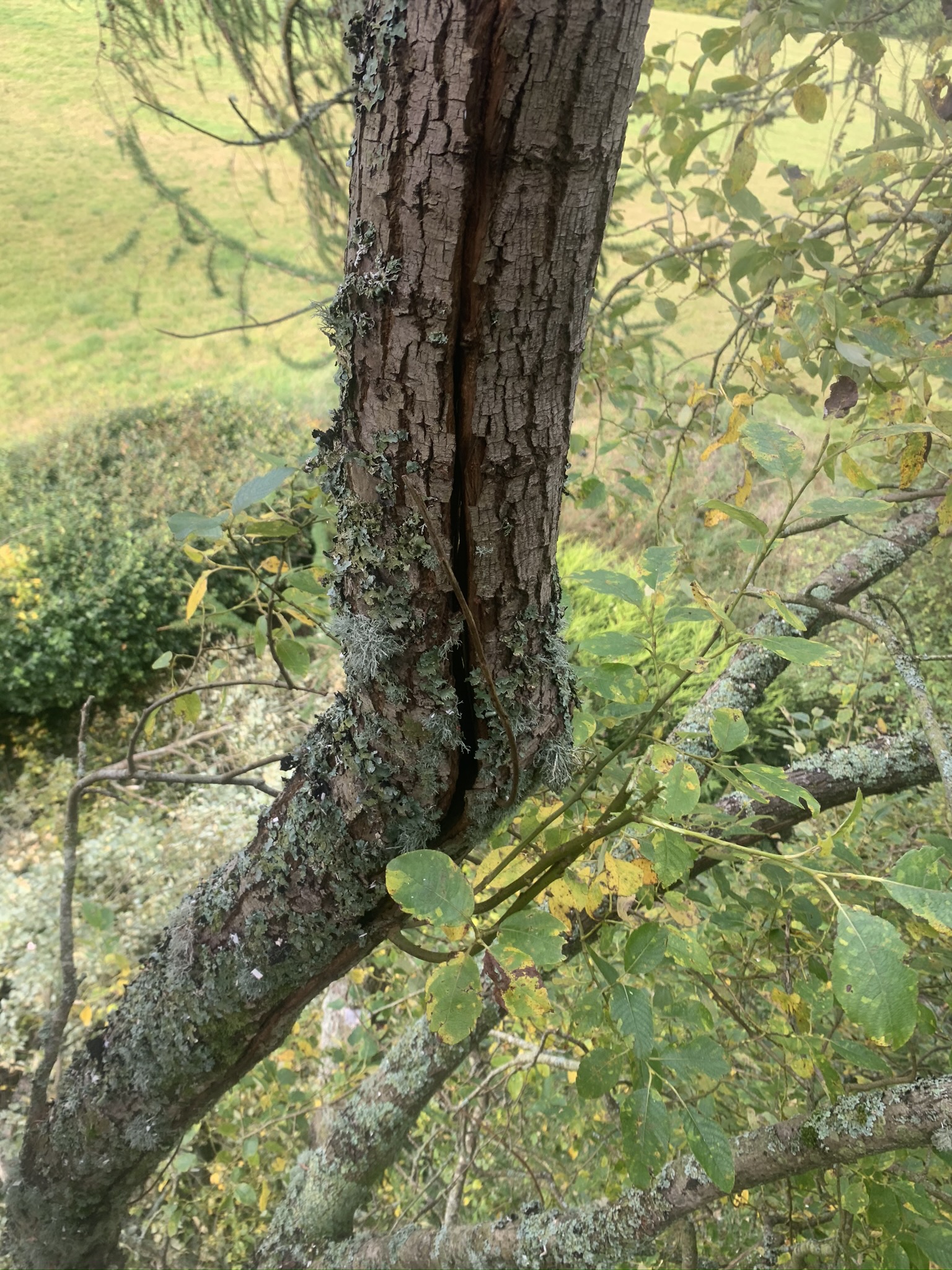
- Access decisions on jobs like the TPO yew and the multi-stem crack tree were made by our NPTC-qualified Professional Tree Inspector, not guessed at from the pavement
- We own our tracked MEWP, avant loader, winch and chipper outright, so the machine you see in these photos turns up on the day you need it, not whenever a hire firm can spare one
The Types of Jobs You’ll Find in This Portfolio
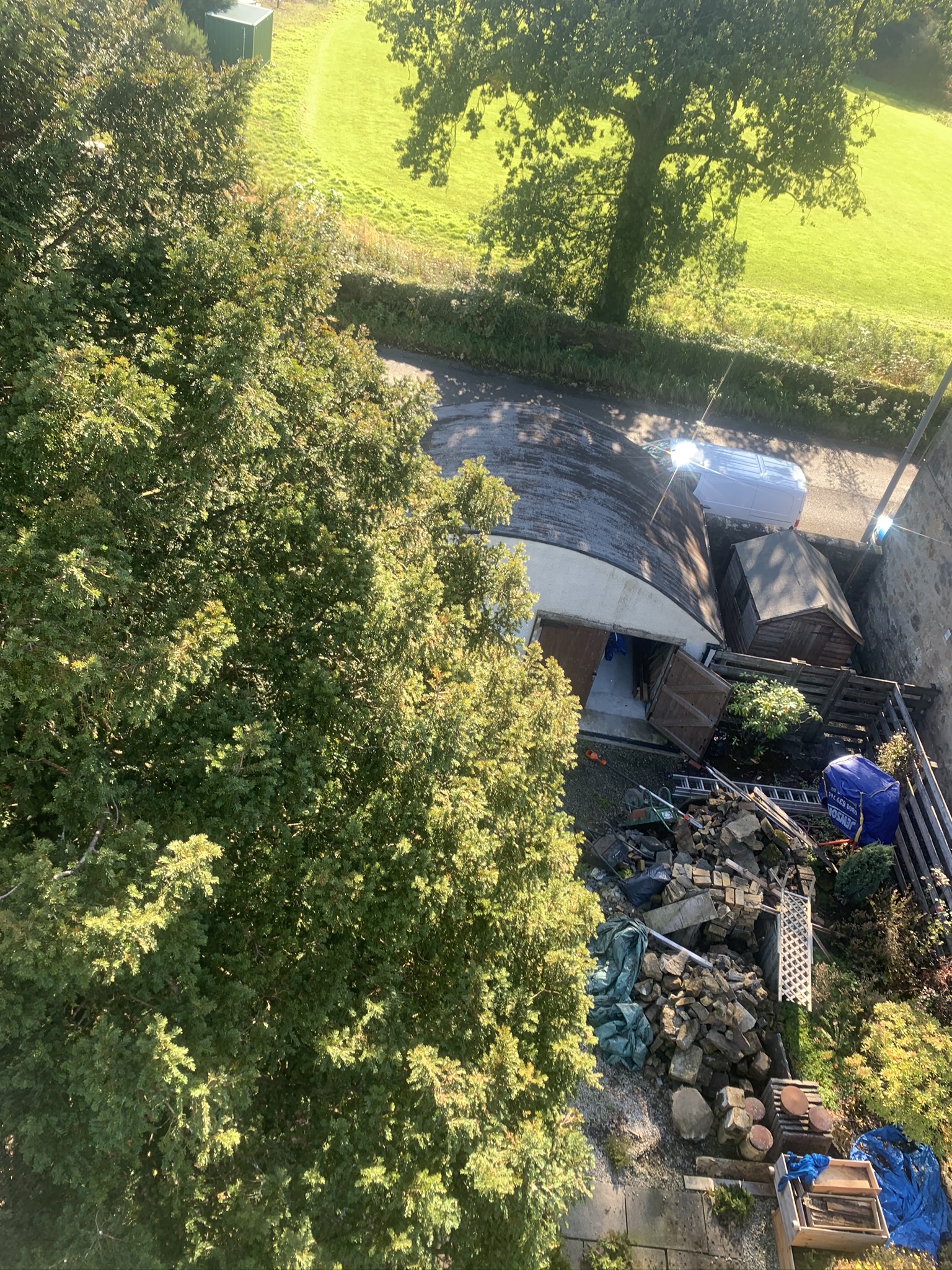
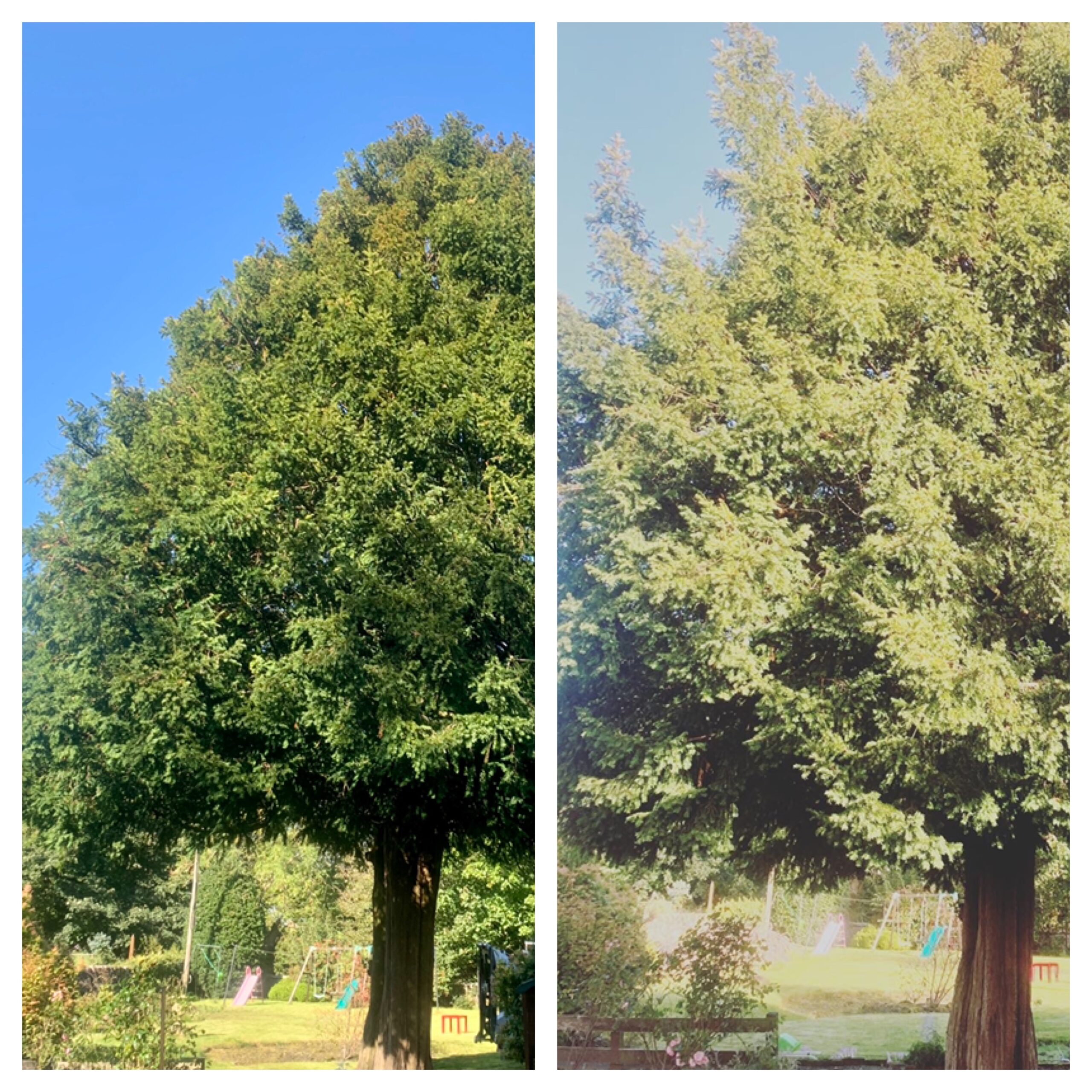
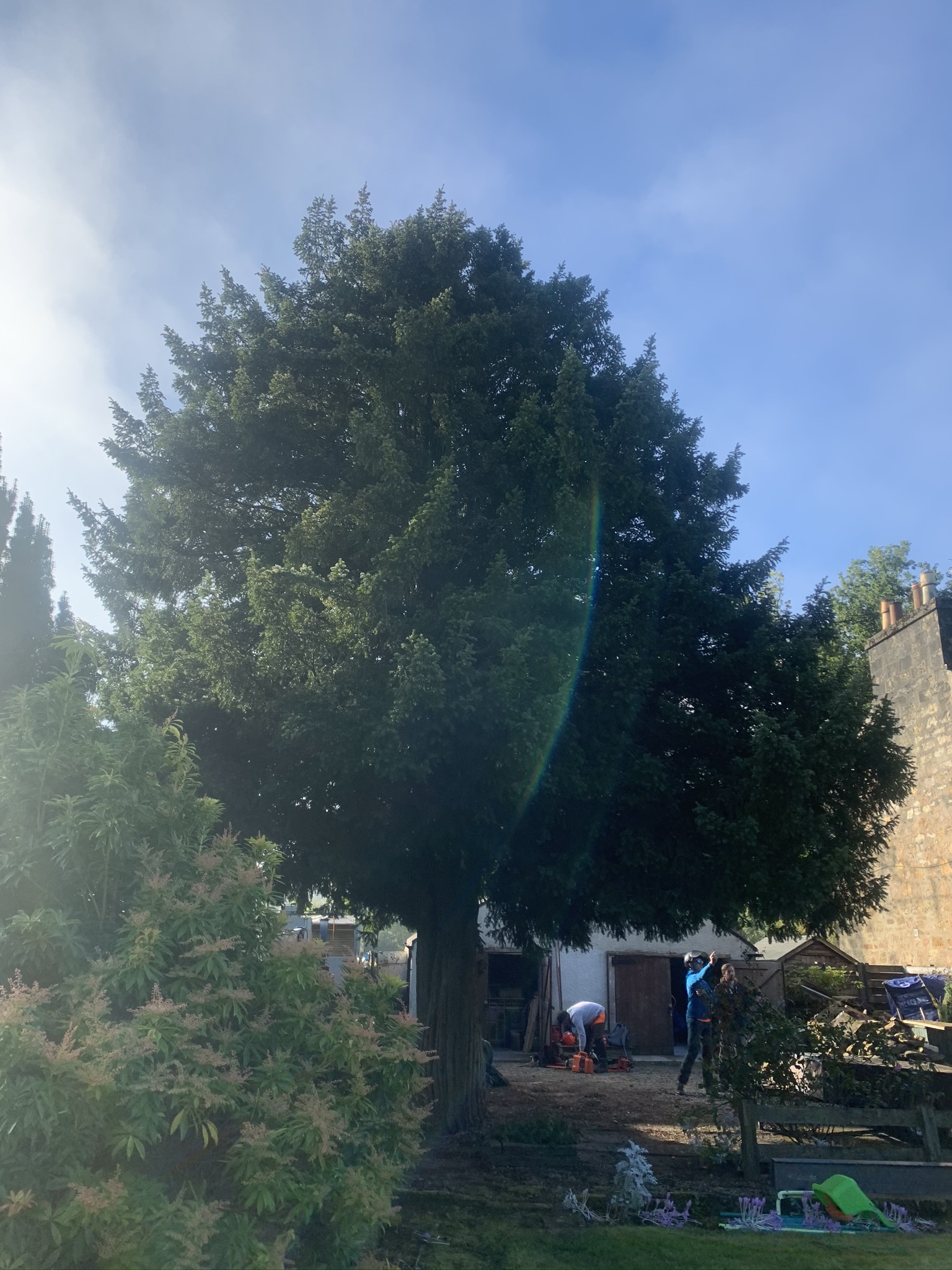
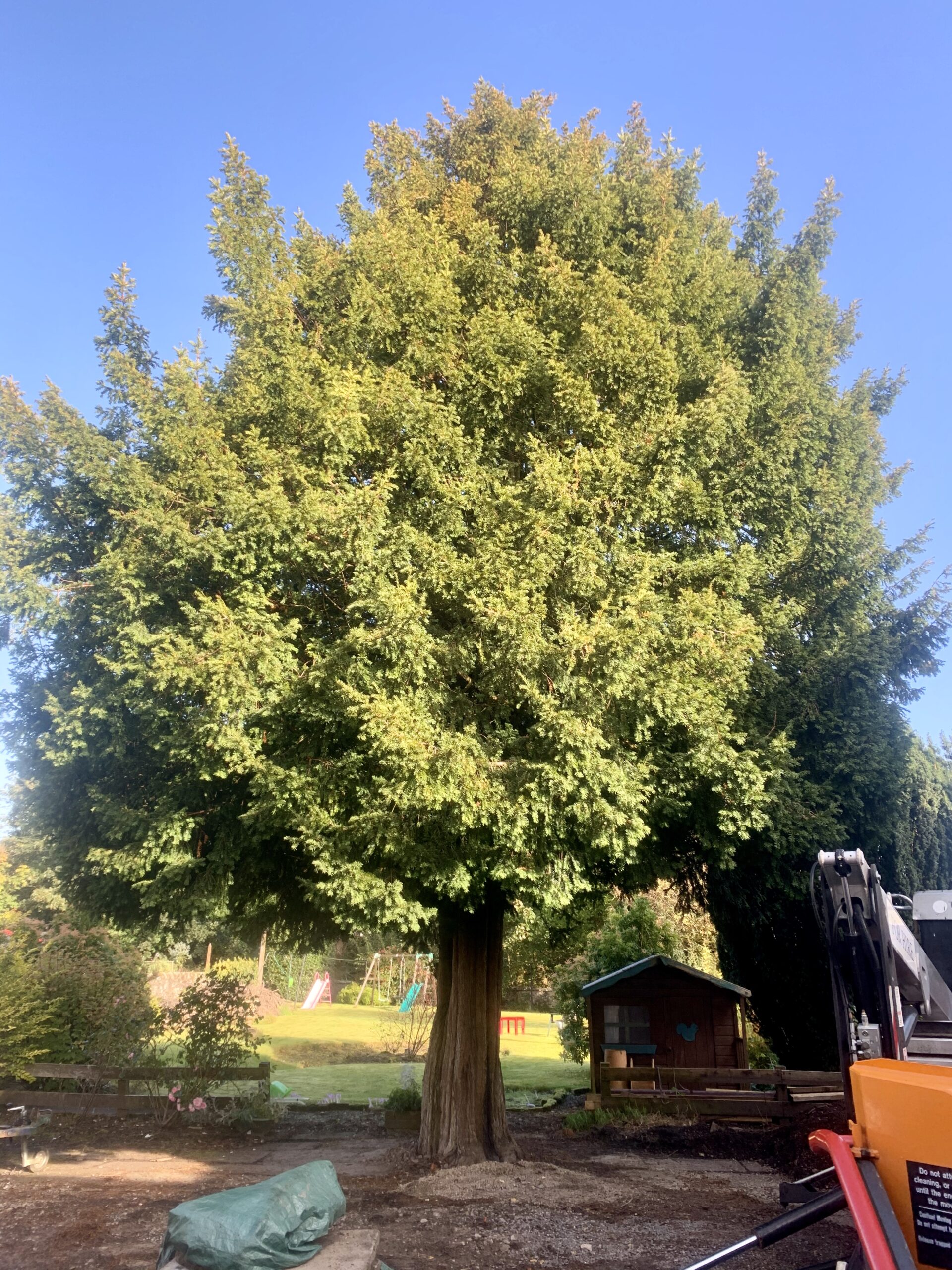
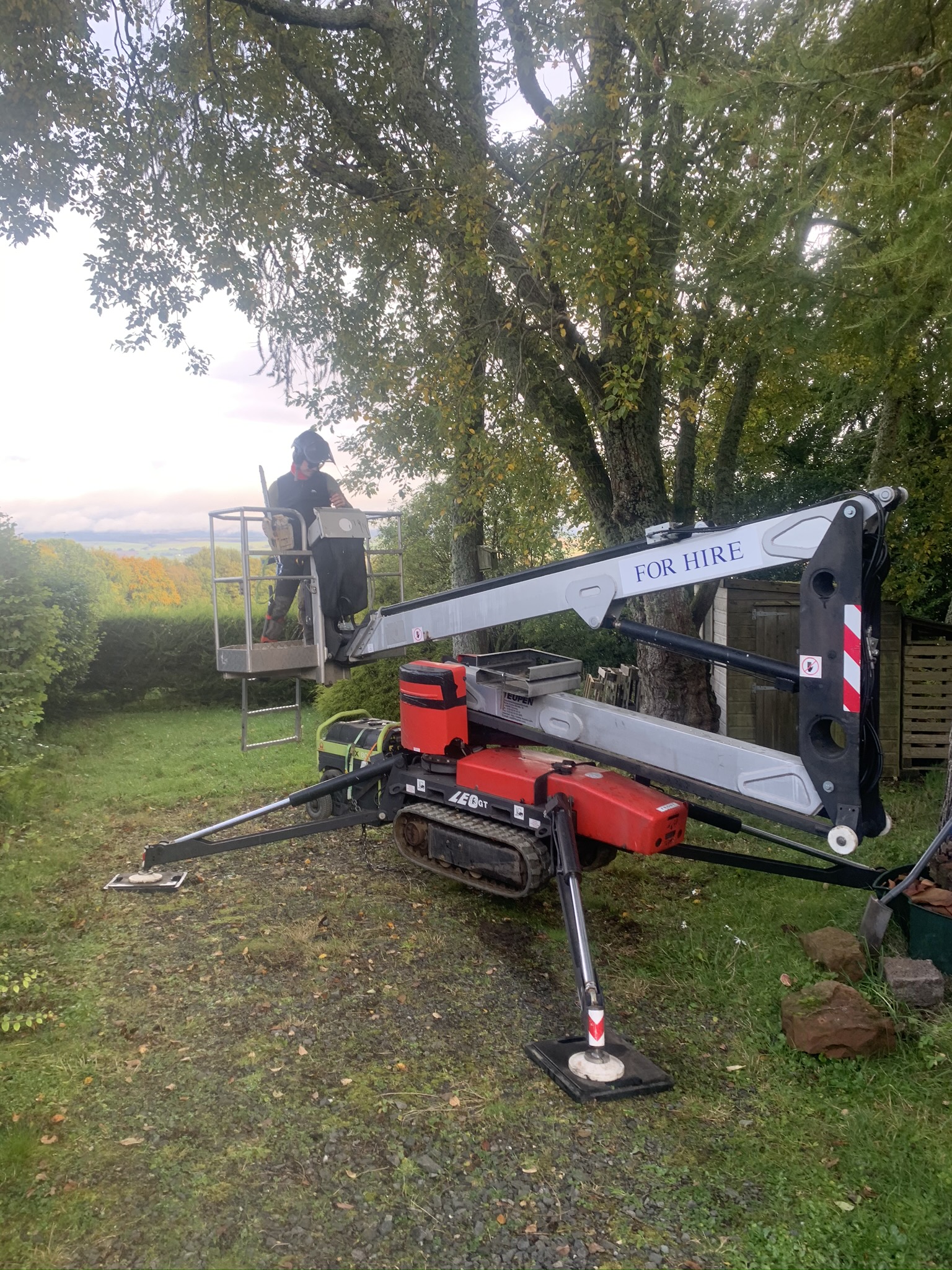
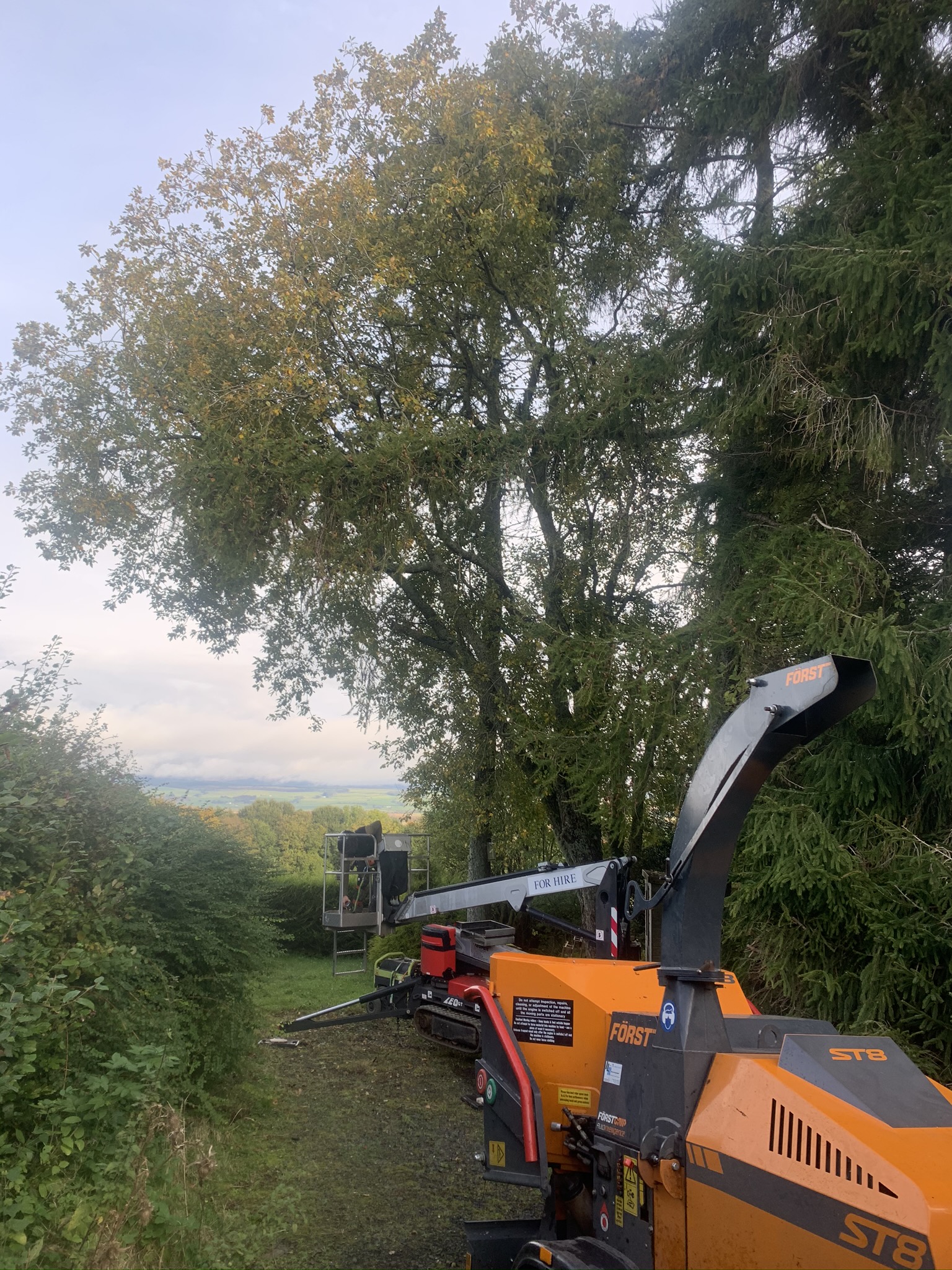
- Protected and TPO trees – a Tree Preservation Order English Yew, given a 1.5-metre crown reduction and crown lift, worked entirely from a tracked MEWP using handsaws and shears so the council-protected canopy wasn’t over-cut
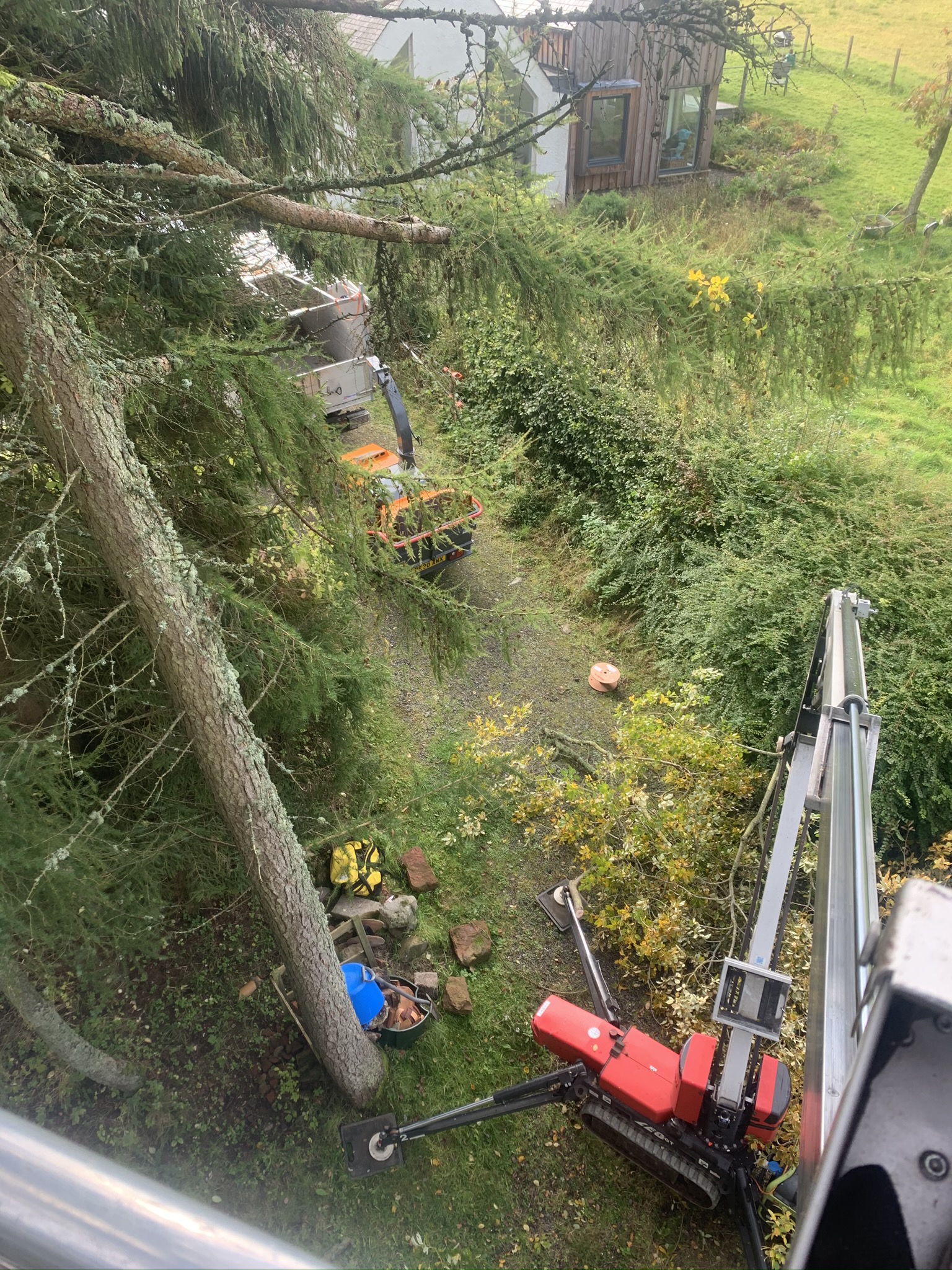
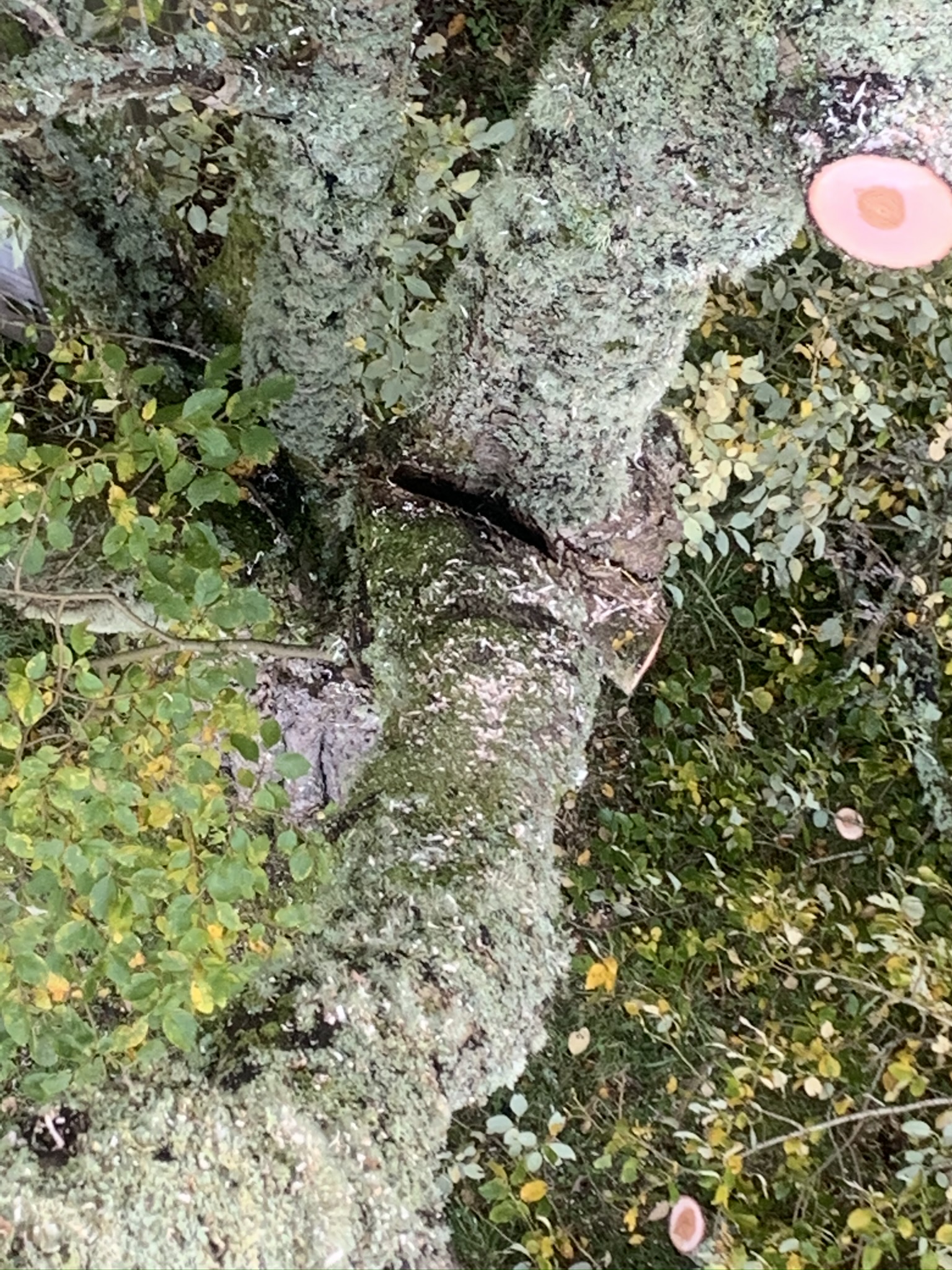
- High-risk felling and dismantling – a multi-stem tree with visible stem cracking, risk-assessed as unsafe to climb and dismantled by MEWP instead
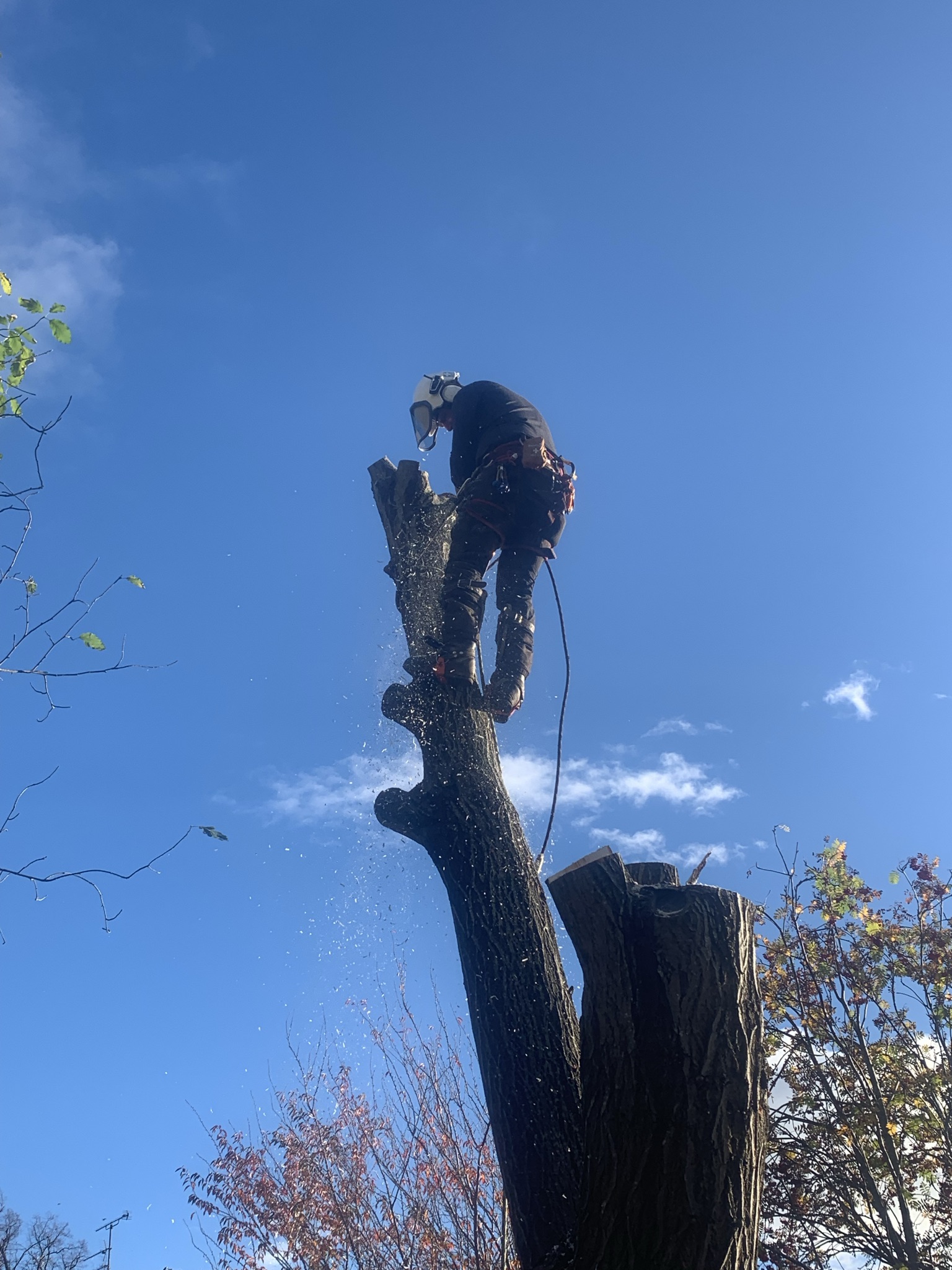
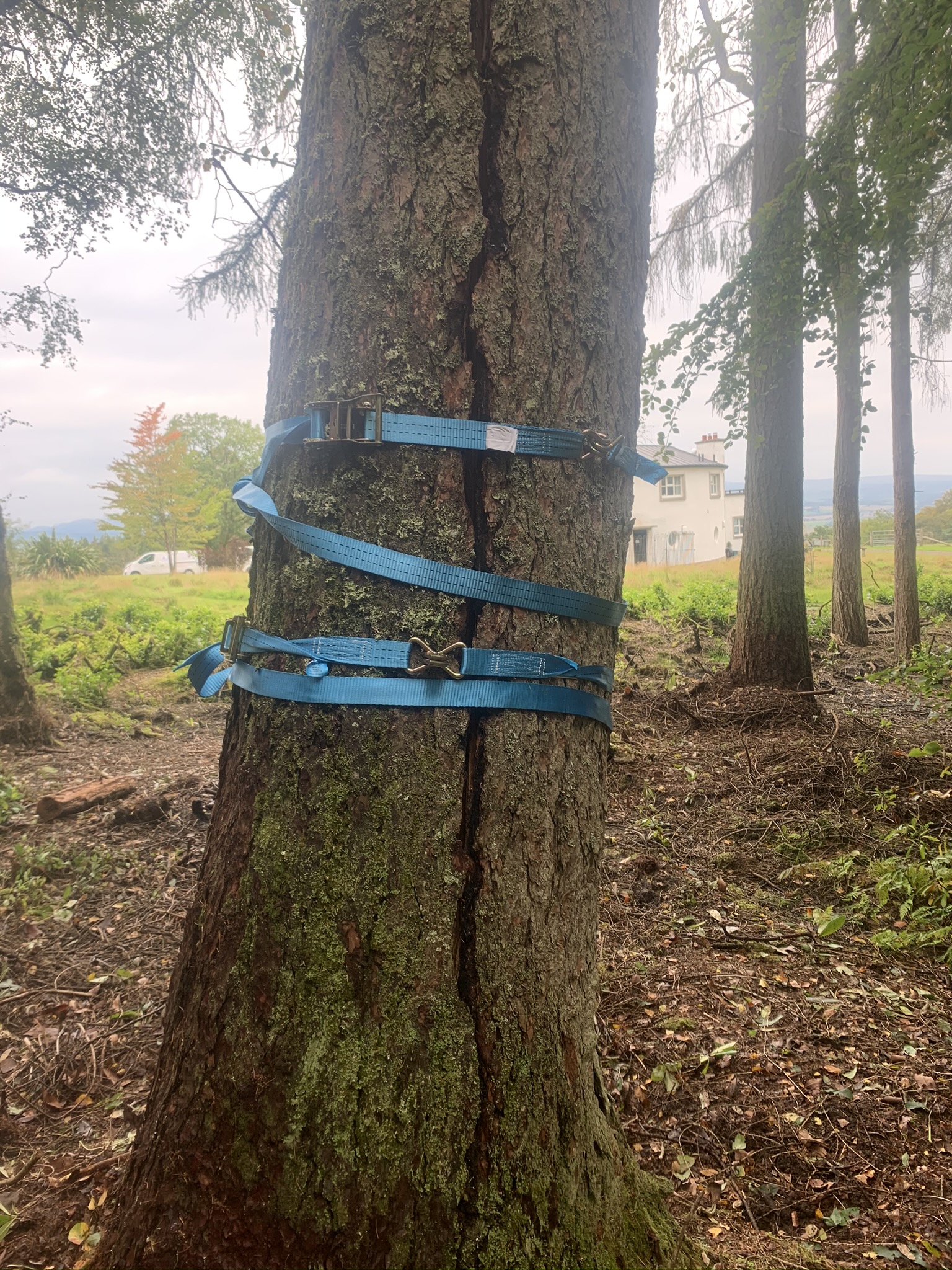
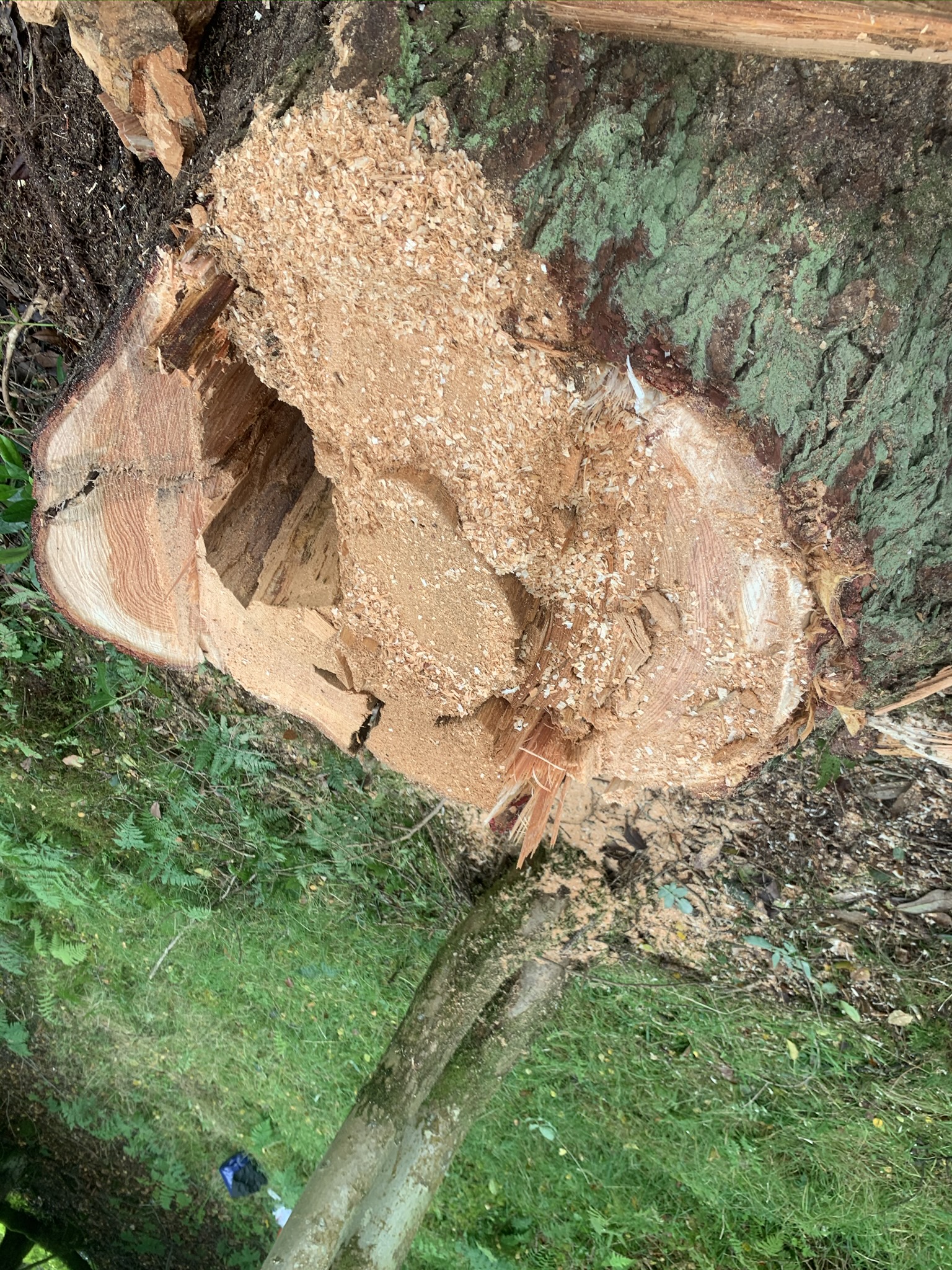
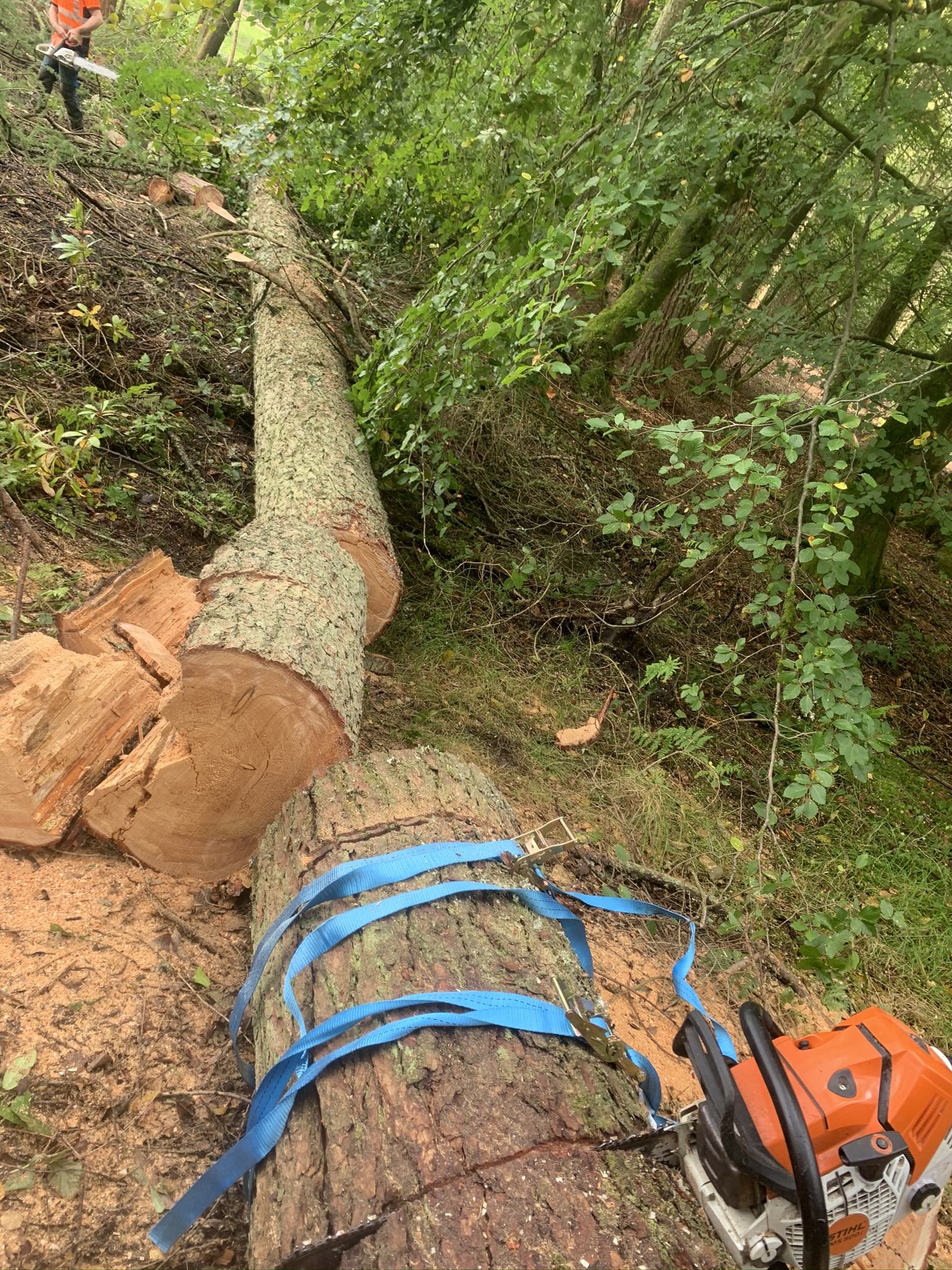
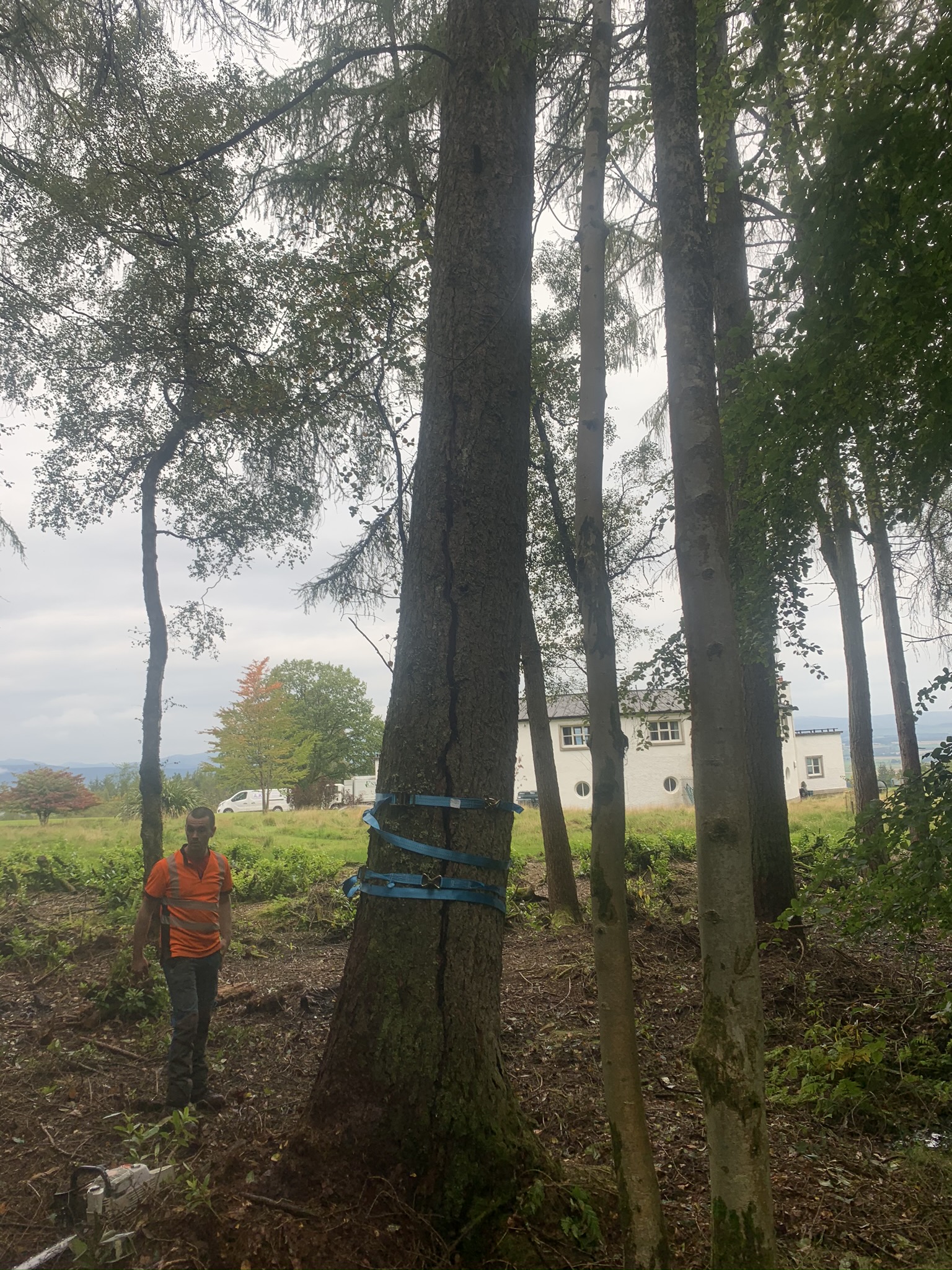
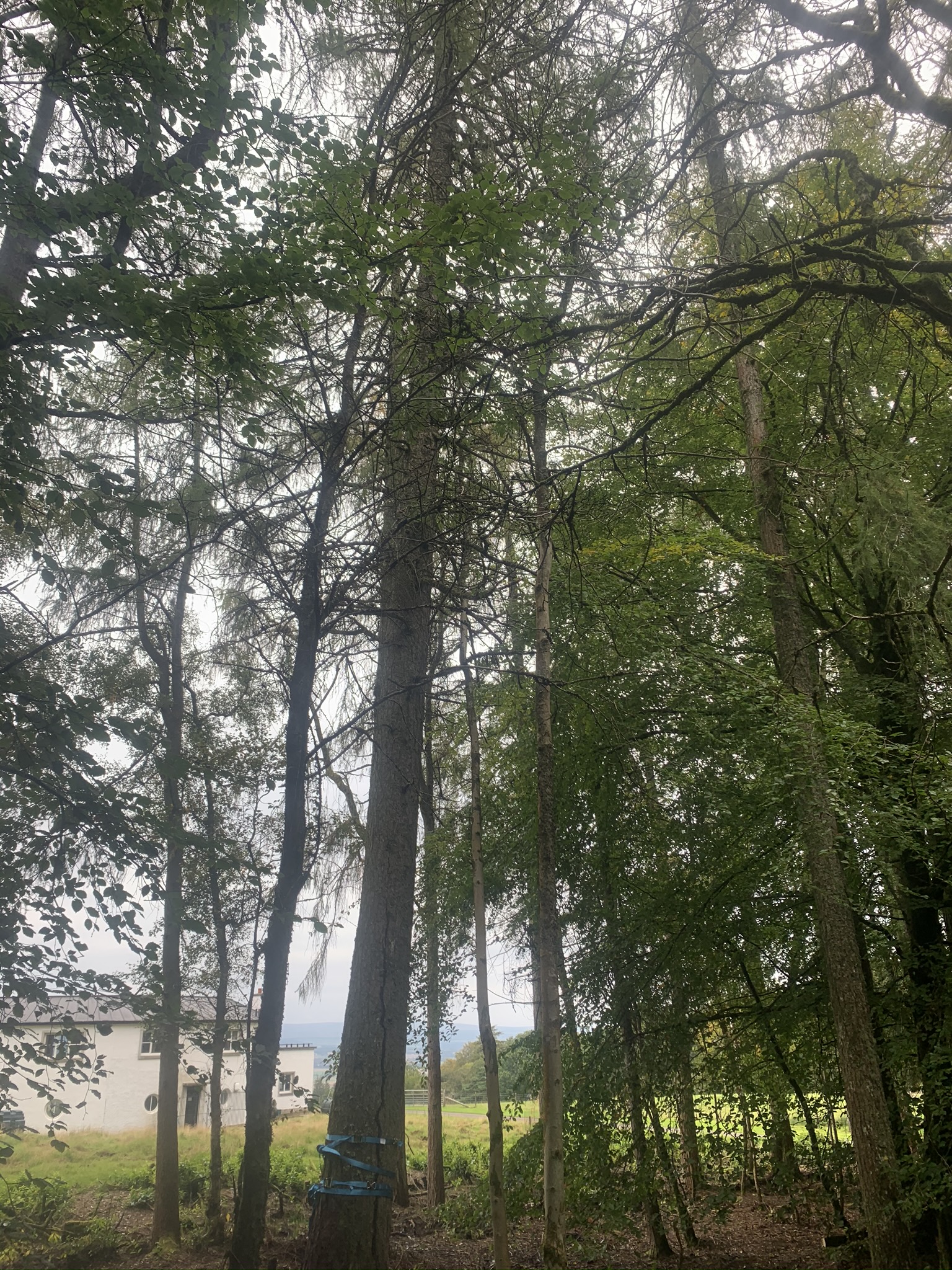
- High-risk felling and dismantling – a wind-exposed Douglas fir felled near a public footpath using ratchet straps to hold the stem together and a boring cut plus dogs-tooth cut to control the direction of fall
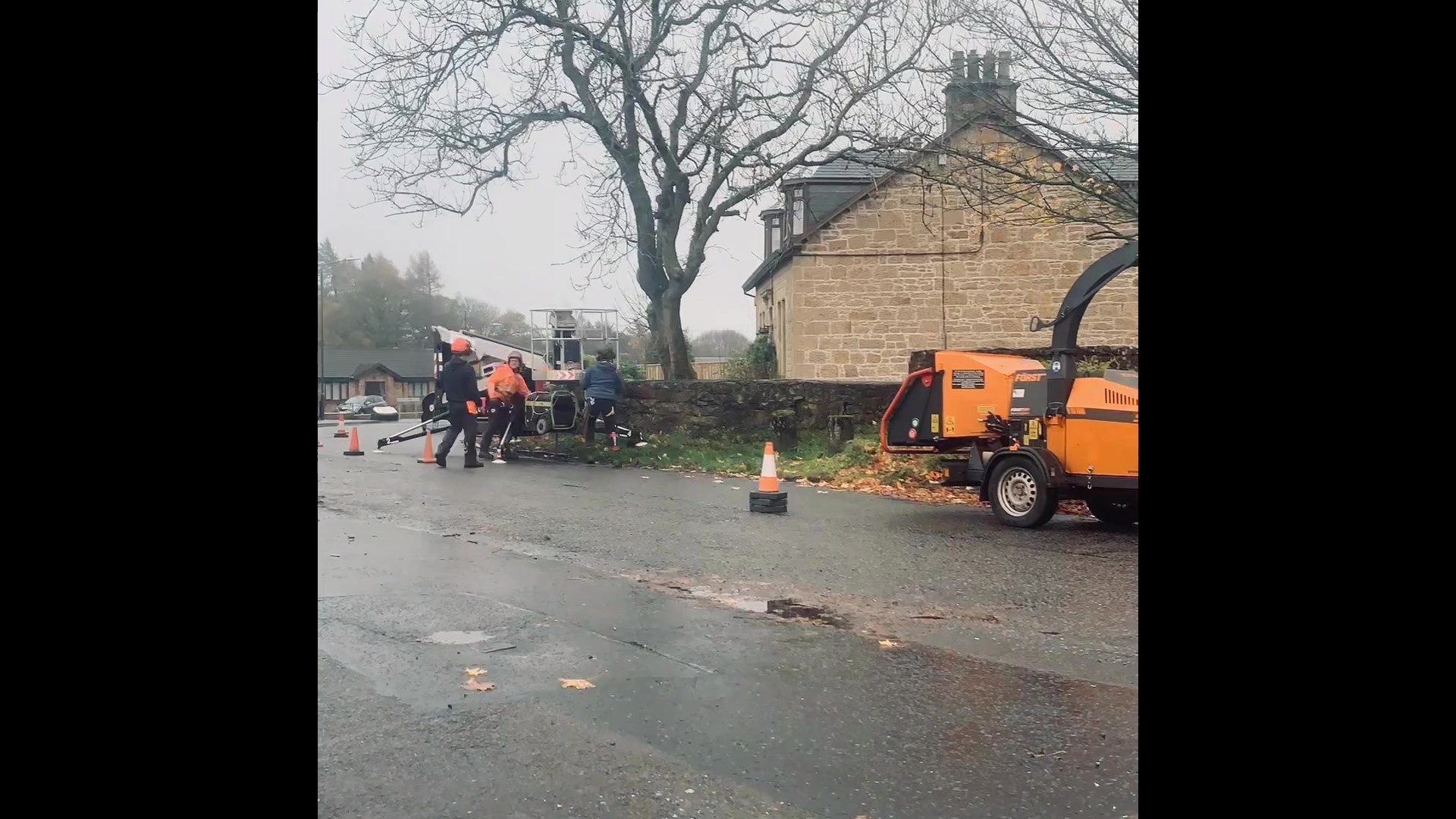
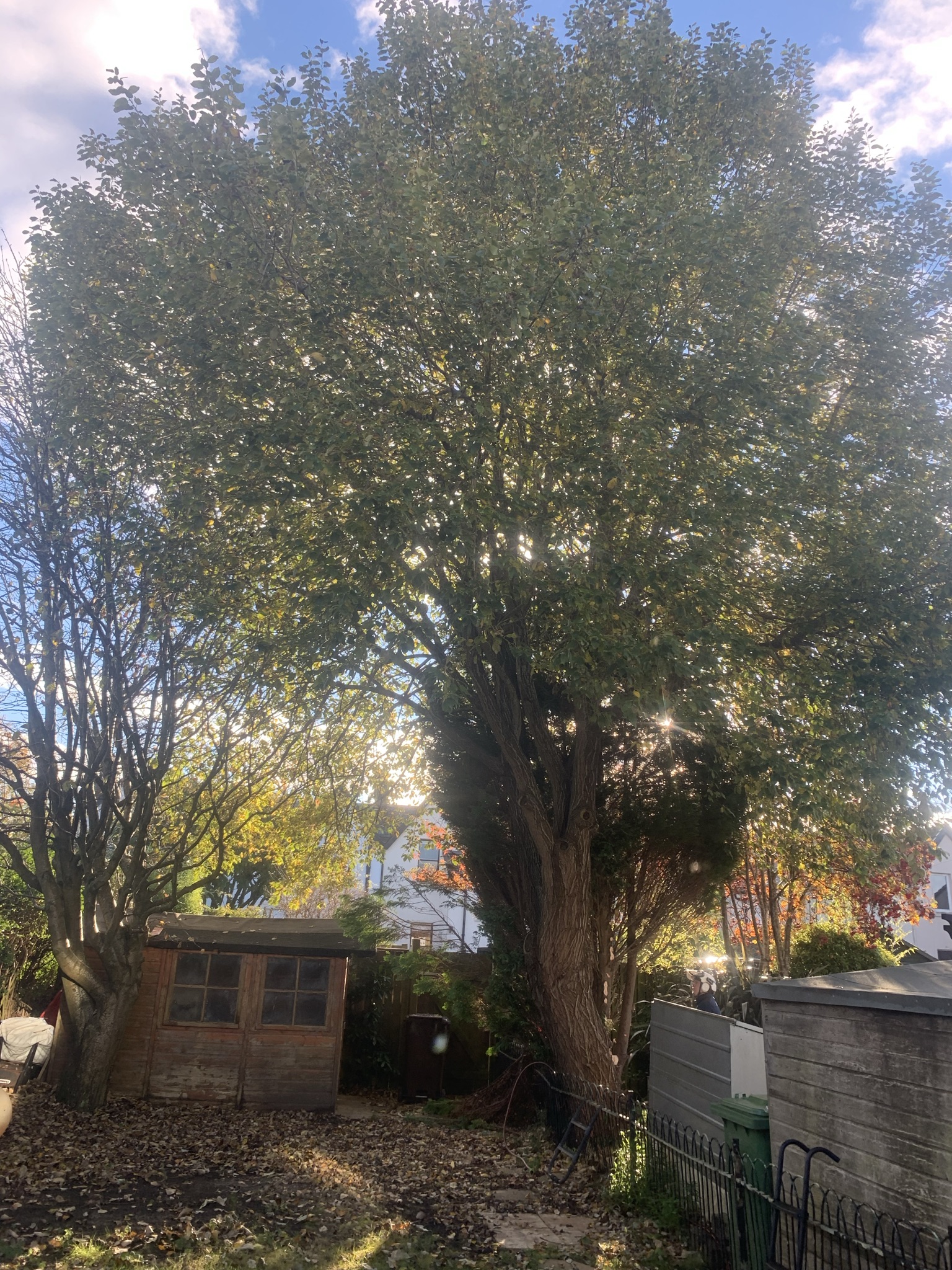
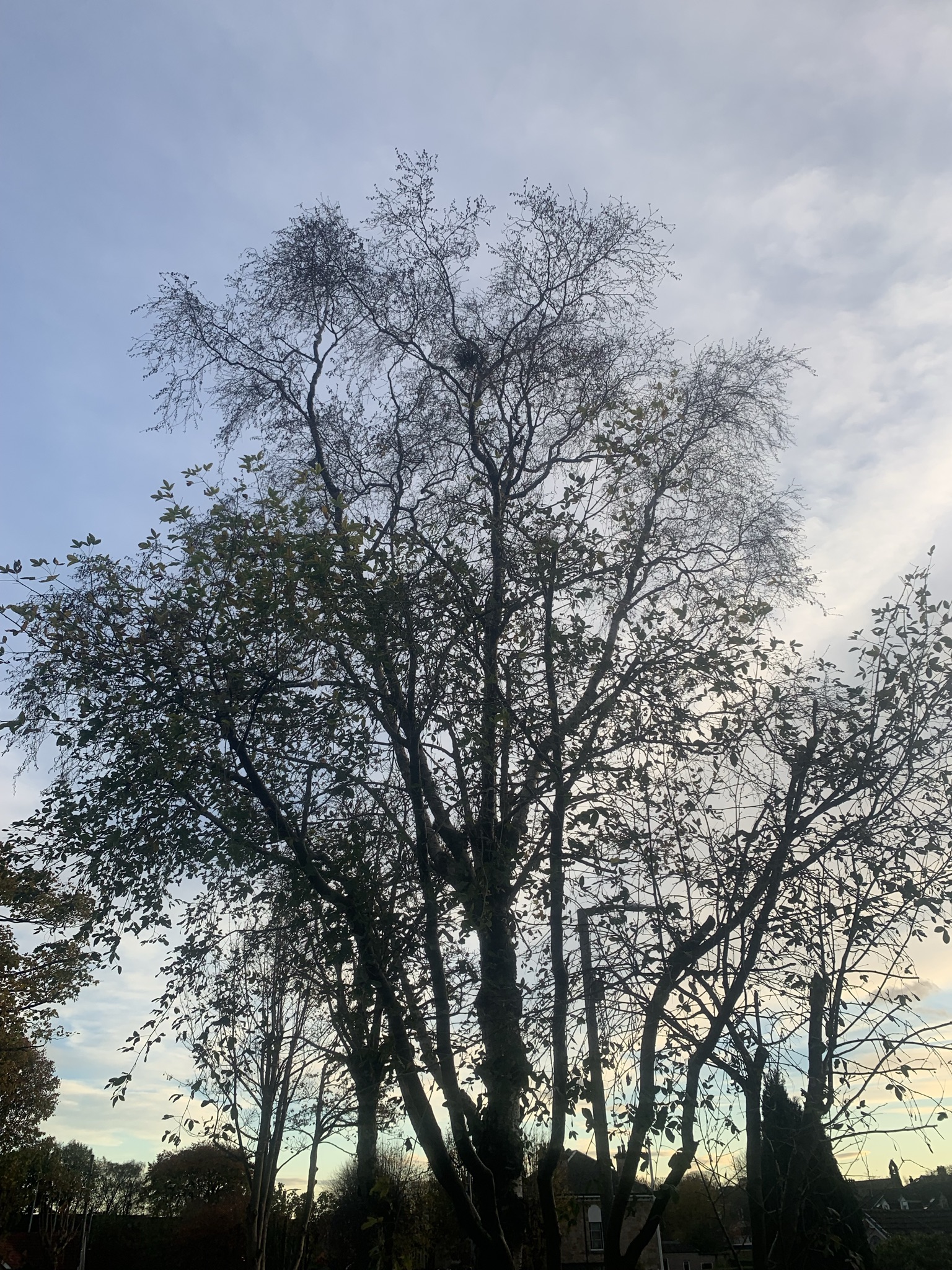
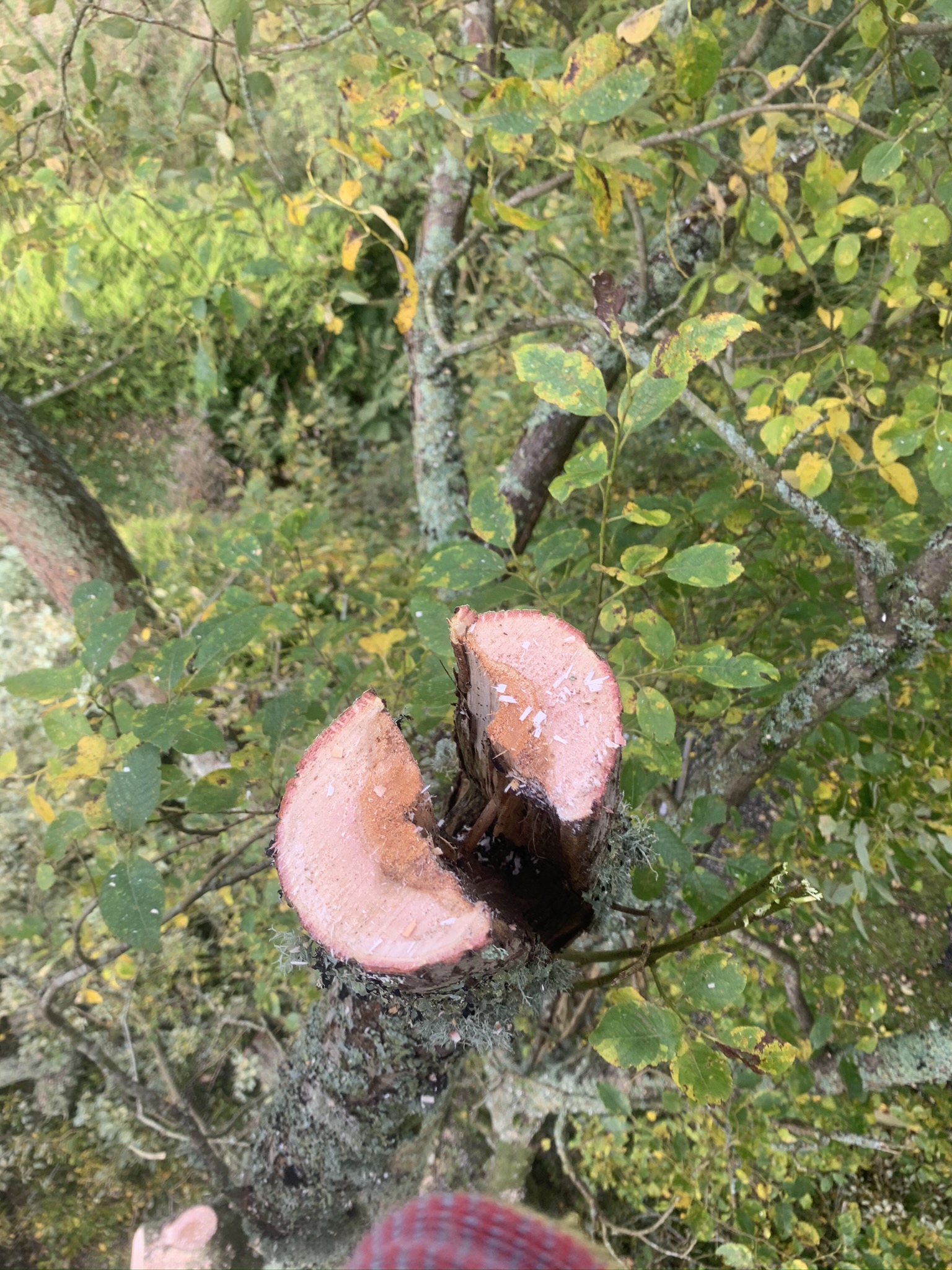
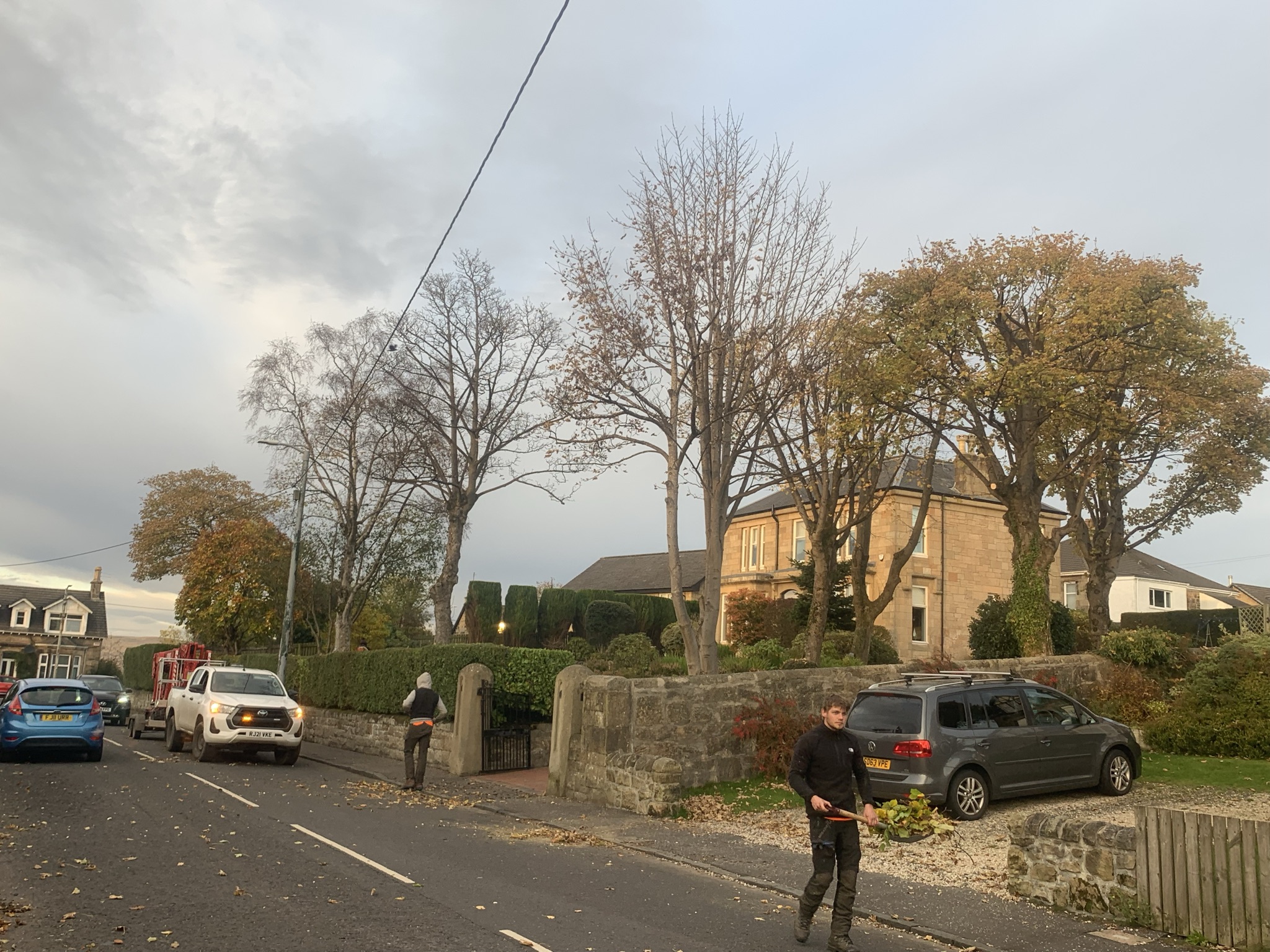
- Diseased tree removal – an ash tree with confirmed Ash Dieback (Hymenoscyphus fraxineus) on a roadside next to a house, dismantled section by section from a cherry picker into a managed landing zone beside a live traffic lane
- Confined-access work – an ash tree dismantled in a tight Scotstoun tenement lane, using a climber and a cherry picker together, with an avant loader clearing material out to the chipper and trucks
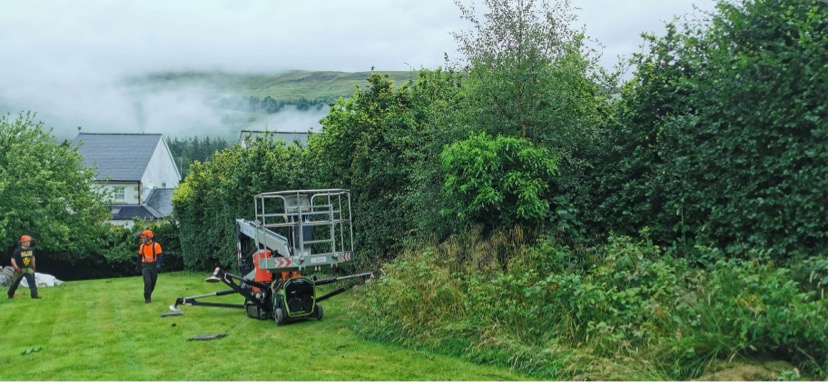
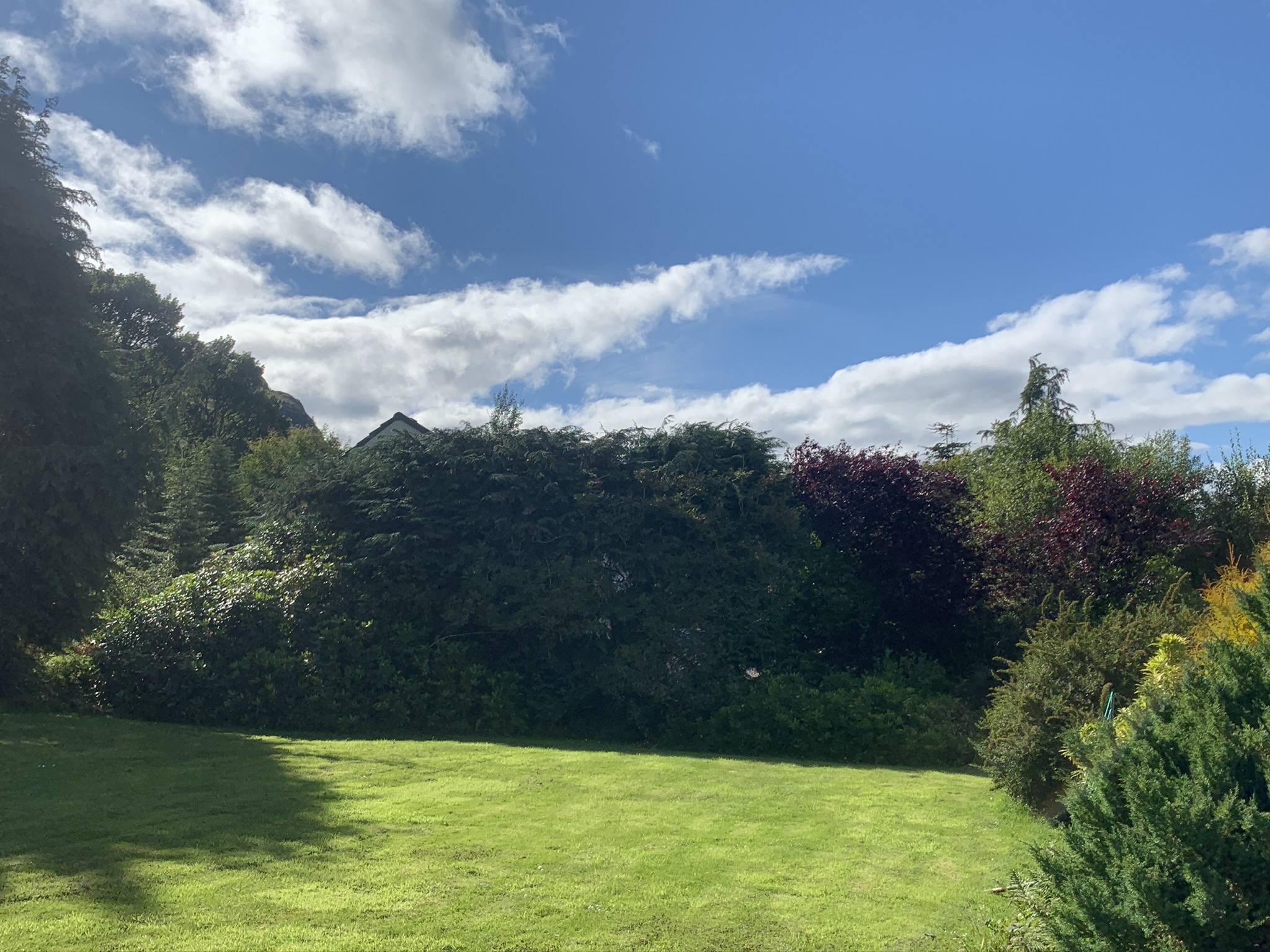
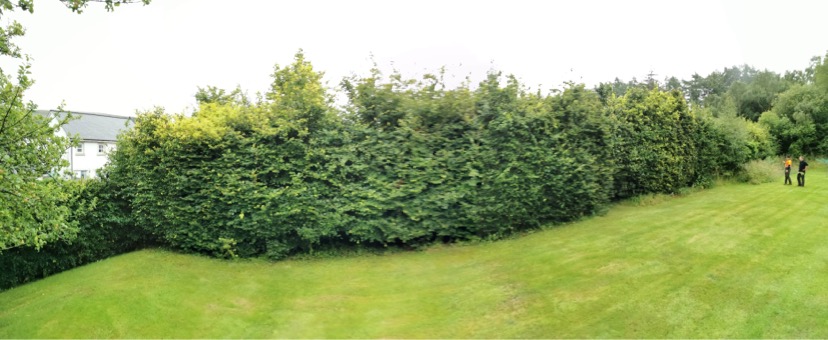
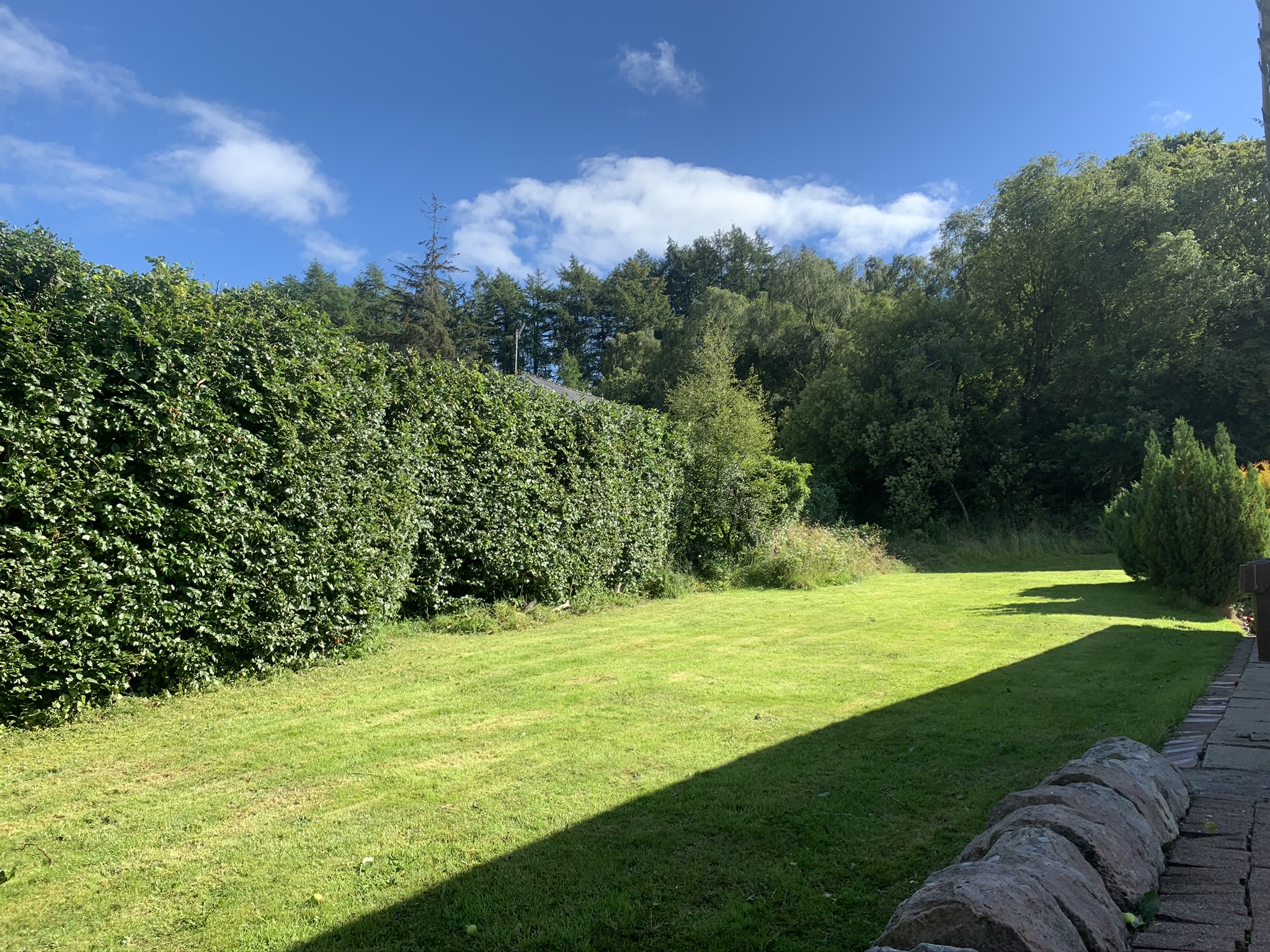
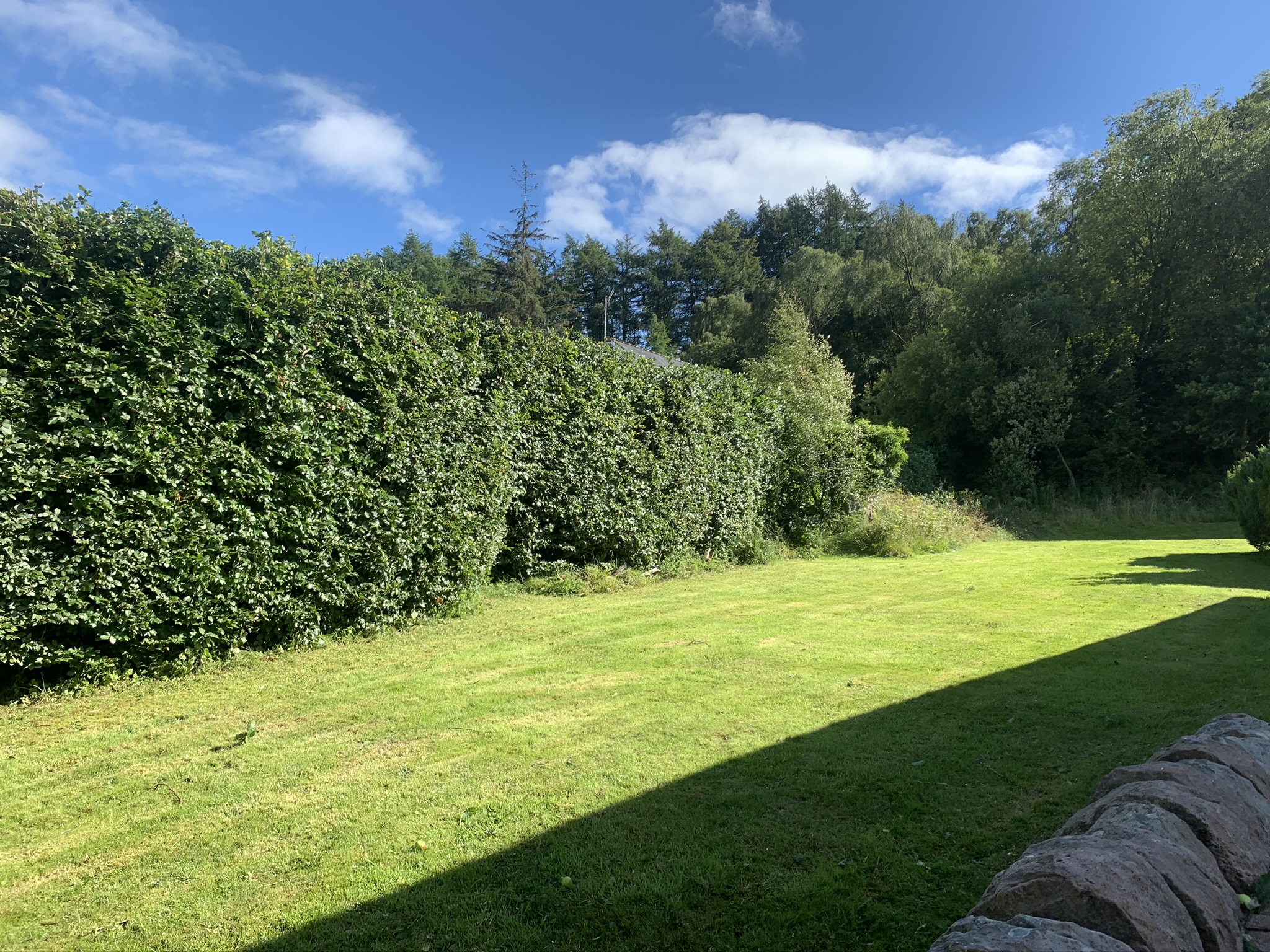
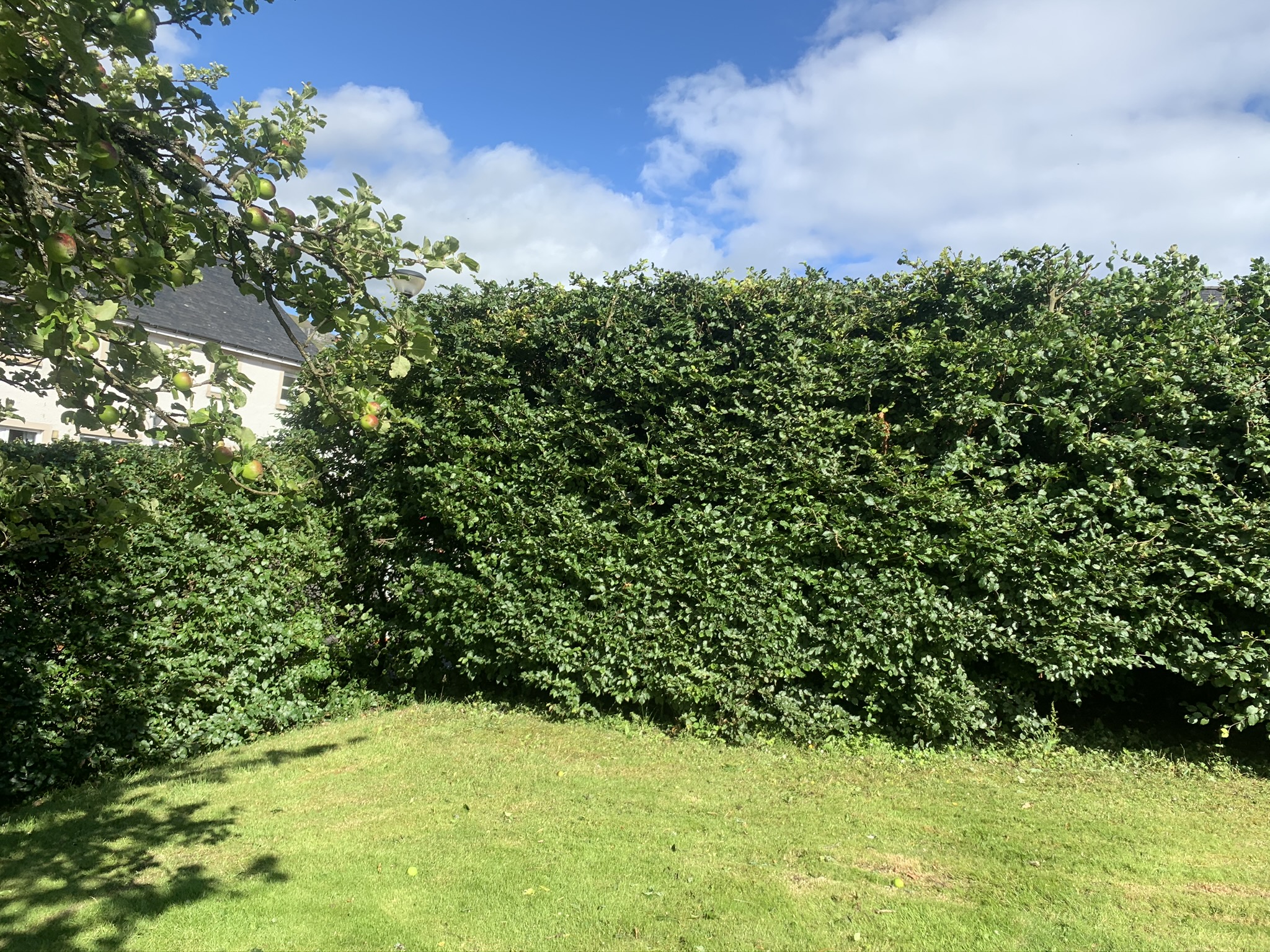
- Hedge work – a 100-metre run of beech hedge, up to 5 metres deep in places, brought back by 1.5-2 metres and levelled off with proper facing work
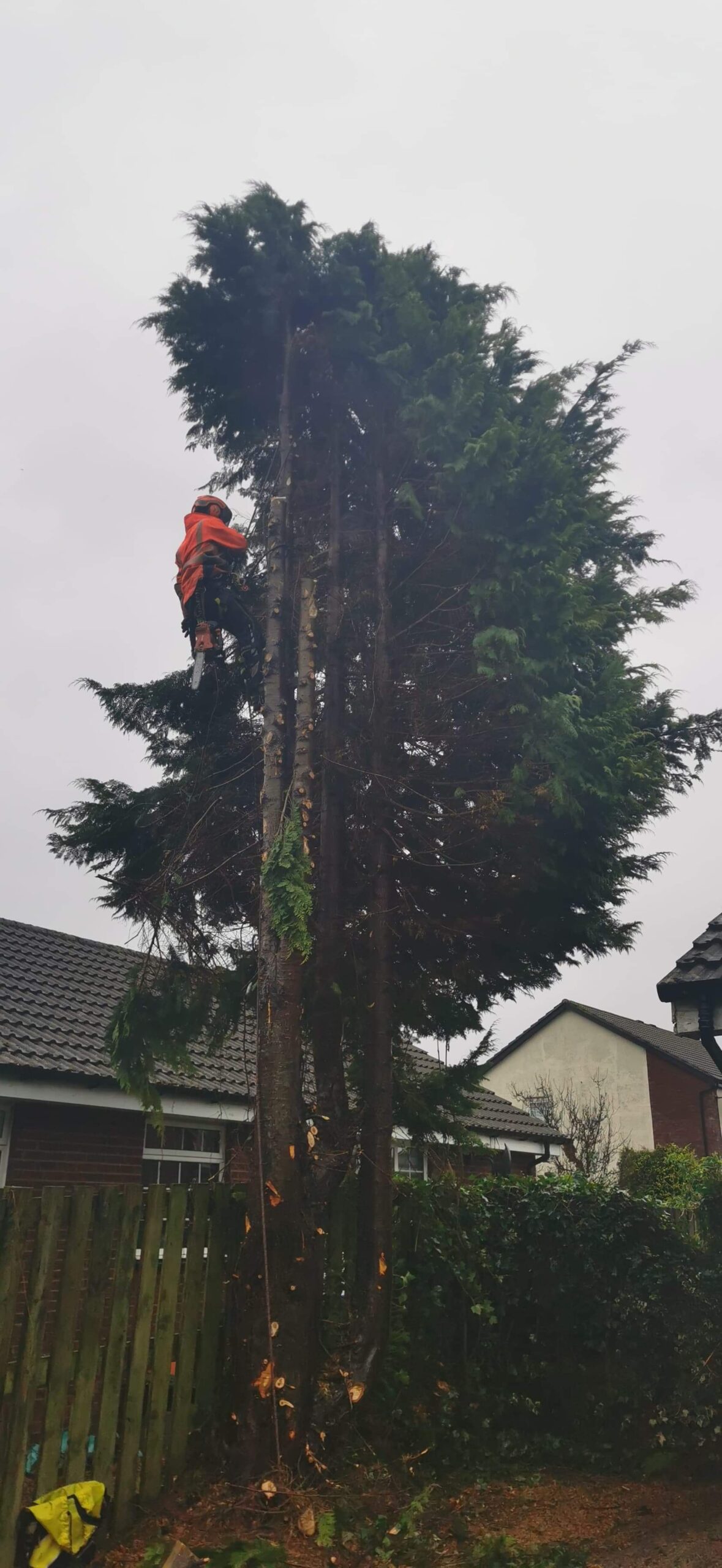
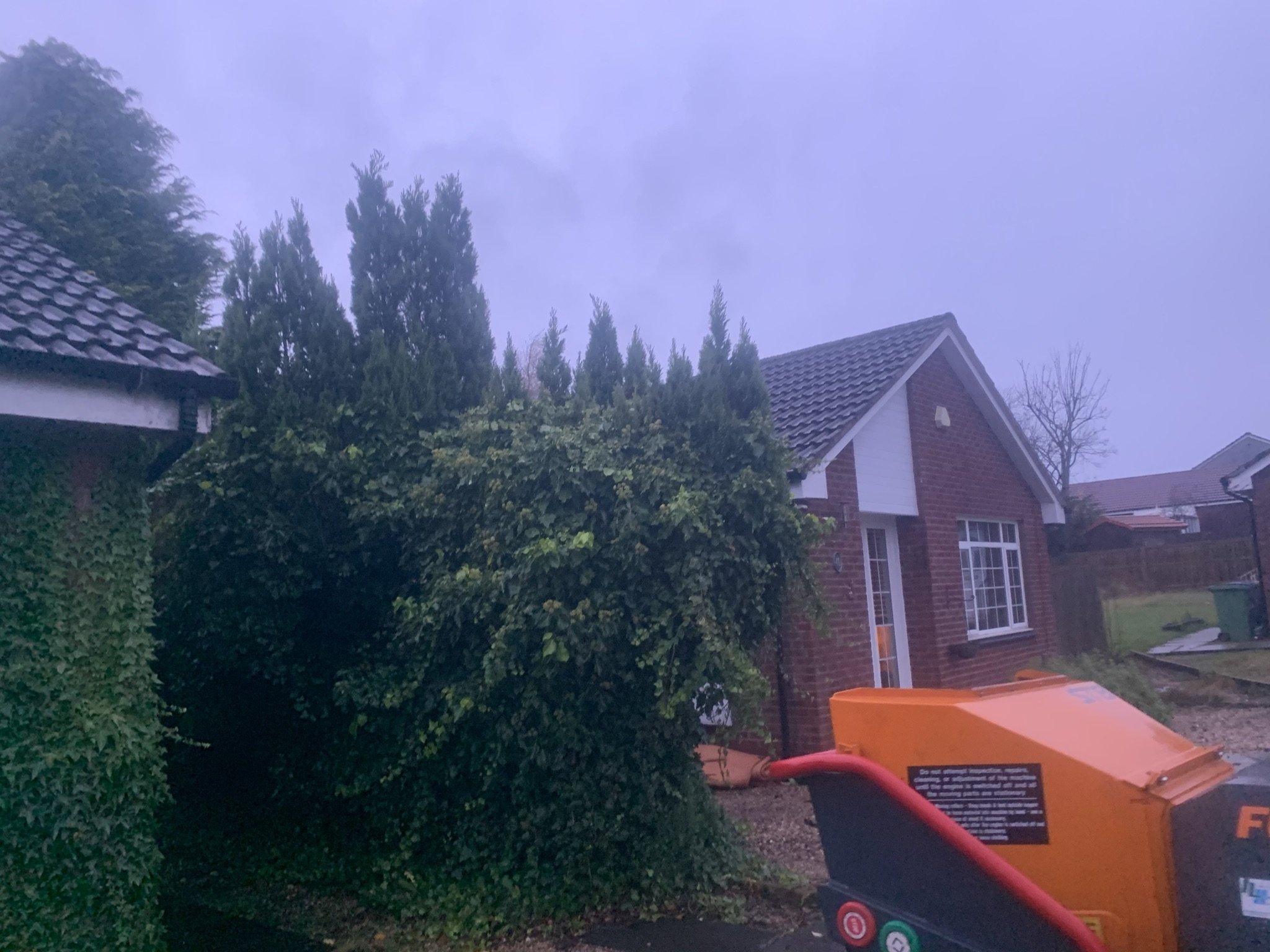
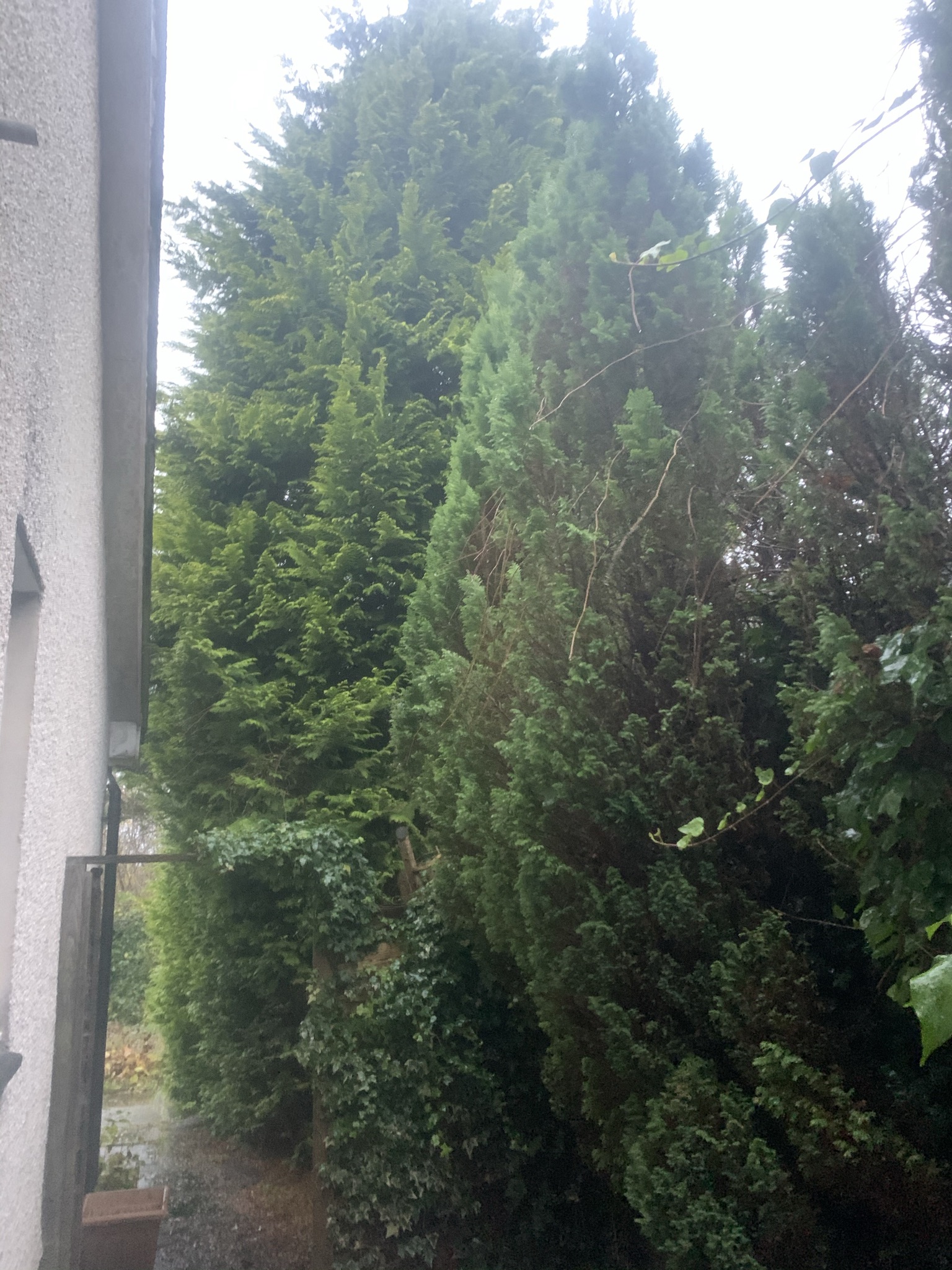
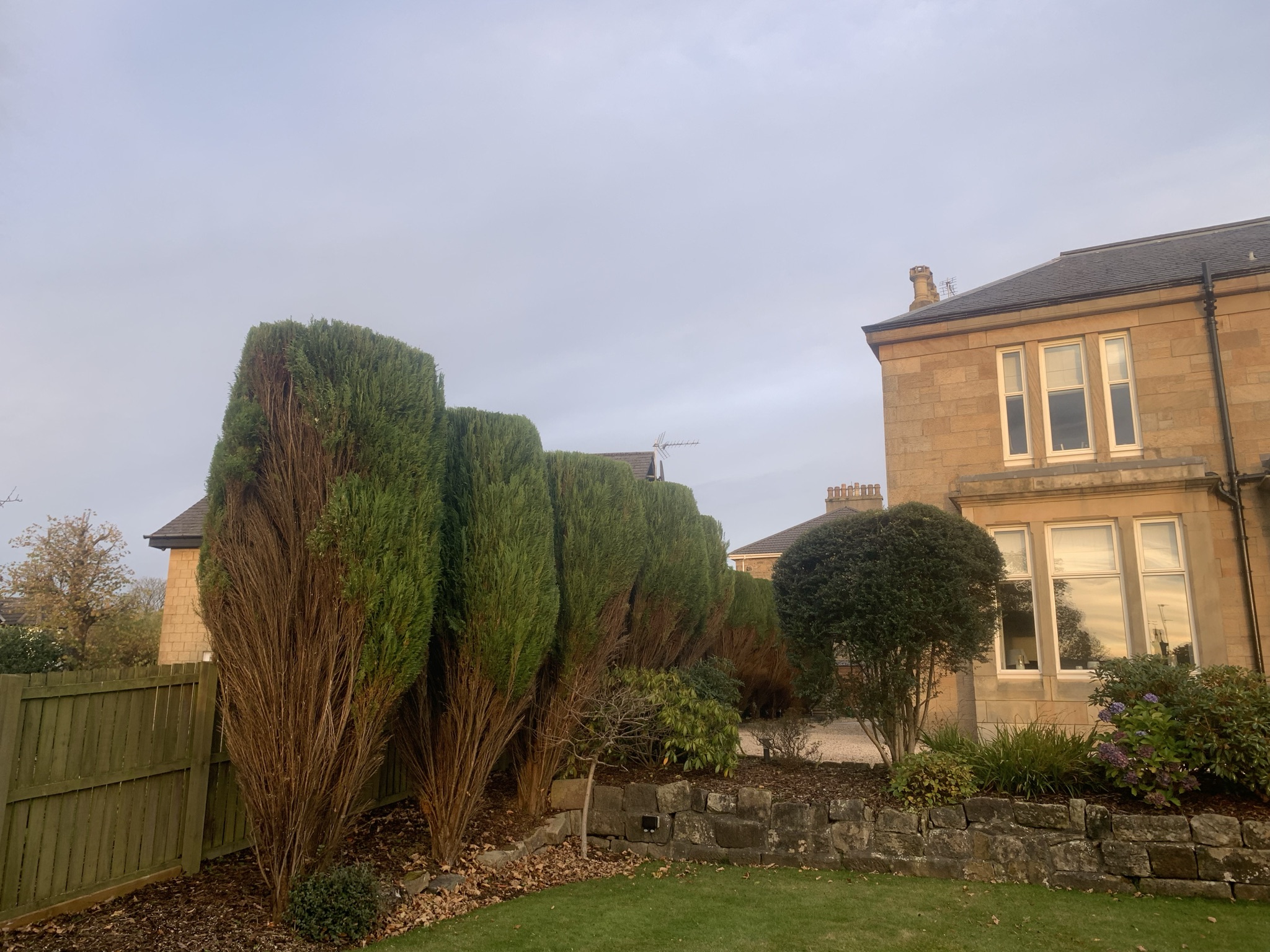
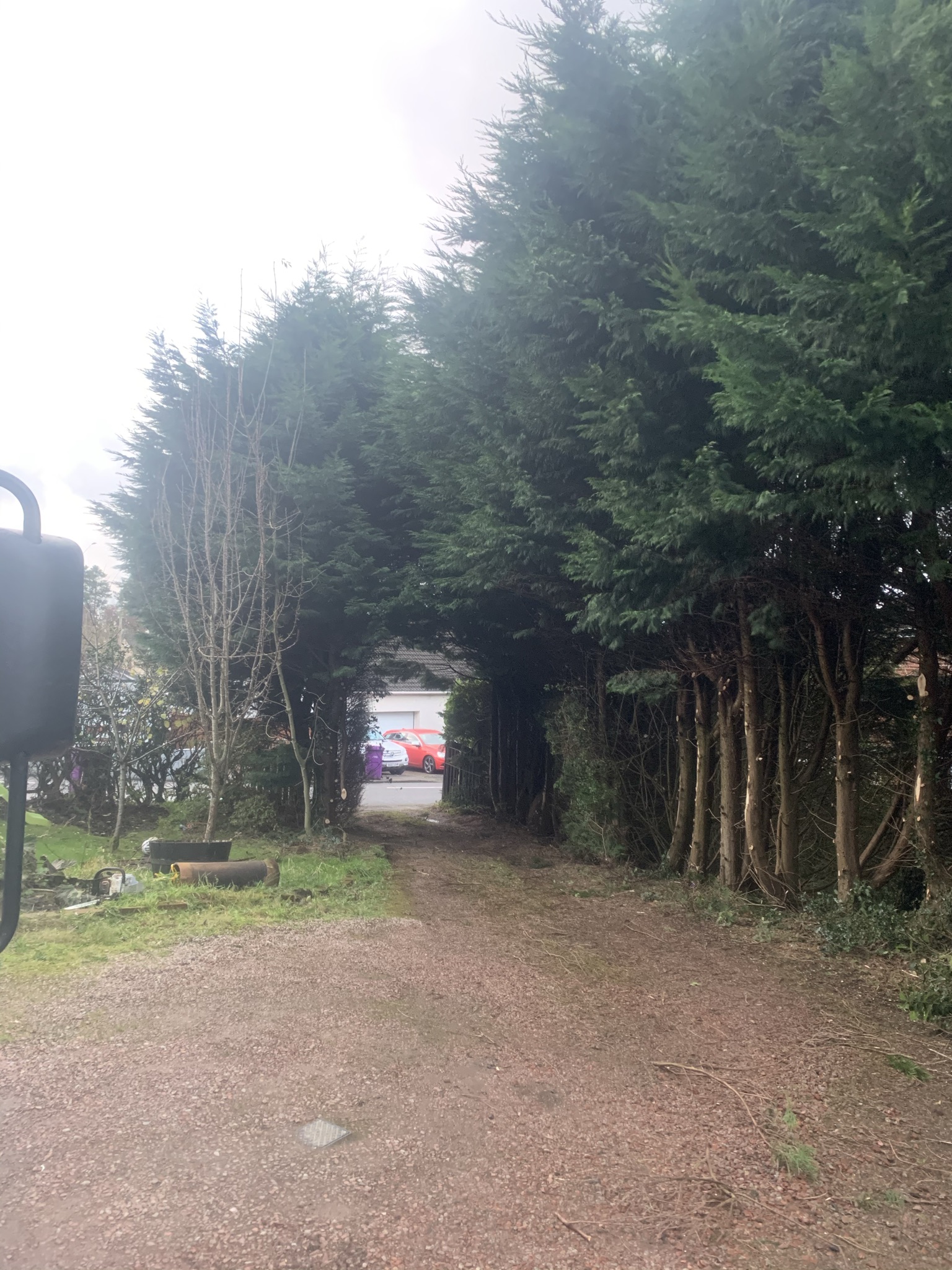
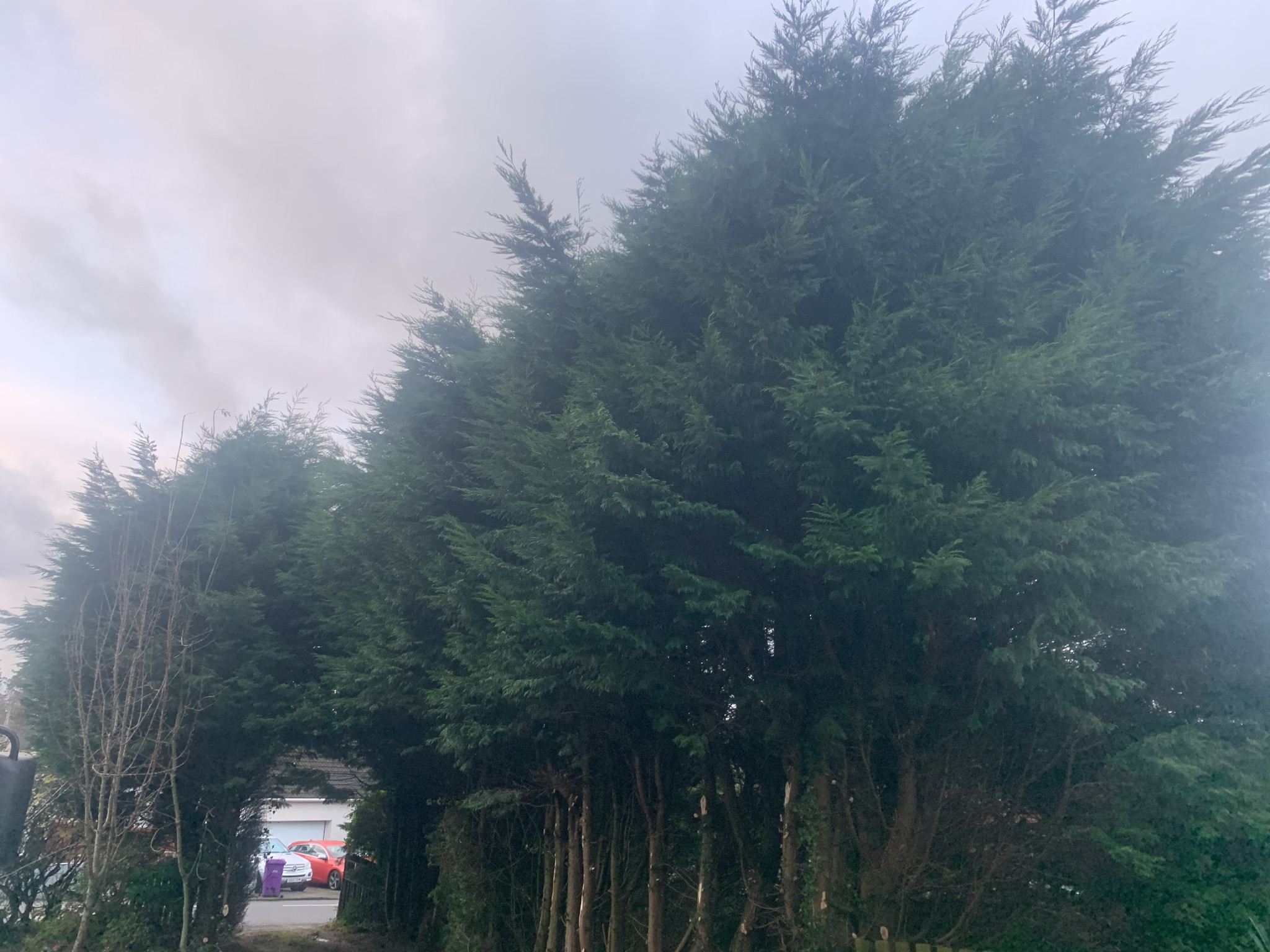
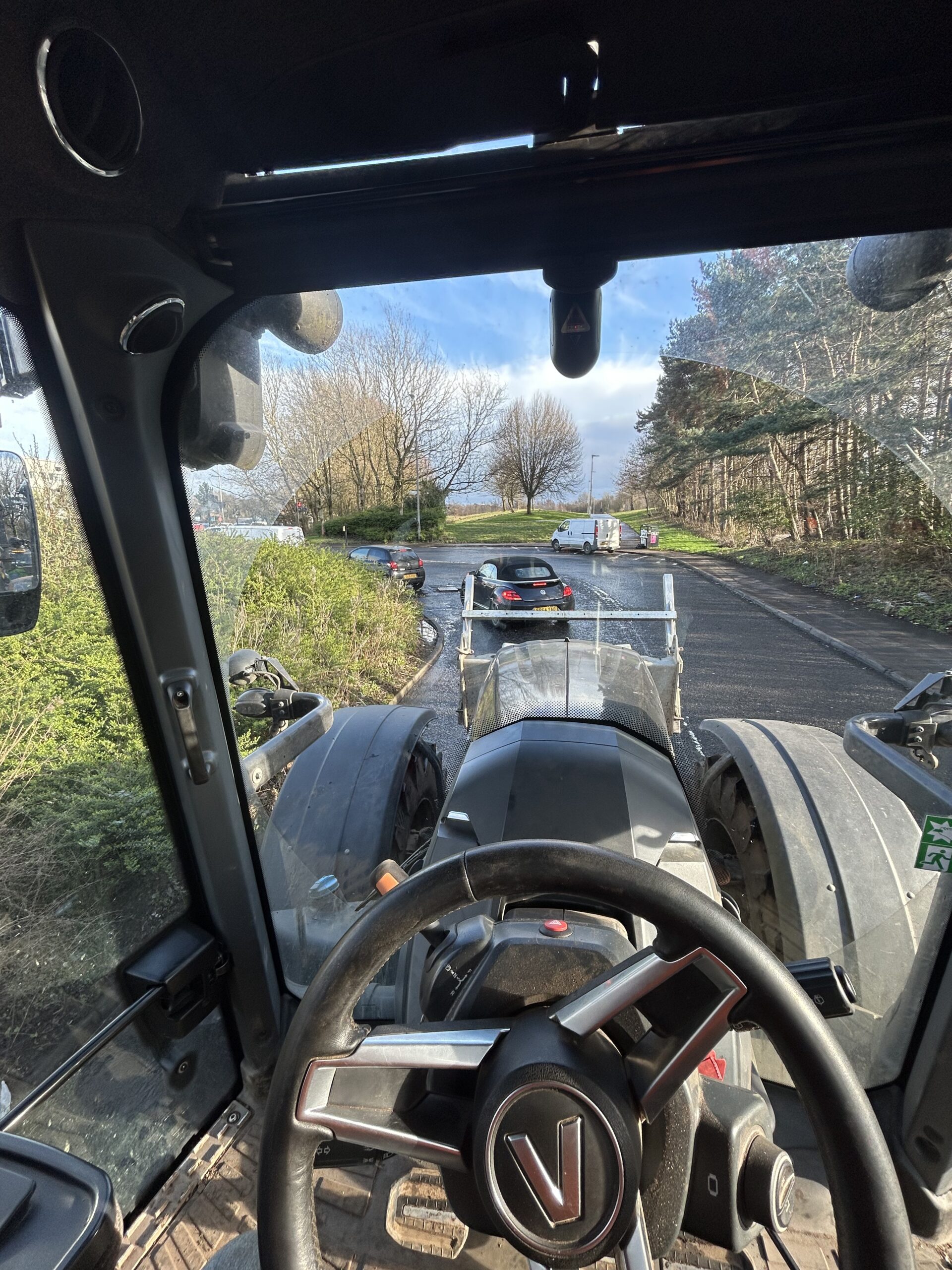
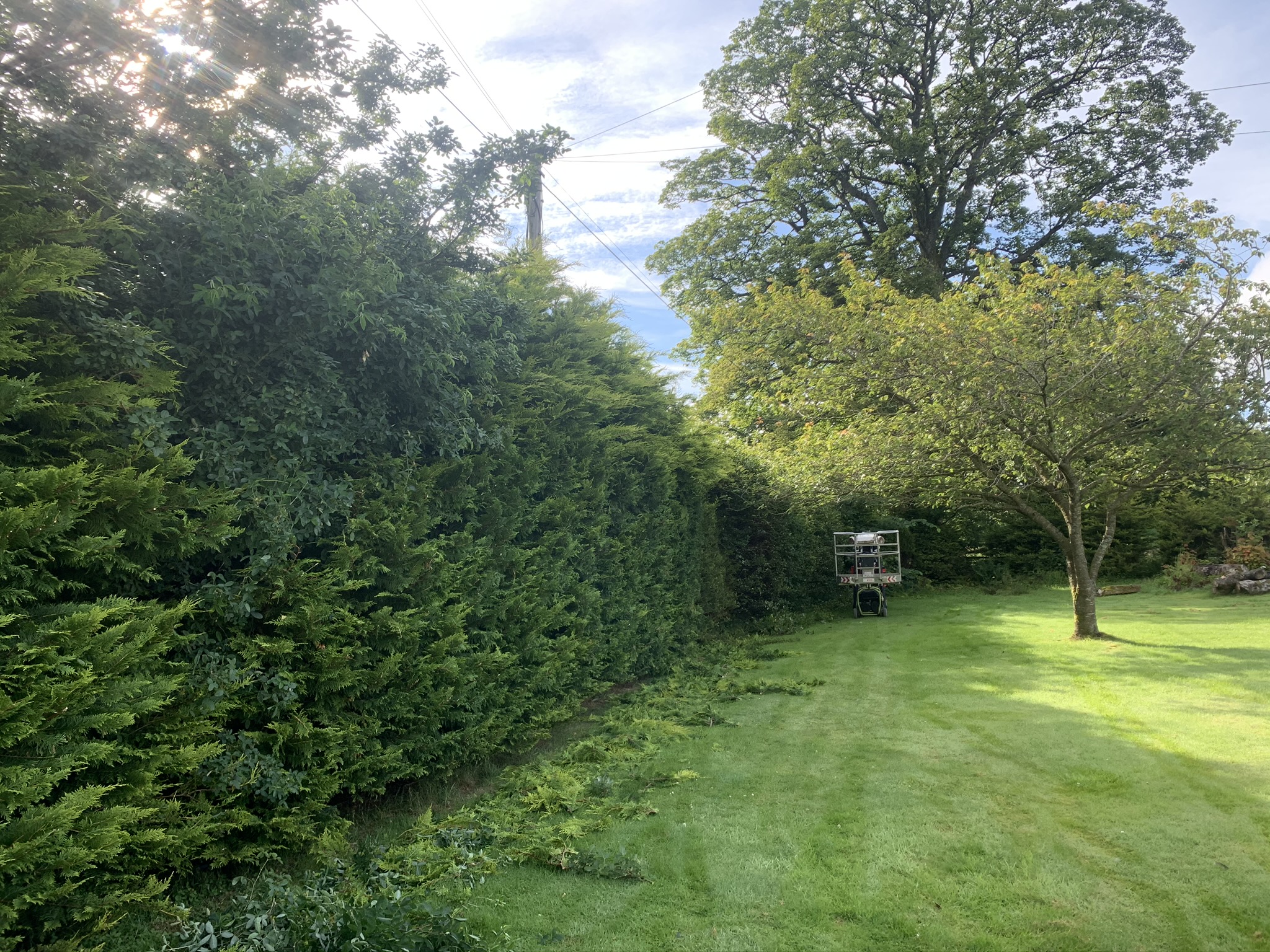
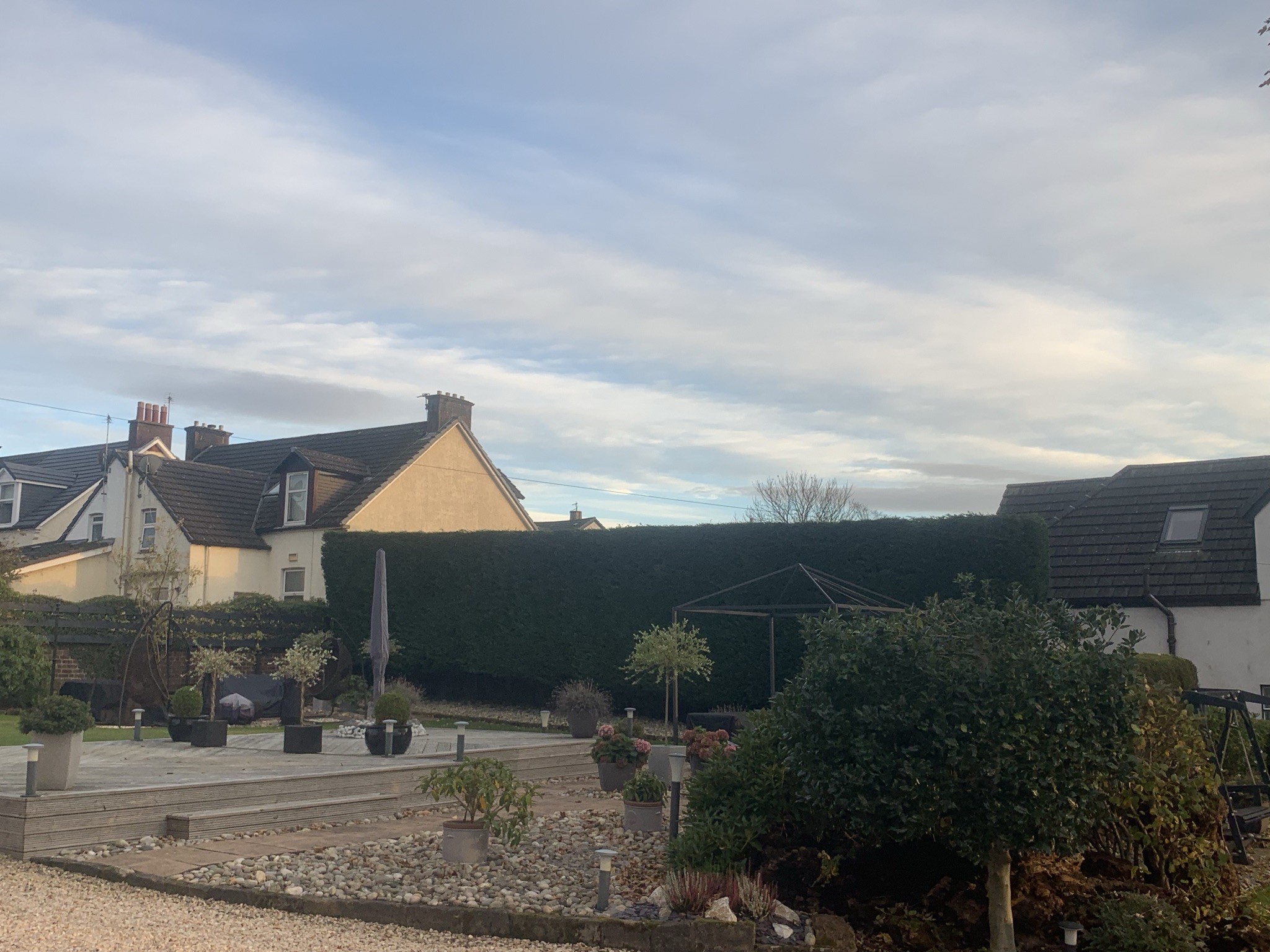
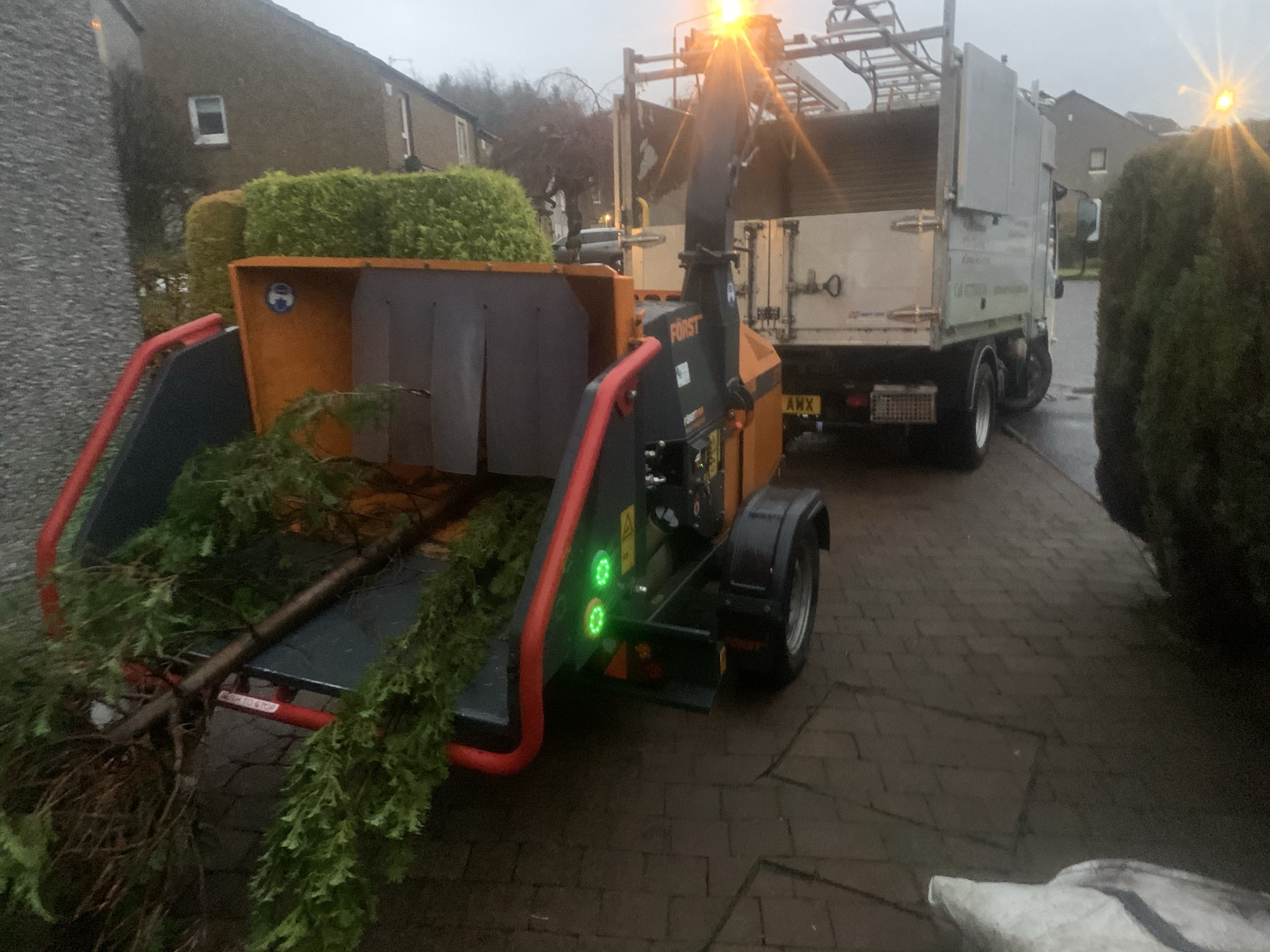
- Hedge work – a driveway lined with around 27 overgrown leylandii, cleared in a single day by a four-man crew using a quad bike winch and chipper
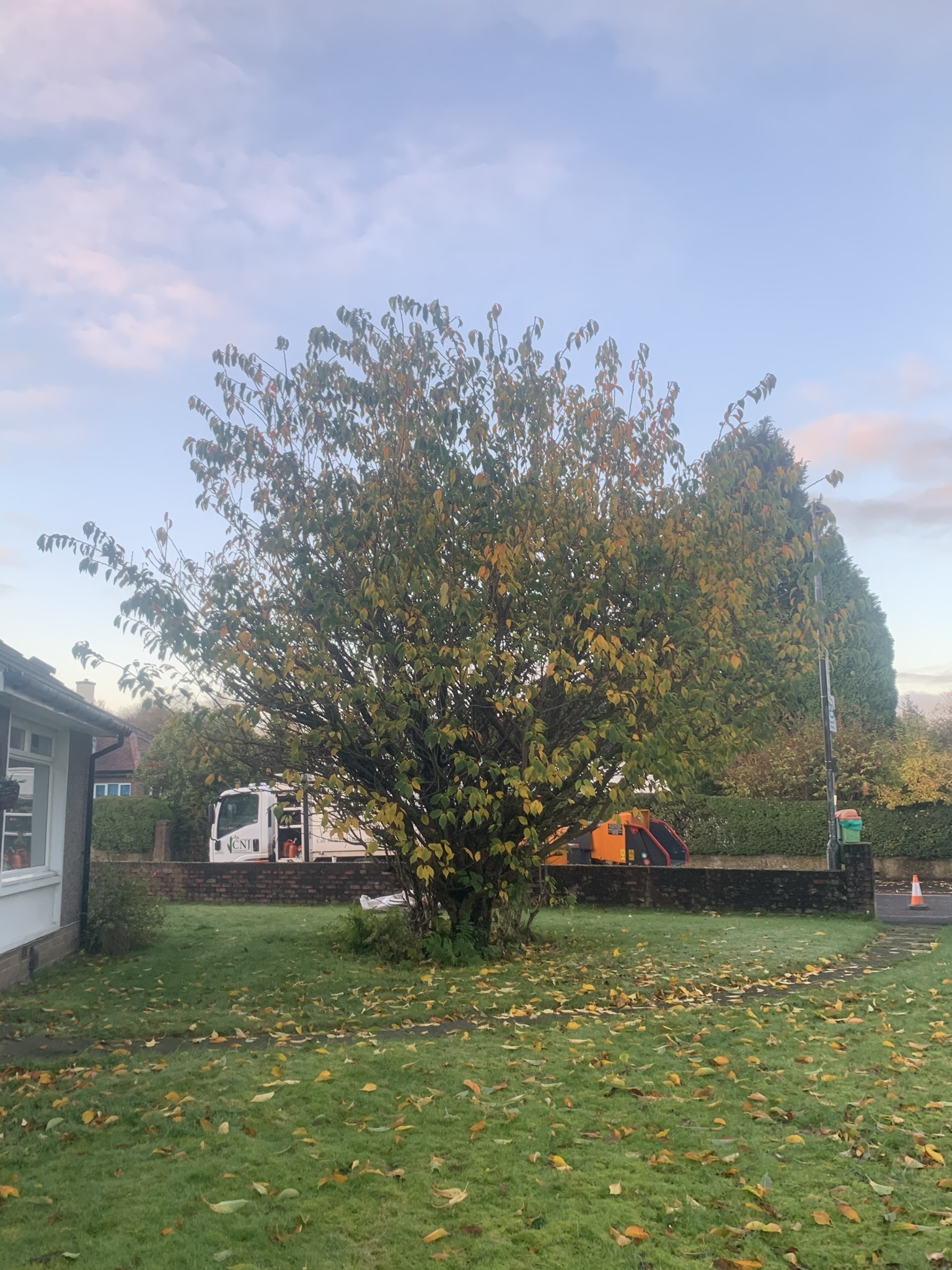
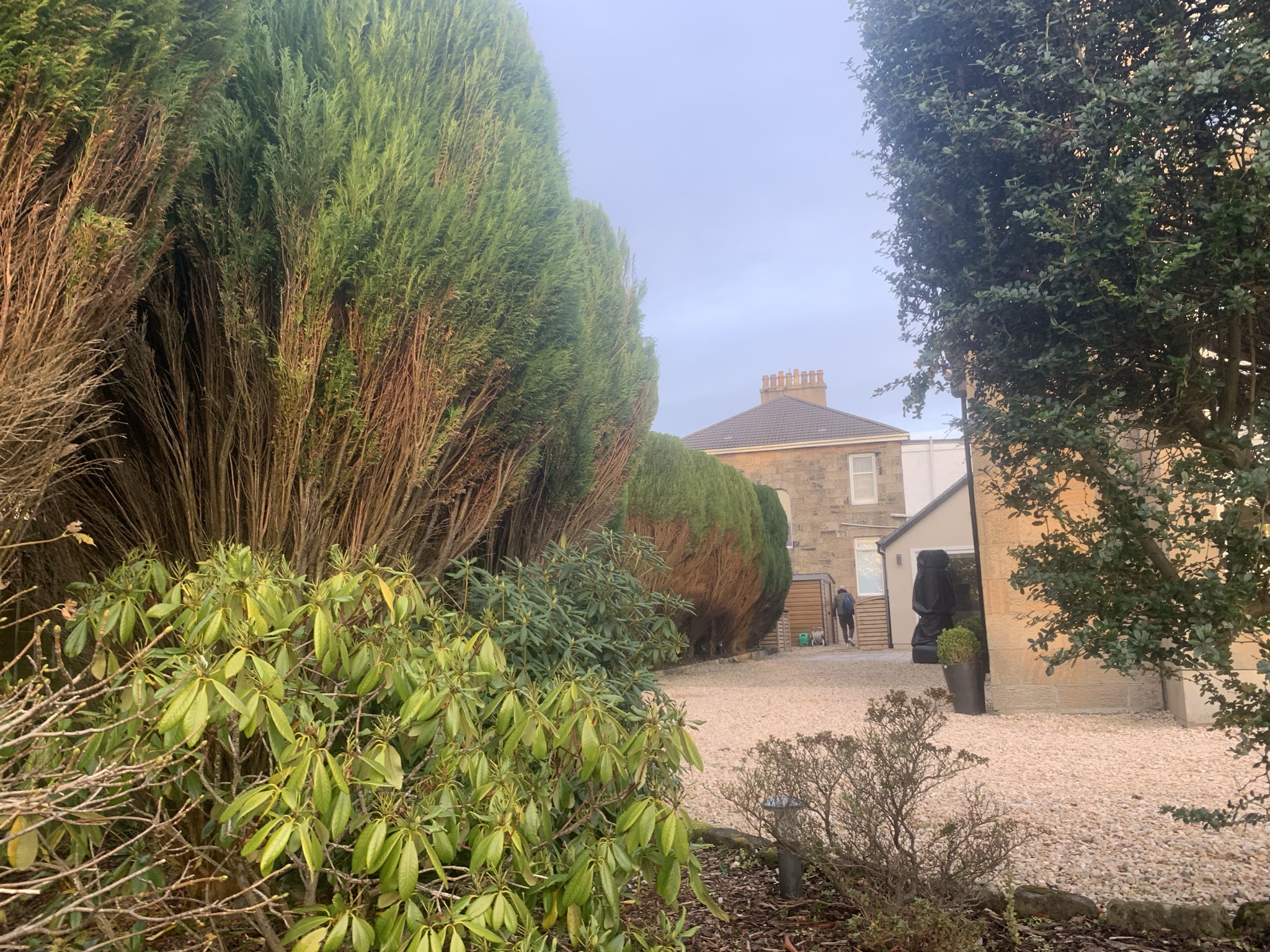
- Hedge work – autumn hedge trimming and multiple crown reductions carried out over a two-day garden visit
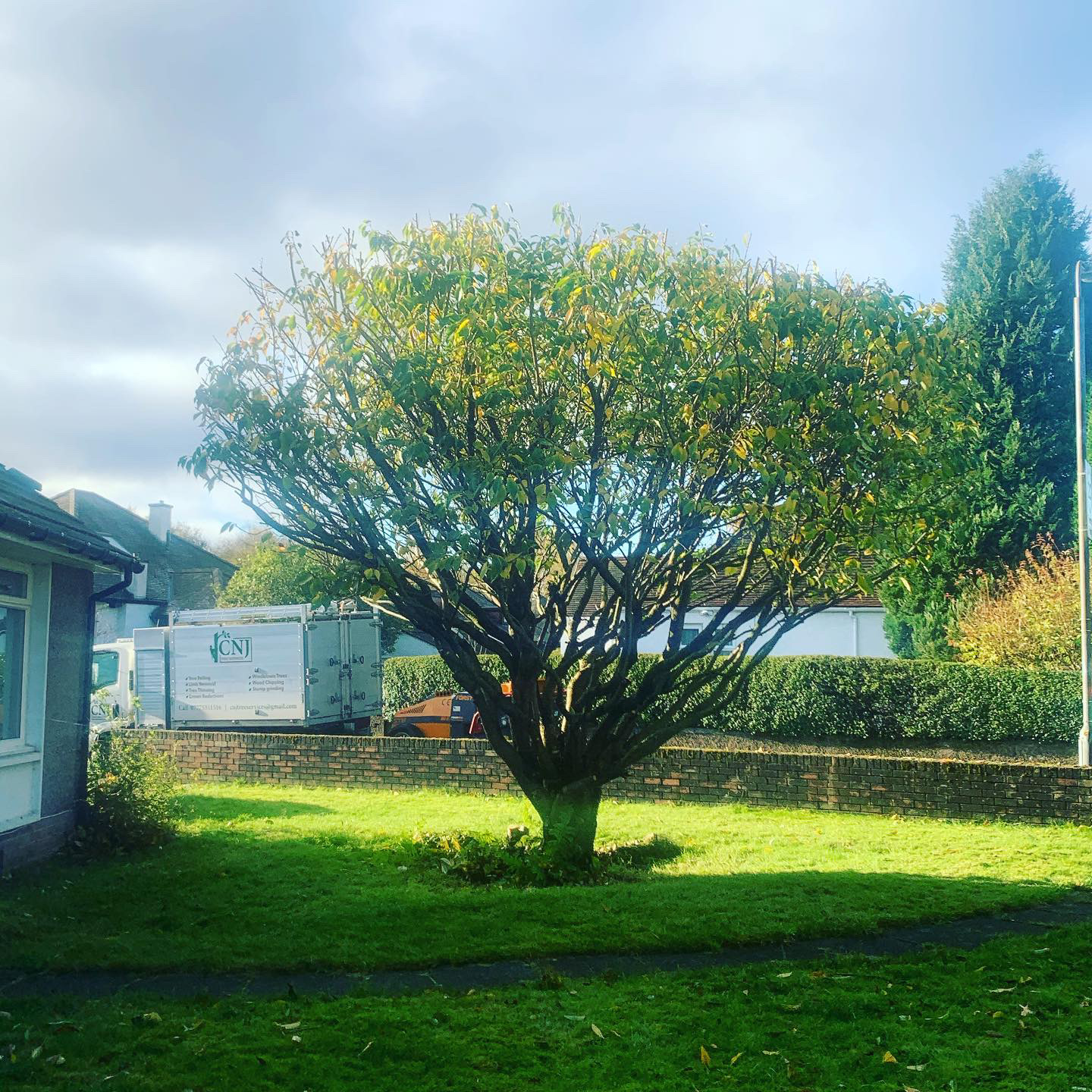
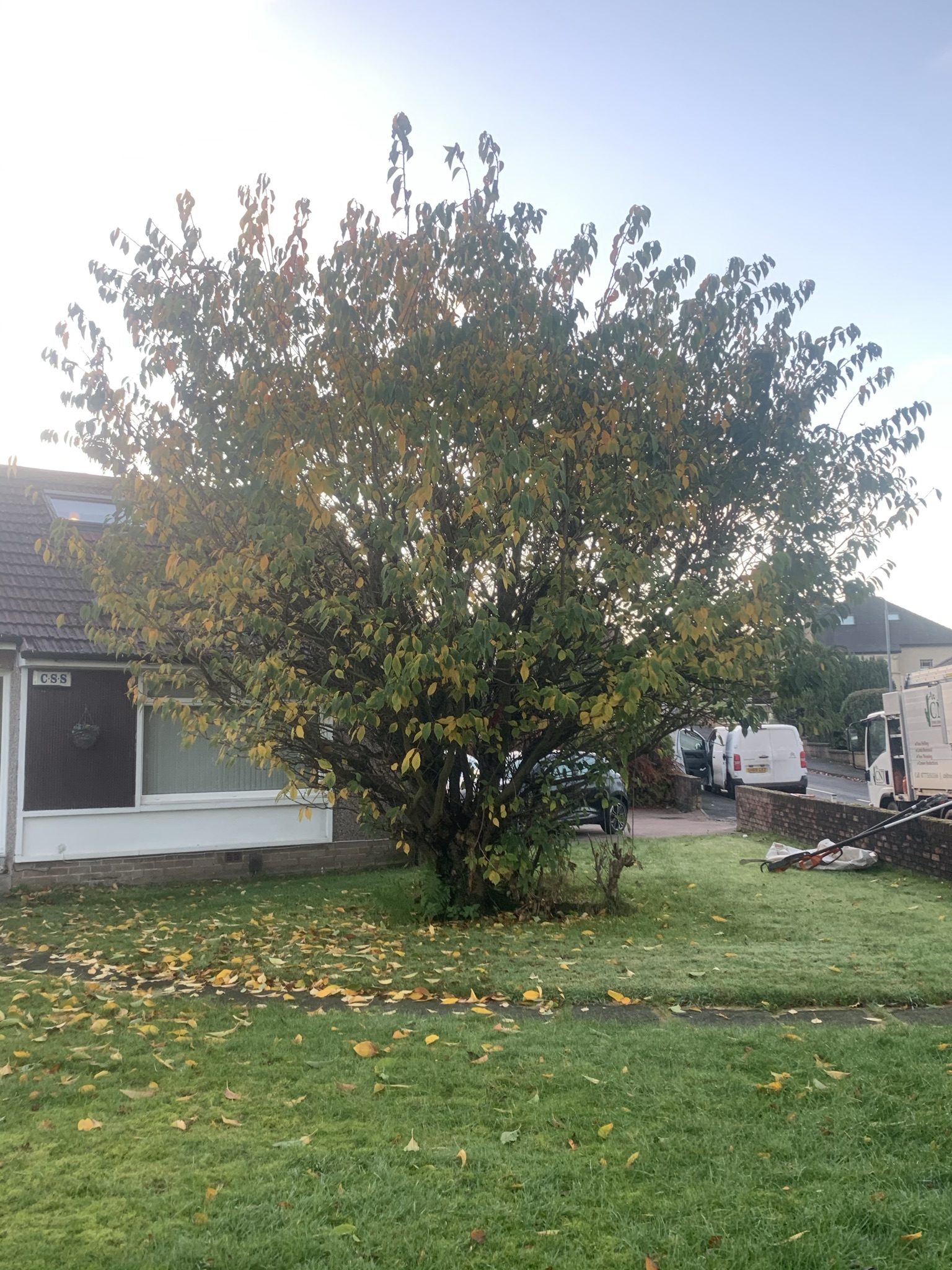
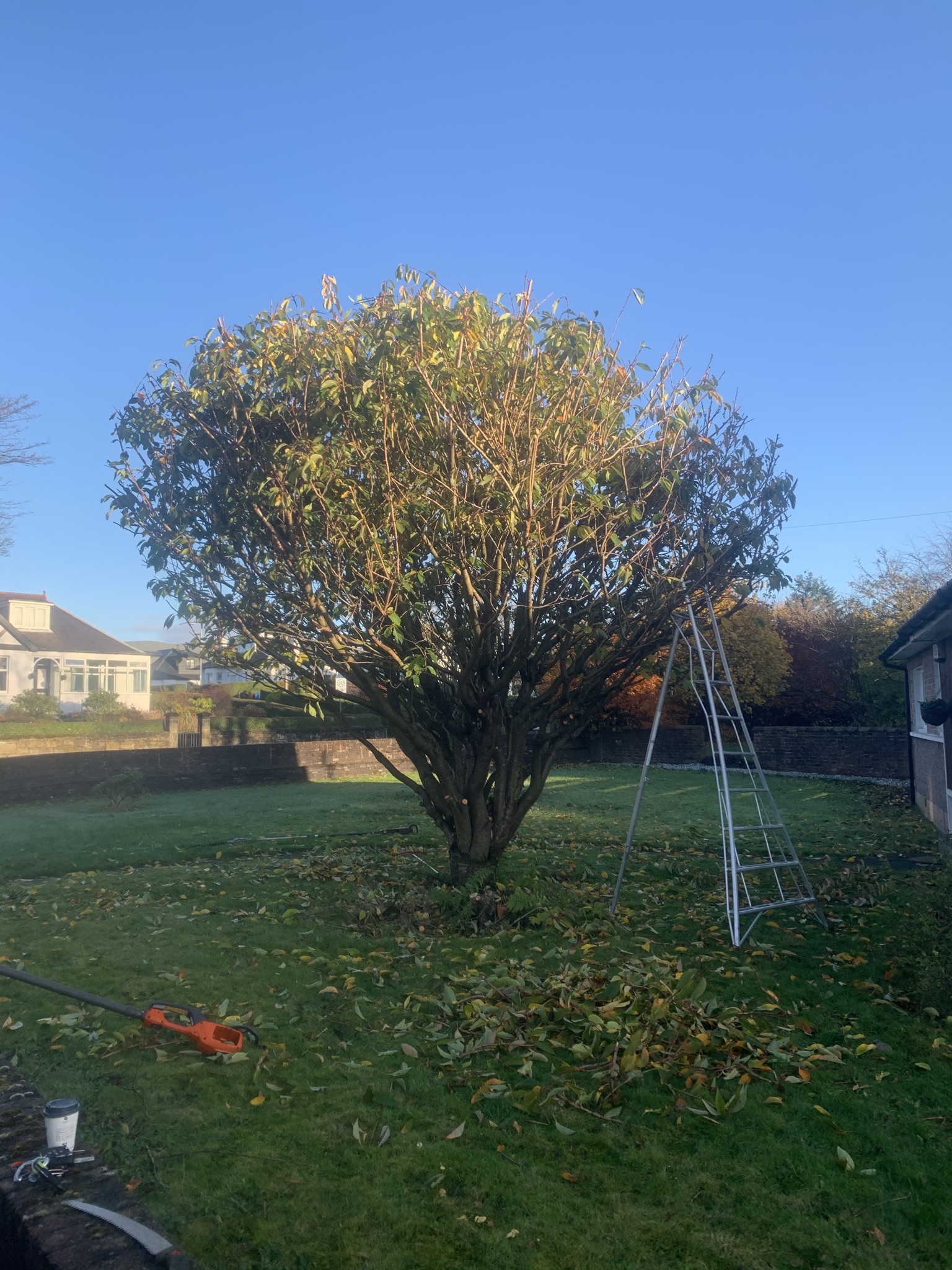
- Garden crown work – a garden cherry tree crown-reduced and deadwooded using hedge cutters, loppers, in-tree climbing and ladder access, to bring back light into a living room
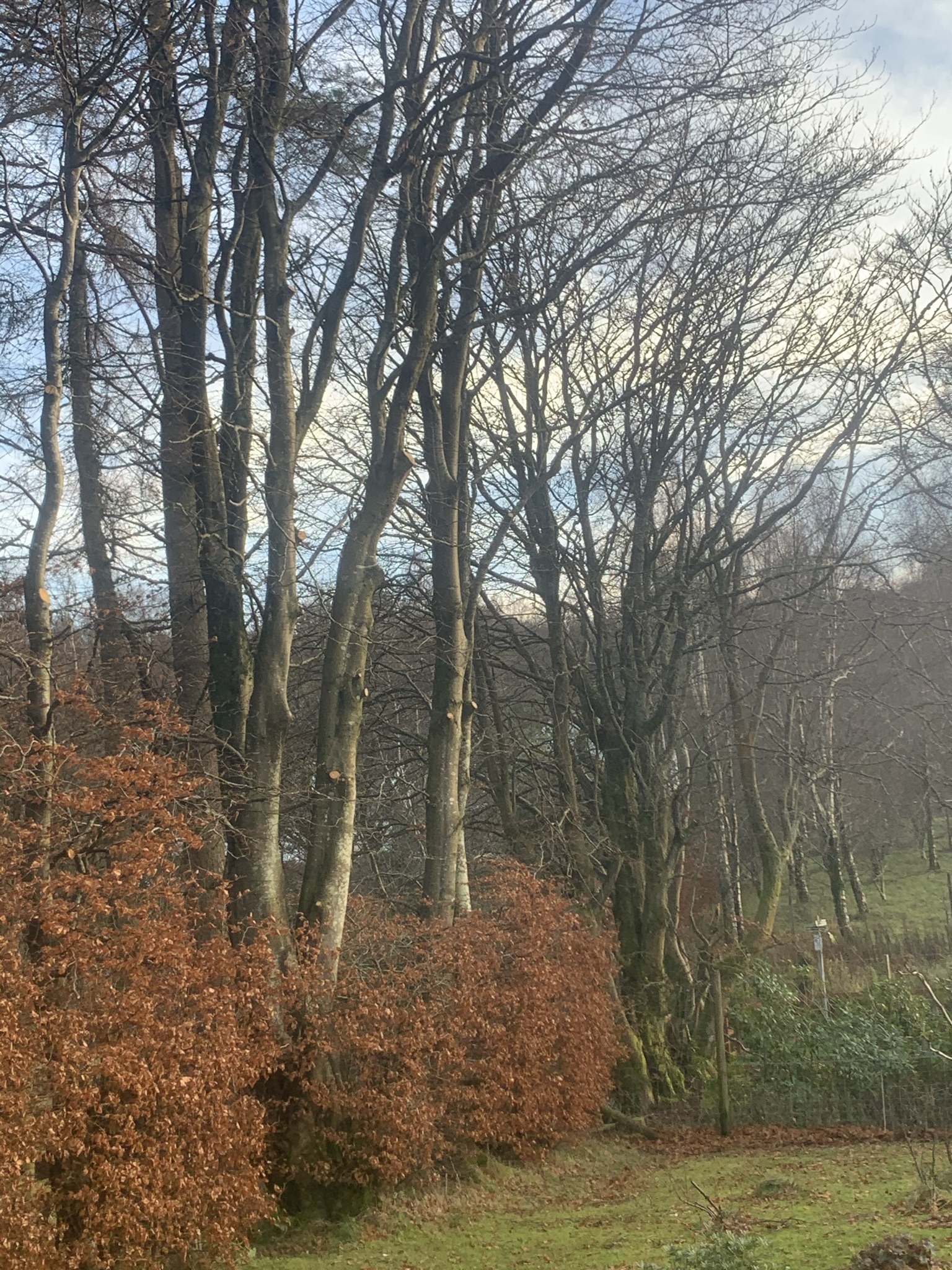
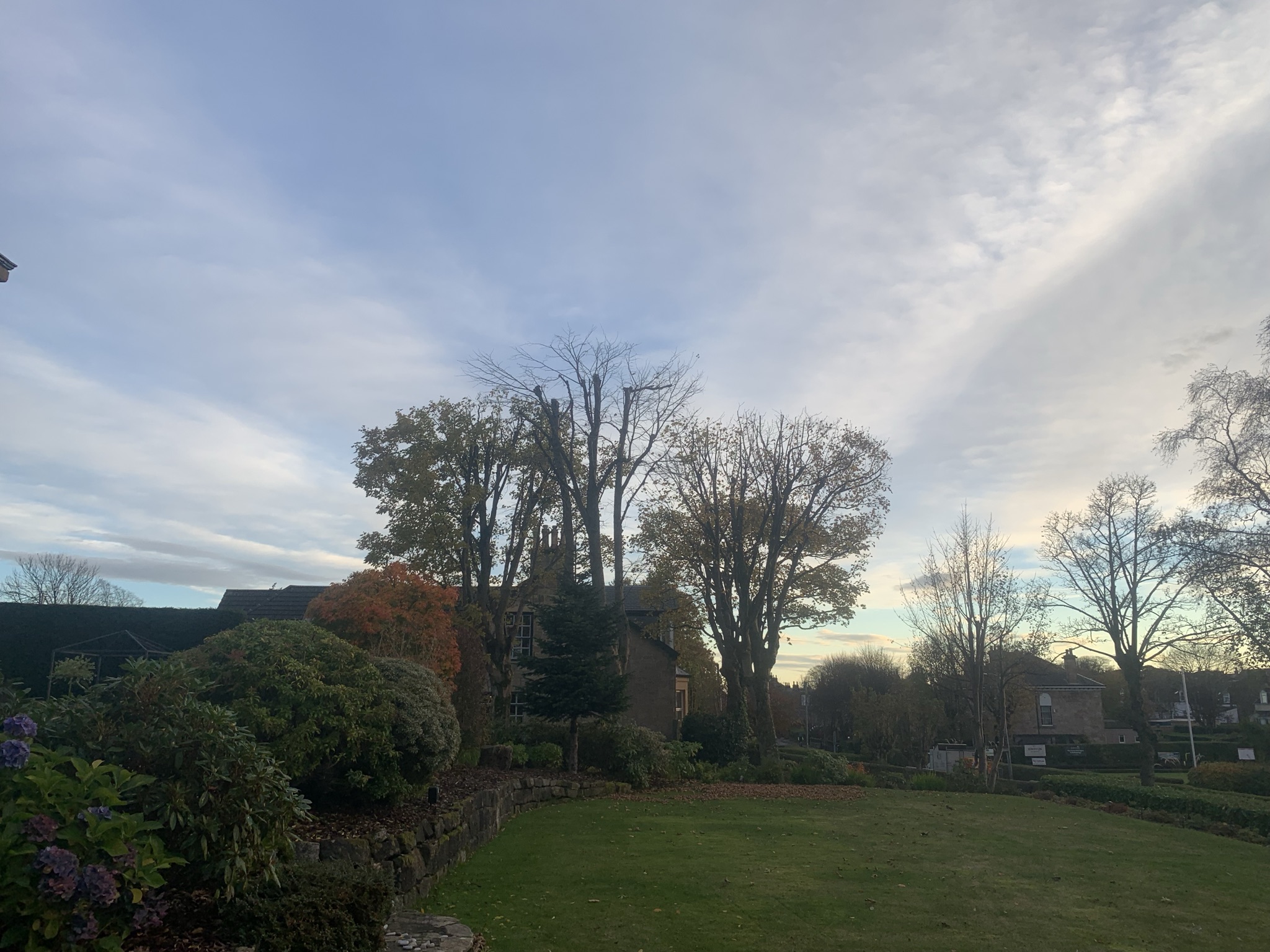
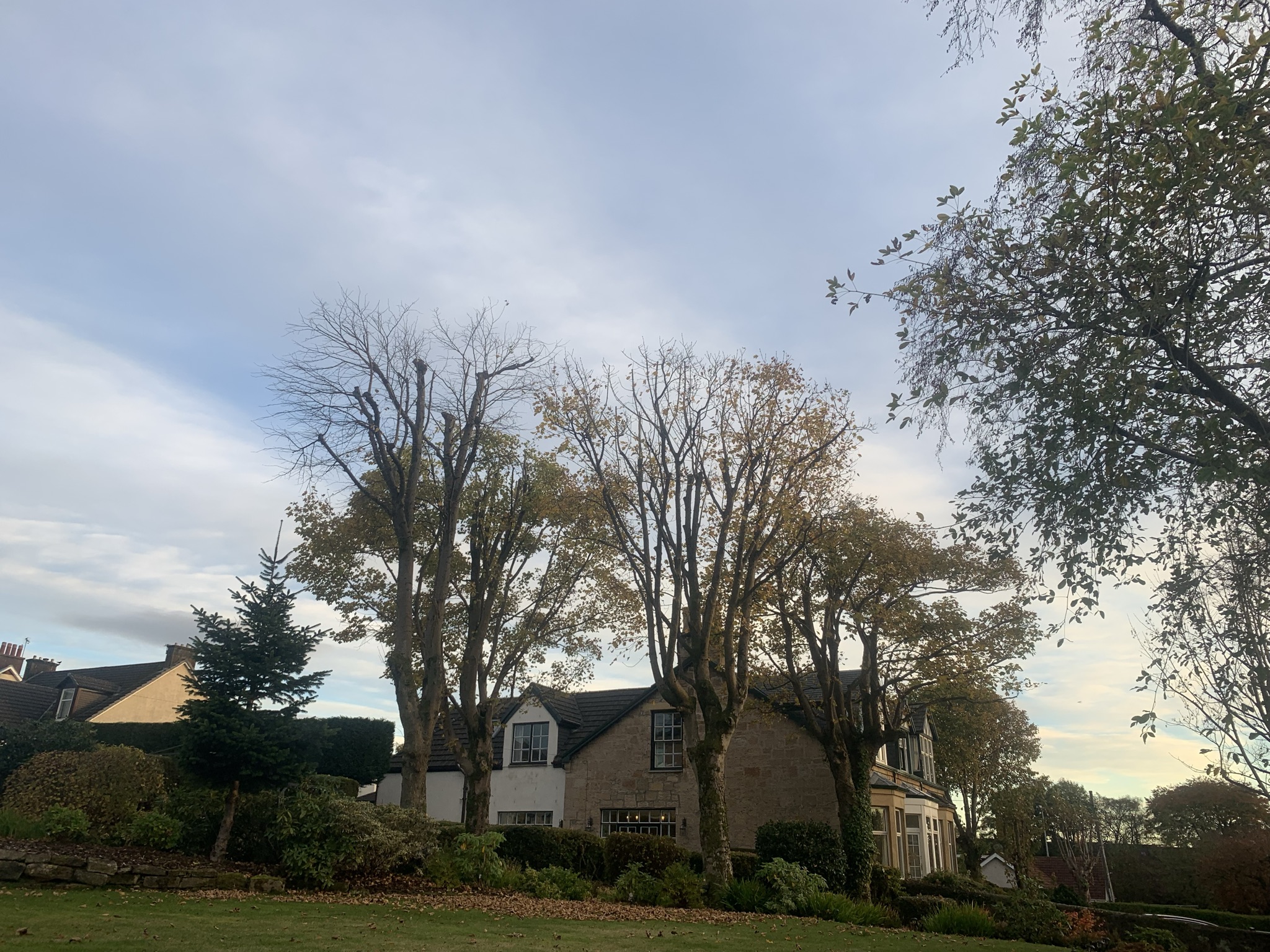
- Garden crown work – beech trees crown-lifted along a woodland boundary so more light reached an orchard planted beneath, with the lift height agreed on-site using a marked photograph
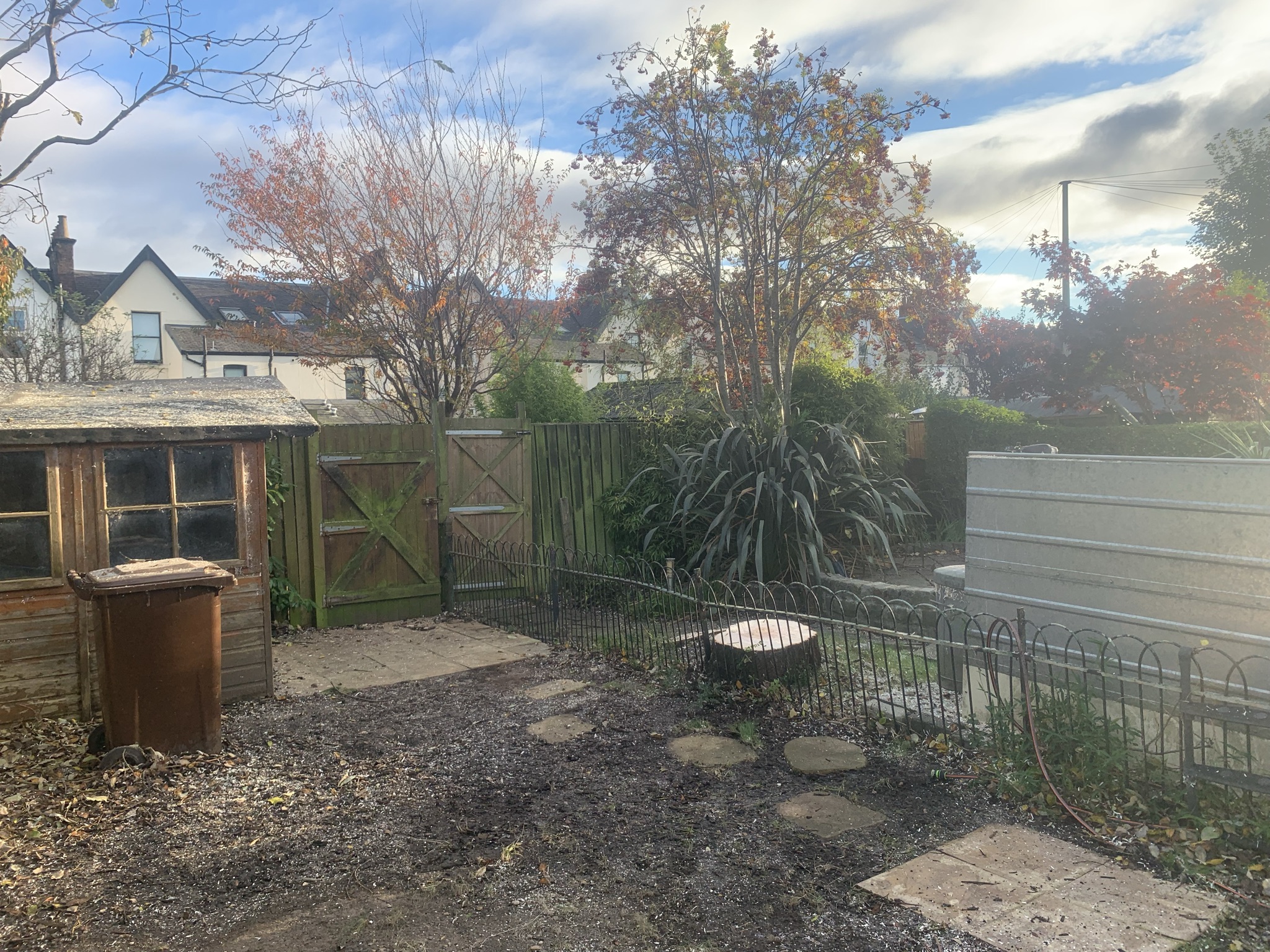
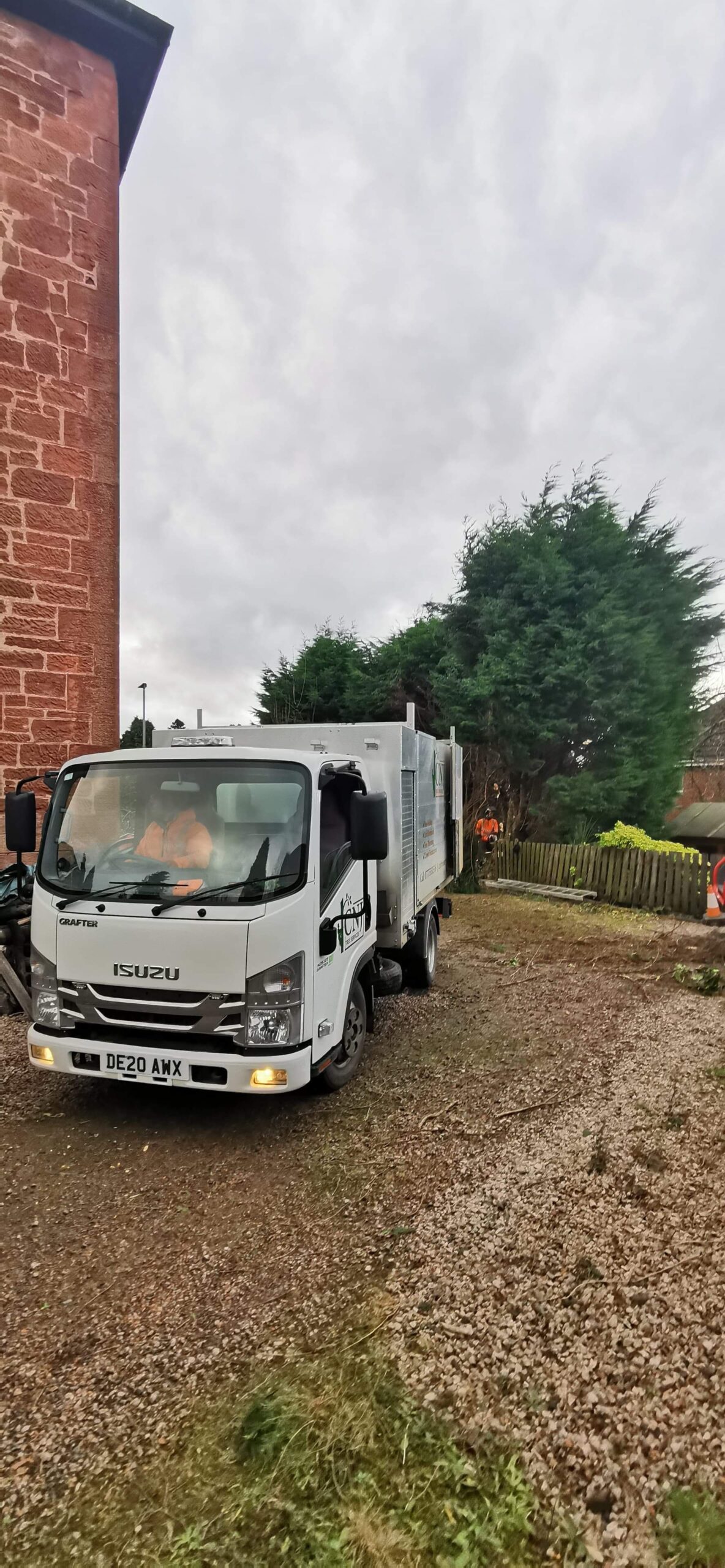
- Site clearance – a row of large leylandii and shrubs along a fence line, cleared ahead of groundworks, including sectional dismantling of a leylandii wedged directly between two houses
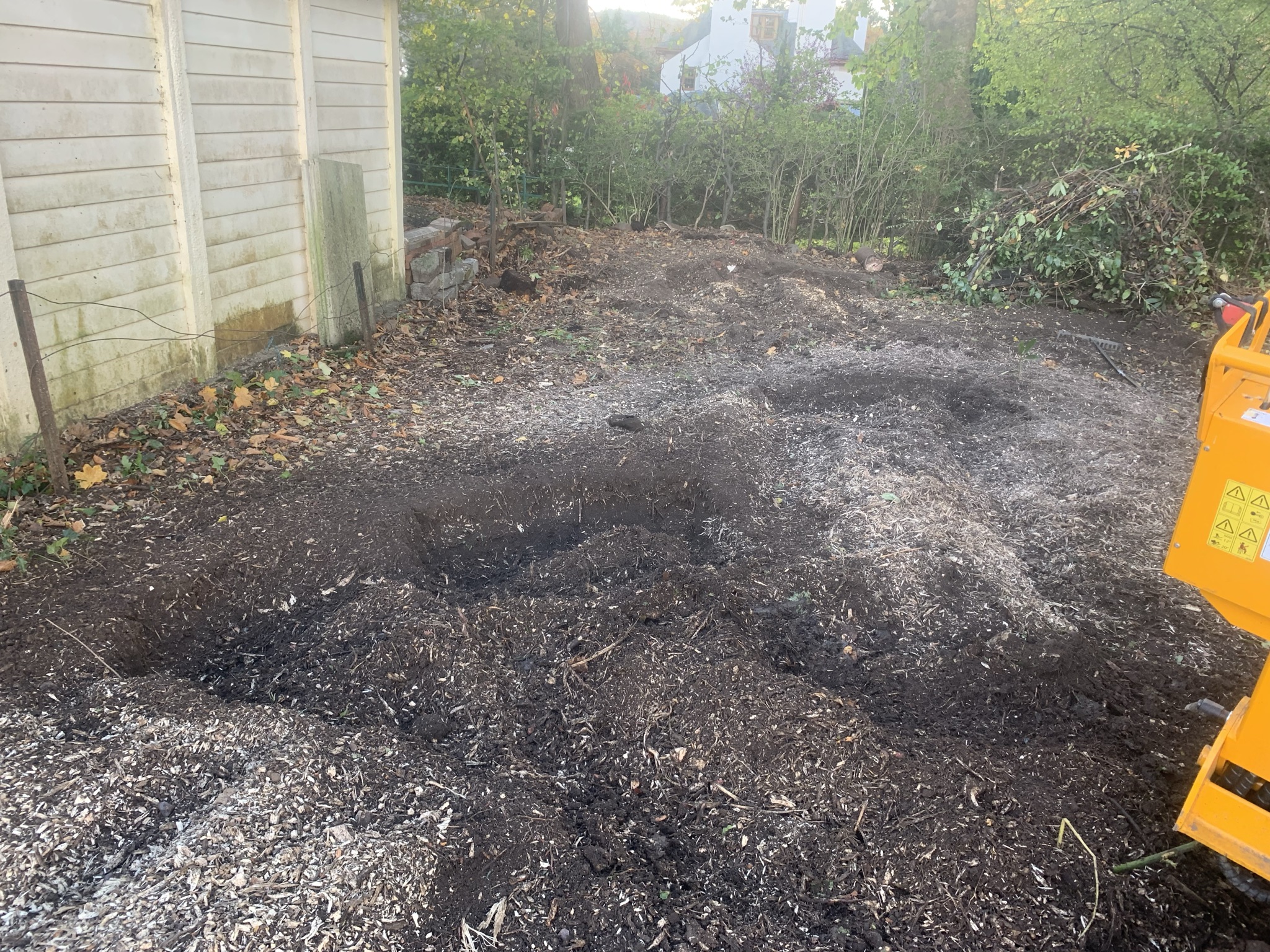
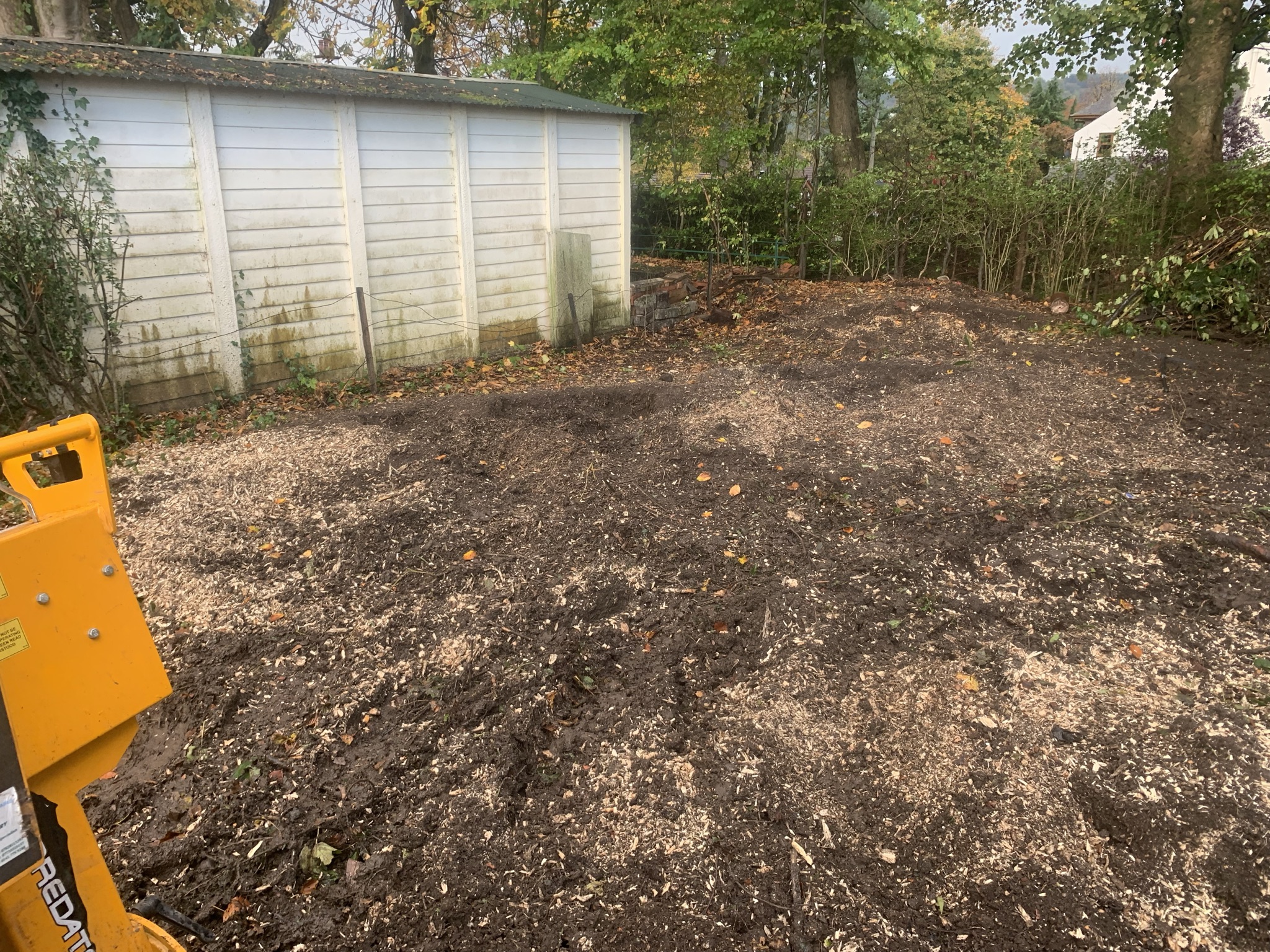
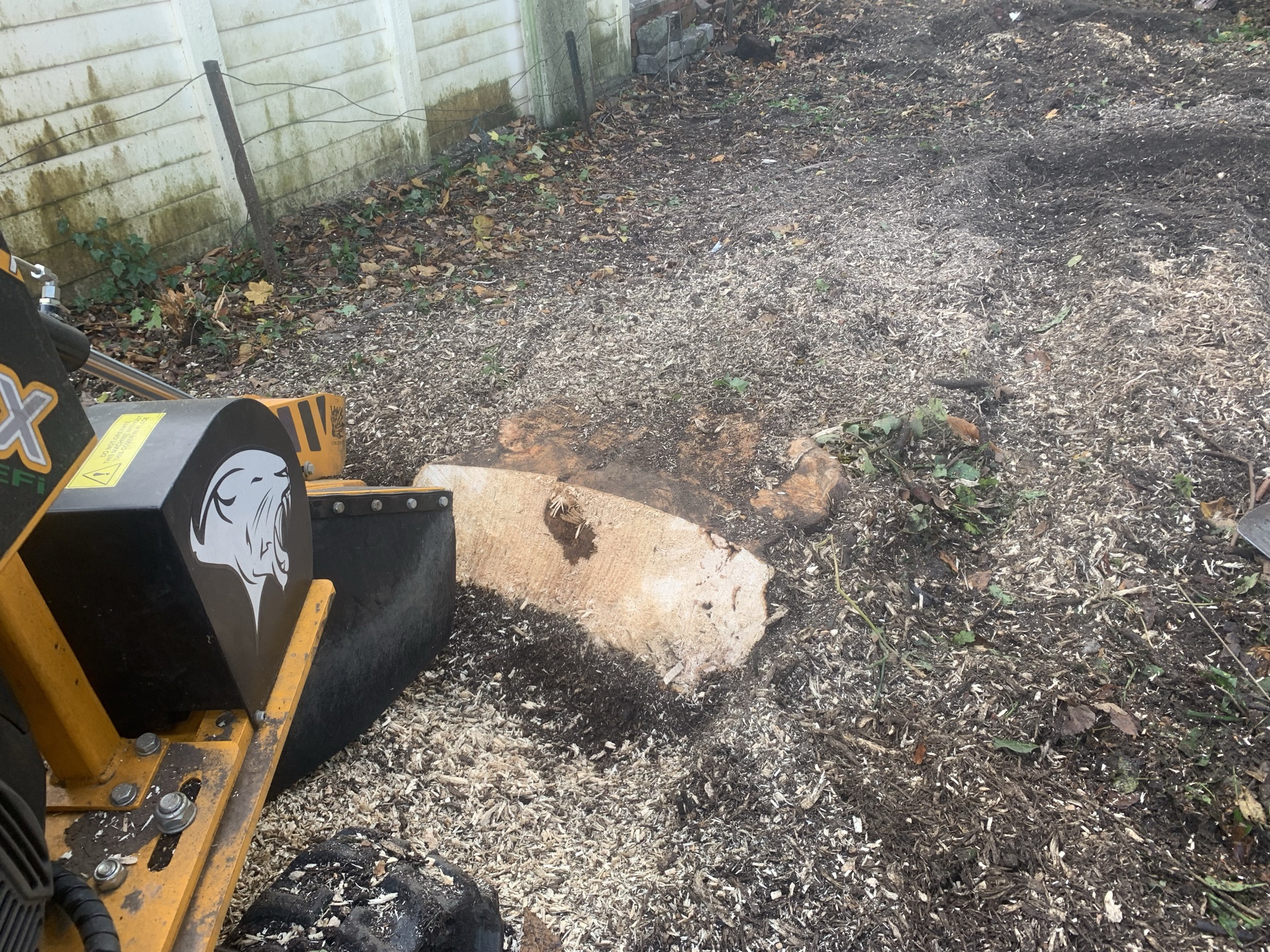
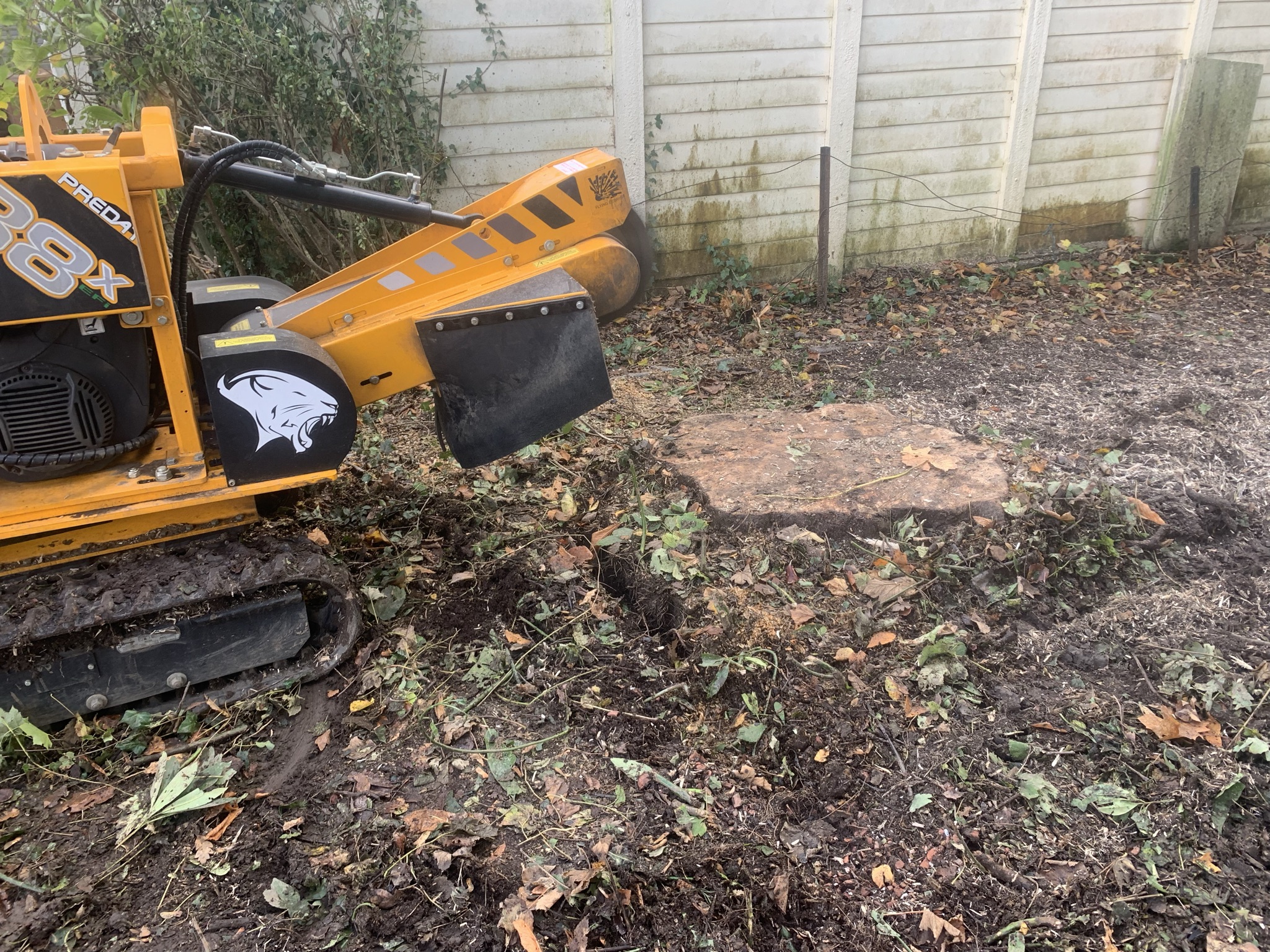
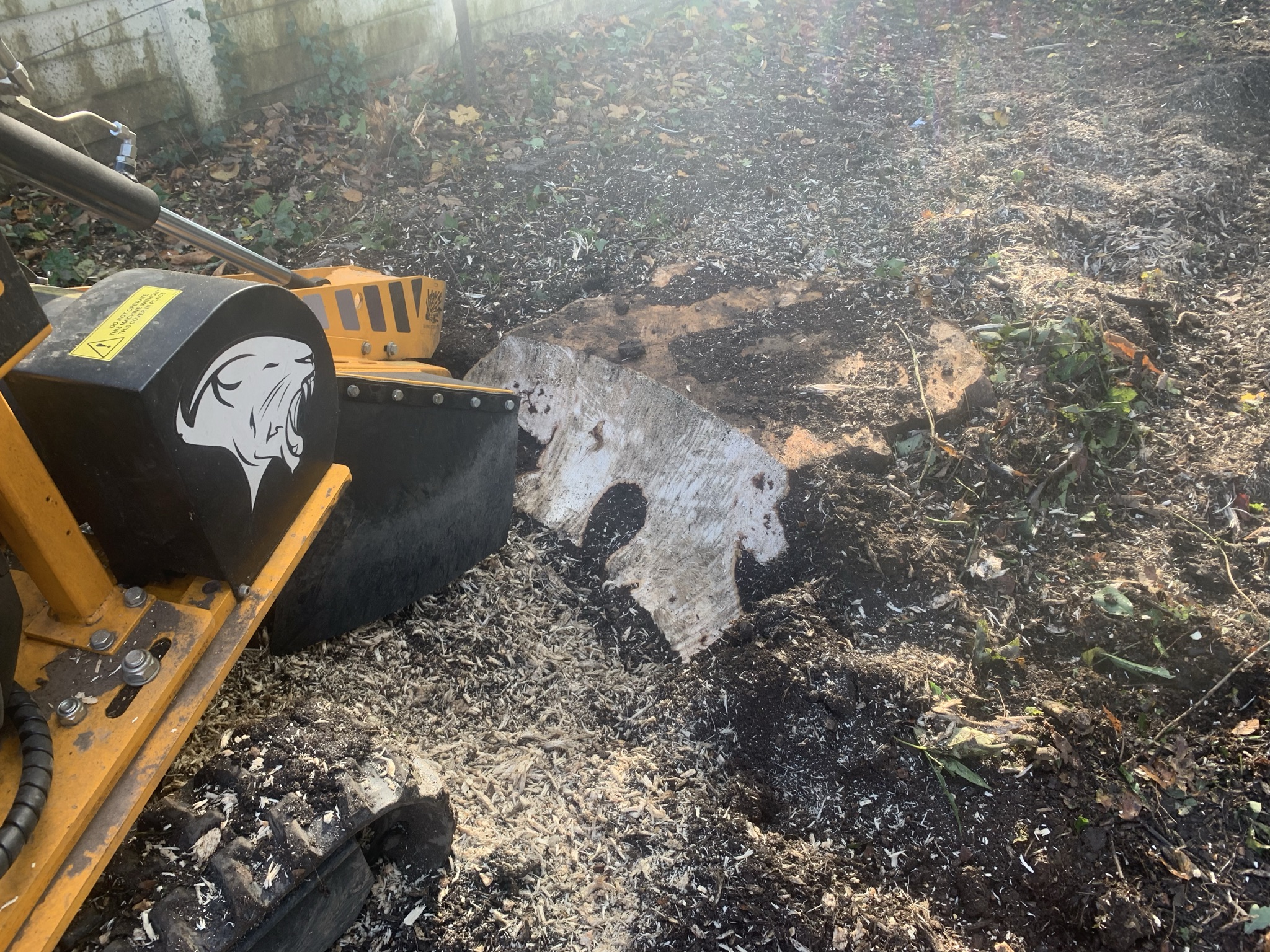
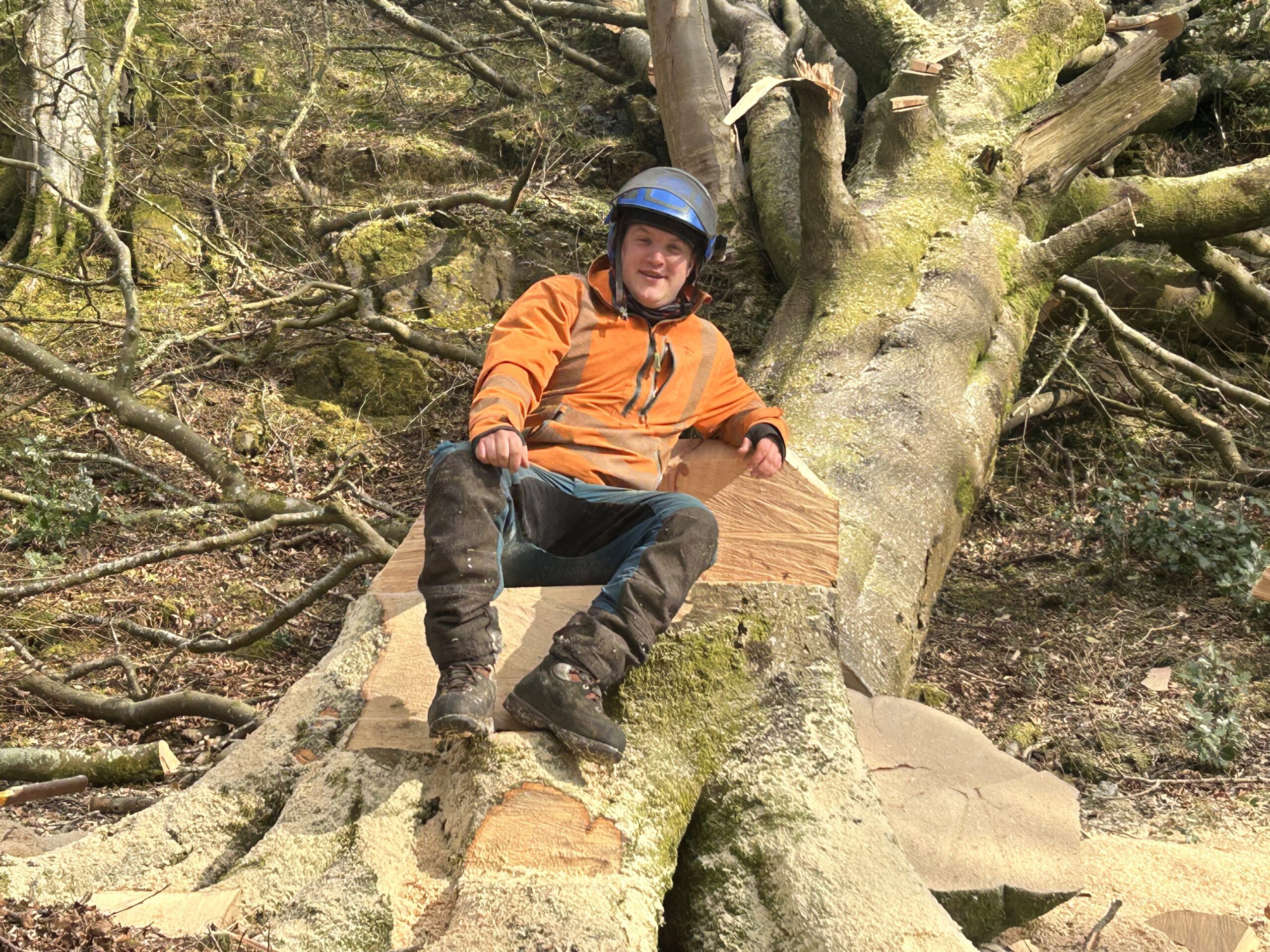
- Stump grinding – a large oak stump removed with our tracked Predator stump grinder
Not Included / Costed Separately
- Drone photography of large or elevated sites isn’t standard on domestic jobs – it’s arranged for bigger commercial sites on request and quoted separately
- Exact addresses and client names aren’t published alongside any job for privacy reasons – locations in the portfolio are described only by area or site type
- Reinstatement work such as turf repair, re-seeding or driveway resurfacing after a stump grind or large removal isn’t shown in the same photos – it’s a separate finishing step, priced only if you want it done
- A photo of the finished job doesn’t cover the TPO or Conservation Area paperwork behind it – where consent or notification was needed, that was handled with the relevant council before any cutting started, not left to chance afterwards
How These Jobs Get From a Phone Call to a Finished Site
- Call and initial description: You describe the tree, hedge or stump over the phone – roughly how big it is, where it sits, and anything you already know about a TPO, a Conservation Area, or overhanging neighbours. This gives us enough to book a site visit and flag anything that needs council checking in advance.
- Site visit and risk assessment: Someone from the team walks the site with you. On jobs like the multi-stem tree with stem cracks, this is where a climb gets ruled out in favour of MEWP access; on tight sites like the Scotstoun tenement lane, this is where access width, fence condition and the drop zone get measured before any cutting method is agreed.
- Matching the machine to the job: The tracked MEWP comes out for TPO trees, soft lawns and gardens where a climber would risk damaging the canopy or the ground; the quad bike winch and chipper handle hedge and small-tree jobs efficiently; the avant loader clears material out of lanes too narrow for a truck; the Predator tracked stump grinder handles large stumps without digging up the surrounding ground.
- Carrying out the work: Crew size is set by the scale of the job – a single climber ties in a small conifer hedge removal on the way to another site, while a driveway full of overgrown leylandii gets a four-man team with winch and chipper working together to clear it in a day.
- Clearing, chipping and tidying the site: All green waste is processed on the day – larger timber is set aside for seasoning through our own woodfuels operation, and smaller branches go through the chipper for organic landscaping or biomass, so nothing sits around as a skip full of arisings.
- Sign-off and, with your permission, a photo: You get to see the finished result before we leave – on crown lift jobs this often means confirming the height against the same marked photograph used to agree the spec. If you’re happy for us to use a photo in the portfolio, we ask first.
What These Jobs Suggest About Likely Cost
This page exists to show how a job gets done, not to price it – the same cracked multi-stem tree could cost noticeably more or less depending on whether a garden lawn can take a MEWP’s tracks or a climber has to go up instead. That said, jobs like these give a rough steer if you’re trying to gauge scale before you call. A hedge reduction on the scale of the beech hedge job pictured here, running to a hundred metres, has tended to fall somewhere between the low hundreds and around a thousand pounds, depending on how many metres are involved and how much material comes off; a single garden crown reduction or crown lift usually sits in a similar range. Work like the roadside ash dieback removal – cherry picker access, sectional lowering, care around a live traffic lane – costs more because of the added machine time and banksman cover, and can run into four figures on a larger or more constrained site. Stump grinding is priced mainly on stump diameter and root spread rather than the size of the tree it came from, so the large oak base shown here cost more to grind out than an average garden stump would. None of this is a quote. A tree that looks straightforward from the pavement can turn out to need machine access, a call to the council over a TPO, or clearance from overhead cables once we’re standing next to it, so the only reliable figure comes from a site visit.
How Portfolio Jobs Compare on Access, Crew and Cost Drivers
| Job type from the portfolio | Typical access method | Crew size | Main cost driver |
|---|---|---|---|
| TPO yew, crown reduction and lift | Tracked MEWP, handsaws and shears | 1-2 | Council protection status limiting how much can be removed, plus specialist access equipment |
| Multi-stem tree with stem cracking | MEWP dismantle, no climbing | 2 | Risk assessment ruling out climbing, adding machine hire time |
| Roadside ash dieback removal | Cherry picker, sectional lowering into a managed drop zone | 2-3 plus banksman cover | Live traffic lane and proximity to a house requiring controlled, small-section drops |
| 100-metre beech hedge reduction | Ground-based cutting and facing work | 2 | Total length and depth of material to remove |
| Driveway leylandii row (27 trees) | Quad bike winch and chipper | 4 | Volume of material and single-day turnaround |
| Tenement lane ash dismantle (Scotstoun) | Climber plus cherry picker, avant loader extraction | 2-3 | Confined access and a fragile boundary fence and gate needing protection |
| Large oak stump removal | Tracked Predator stump grinder | 1 | Stump diameter and root spread rather than tree height |
The Crew, the Kit and the Calls Behind This Portfolio
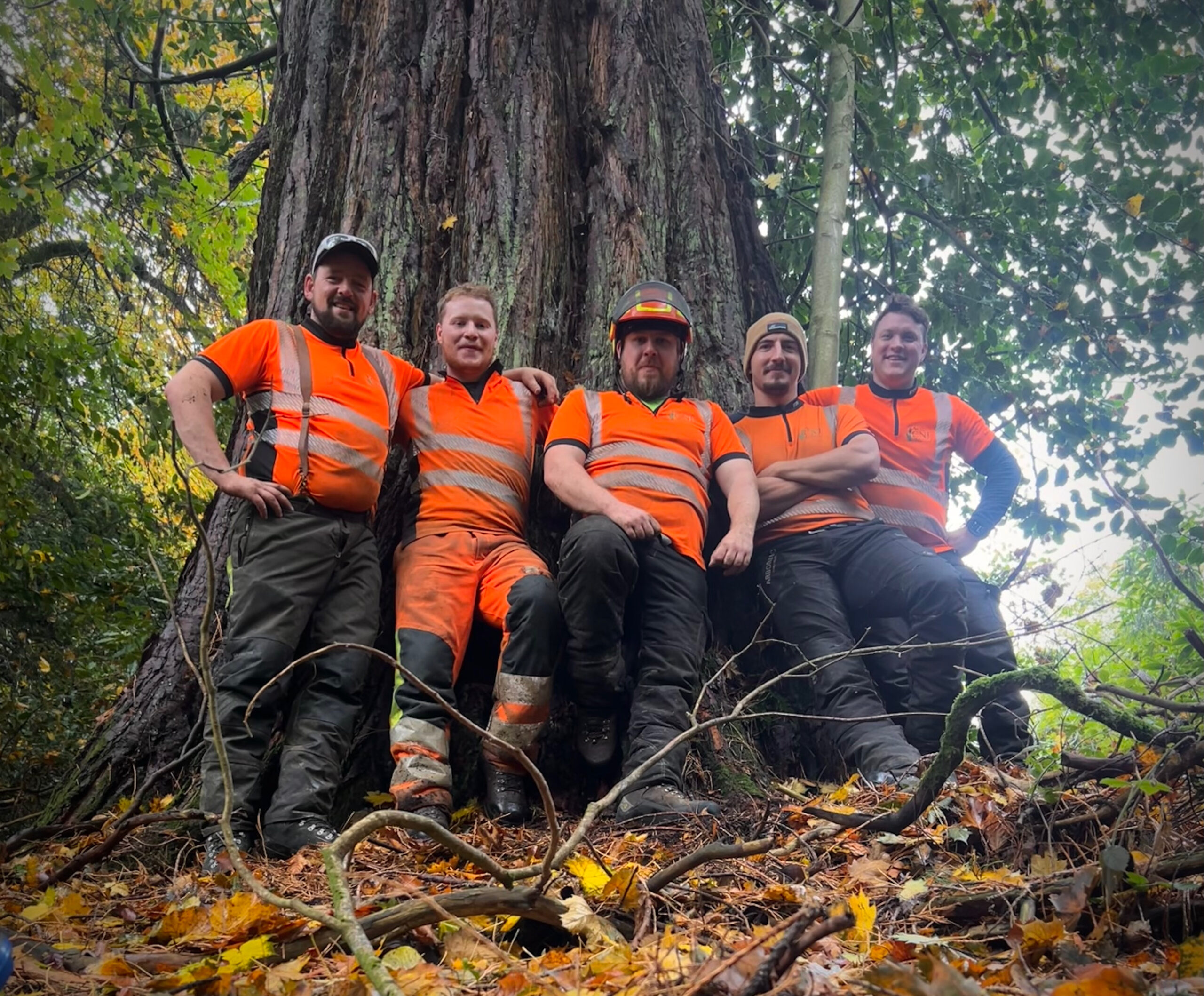
The riskier calls behind this portfolio were made by named members of the crew working to a plan, not guesswork on the day. Ron Bowes-Taylor led the rigging on the confined Scotstoun tenement lane dismantle, where dropping a section wrong would have meant damage to a neighbour’s fence or gate rather than just a messy cut. Neill Tannahill, who also keeps the plant fleet maintained, brought the 360 excavator work behind the larger clearance jobs. Ryan Spark handled the large-diameter felling over 380mm, including the boring cut and dogs-tooth cut used to control the Douglas fir coming down beside the footpath. Founder Callum Jackson, an NPTC-qualified Professional Tree Inspector, signed off the risk assessments behind the trickier calls shown here – ruling the cracked multi-stem tree unsafe to climb, for instance, rather than sending someone up it. Every job pictured was carried out under £5 million public liability cover, to British Standard BS3998 for tree work.
What’s changed most since the company’s early days is the shift from climbing alone to owning the machinery outright. The tracked MEWP, avant loader, quad bike winch and Predator stump grinder in these photos don’t get booked from a hire firm on the day – which is why a four-man crew could clear a driveway of 27 leylandii in a single visit rather than waiting on rented plant. Low-ground-pressure tracks matter on soft lawns and garden beds too, protecting turf that a wheeled machine would rut. Every load of green waste leaving site is processed locally rather than sent to landfill – larger sections seasoned through our own woodfuels operation, smaller material chipped for landscaping or biomass use.
Where in and Around Glasgow These Jobs Were Carried Out
Most of what’s shown on this page was cut within a strict ten-mile working circle from our Newton Place base near Charing Cross, and the portfolio genuinely reflects the ground inside it. The Scotstoun ash dismantle sits close to the M8 corridor and the Clydeside stretch of the river, where back-court lanes between tenements are often narrower than a delivery van and a straight felling cut simply isn’t an option – which is why the climber-and-cherry-picker combination shown there gets used more here than on a typical suburban visit. The TPO yew and several of the crown-reduction jobs sit in the kind of Conservation Area street that runs through the West End and Pollokshields, where the tree stock often predates the tenements around it and any crown work has to clear Glasgow City Council’s planning process before a saw goes near the trunk.
Further out towards the edge of the ten-mile radius, the jobs pick up a different set of problems. Driveways and orchard boundaries in the Bearsden, Milngavie and Newton Mearns direction tend to involve more free-standing, wind-exposed trees than the sheltered tenement gardens closer in, and sites nearer the Cathkin Braes and the southern edge of the Campsies bring in more storm and wind-throw call-outs – the kind of ground the Douglas fir felling came from. Where a job crosses from Glasgow City’s boundary into East Dunbartonshire or East Renfrewshire ground, the planning conversation changes council even though the tree itself looks no different from the last one. Commercial clearance and estate work take the crew further across Scotland, but everything pictured above is drawn from that core ten-mile working area.
Images
Frequently Asked Questions
Can I see examples of tree work you've completed near me in Glasgow?
Yes – the jobs on this page are drawn from real sites across Glasgow and the surrounding towns, described by area and job type rather than exact address for privacy reasons. If you want to see something closer to your own situation, describe your tree or hedge over the phone and we can point to a comparable job or arrange a site visit.
Do you have before-and-after photos of past jobs?
Some jobs on this page, like the beech hedge reduction and the driveway leylandii clearance, include multiple photos showing the site partway through and once finished. We photograph consistently on larger or more visually striking jobs; smaller routine work doesn’t always get the same documentation.
Is the work shown mostly domestic gardens, or do you take on commercial sites too?
This portfolio is weighted towards domestic gardens because that’s most of what a residential Glasgow street brings in – hedges, single trees, driveways. We also take on commercial site clearance, utility corridor pruning and estate management work, which tends to be quoted and scheduled differently and doesn’t always suit the same kind of photography.
Have you handled large or complex tree removals before?
Yes – the roadside ash dieback removal and the tenement lane ash dismantle are both examples of technical jobs, where the tree had to come down in controlled sections next to a live traffic lane or through a confined lane, rather than being felled in one piece. Both used a cherry picker for controlled access rather than relying on a climber alone.
Do you show stump grinding results?
Yes – the large oak stump job pictured was ground out using our tracked Predator stump grinder, which handles bigger diameters and root spread without needing to dig up the surrounding lawn or path.
Does the portfolio include hedge trimming as well as tree work?
It does. The 100-metre beech hedge reduction and the autumn garden visit with multiple crown reductions both show hedge work alongside tree work, since most gardens need both handled together rather than as separate call-outs.
Can I get references from past customers in Glasgow?
We can put you in touch with past customers who’ve agreed to be a reference for similar work, particularly if you’re weighing up a technical job like a TPO tree or a confined-access dismantle. Ask when you call and we’ll see what we can arrange for your specific job type.
Does the portfolio include any Tree Preservation Order or Conservation Area work?
Yes – the English Yew job is a Tree Preservation Order tree, pruned within the limits the council permits and worked entirely from a tracked MEWP to avoid over-cutting the protected canopy. Glasgow’s Conservation Areas, particularly around the West End, carry a lot of mature protected stock, so this comes up more often here than on an average garden job.
Do any of the jobs show rigging or crane-assisted work in tight tenement back courts?
The Scotstoun ash dismantle is the clearest example – a confined back-court lane, a fragile fence and gate, and a drop zone too small for a standard felling approach, handled with a climber and a cherry picker working together and an avant loader clearing material out to the chipper and trucks.
Want to See How This Looks on Your Own Tree?
A photo only tells you so much – the access method, the risk assessment and the machinery that suited someone else’s tenement lane or TPO garden might not be right for yours. Get in touch with your tree, hedge or stump and we’ll talk through what a job like it actually involves, then arrange a site visit to give you a proper figure rather than a guess. Trees suffering from dieback or storm damage don’t get safer by waiting, so the sooner we see it, the more options are still on the table.
Why Choose CNJ Tree Services?
Scotland's leading comprehensive tree and property service company.
60+ Specialist Tree Services
From basic pruning to de-vegetation and complex ecological assessments
30+ Years of Experience
Core team made up of highly experienced third-generation tree surgeons
24-hour Availability For Emergencies
Average response time under 2 hours
Up to £5M
Insurance Cover
Comprehensive cover for complete peace of mind
Professional Credentials
NPTC, Lantra, FMO and NPORS certified professionals ensuring the highest standards of safety and expertise on every project.
Environmental Expertise
Ecological surveys and compliance specialists
What Our Clients Have Said About Us
Jackie Breen
From the first time getting in touch with Callum, the service was fantastic, he came out gave us a great quote and was able to do the job very quickly. The boys that came to carry out the work were professional, friendly and worked non stop to get the job done, they were so careful with machinery on the property as well and left the garden and paths spotless before they left. I would highly recommend them.
"
Alan
Callum and his team arrived on the agreed day & time, carried out the tree felling with impeccable professionalism and cleared up after. The work was done at the quoted price and they were very pleasant guys with no bad language. I highly recommend CNJ and I will certainly be using Callum and his 5 star tree fellas again.
"
Robin Campbell
Callum and his team felled four 40-foot+ trees in our garden, facing particular challenges (2 trees hanging over our LPG tank, one menacing a precious rhododendron). They worked incredibly hard, were great to deal with and we would thoroughly recommend them.
"
Our Service Areas
We Cover All of Glasgow and West Scotland
Primary Coverage
- Balfron
- East Dunbartonshire
- Glasgow City
- Killearn
- Renfrewshire
- South Lanarkshire (selected areas)
- Stirling
- Strathblane
- West Dunbartonshire
Key Locations
• Balfron • Bearsden • Bothwell • Clarkston • Clydebank • East Kilbride • Fintry • Giffnock • Hamilton • Killearn • Kippen • Kirkintilloch • Milngavie • Newton Mearns • Paisley • Strathblane • Stirling
Emergency Response
50-mile radius
Commercial Projects
We undertake commercial projects across Scotland.