
Windblown Tree Removal Glasgow
NPTC-qualified windblown tree removal across Glasgow. £5m-insured team with its own heavy plant for safe storm-damage clearance, 24/7 response and free site quotes.
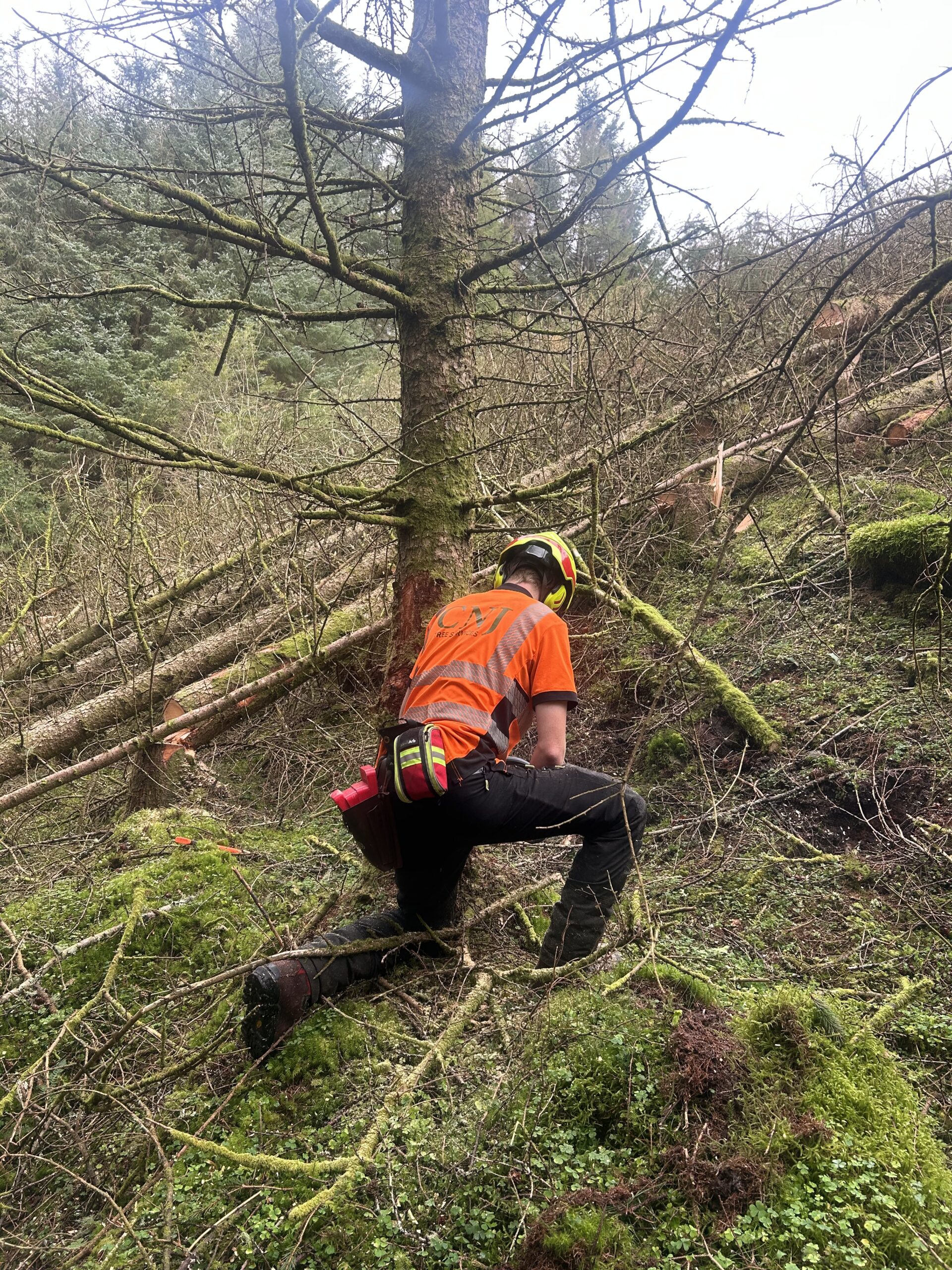
When a storm leaves a tree leaning, half-uprooted or hung up in the branches next door, the real danger usually isn’t the tree falling any further – it’s the tension and compression already locked inside the trunk and root plate, which can release violently the moment a saw touches it. Callum Jackson, who leads the crew, is an NPTC Professional Tree Inspector and grew up around chainsaws in a Scottish forestry family, and CNJ owns its own spider lift cherry picker, forwarders and 360 excavators outright, so a dangerous windblown tree can often be dismantled from the machine rather than sending a climber up an unstable stem. Where a climber does still need to go up, Ron Bowes-Taylor leads the climbing side of the crew with 15-plus years of rigging and dismantling behind him, while Ryan Spark, a former outdoor instructor with wilderness and swift-water rescue training, takes on the large-diameter sectioning over 380mm that a big windblown stem often calls for.
Windblown removal sits alongside the rest of our tree services, from planned felling to pruning and site clearance, all carried out to British Standard BS3998.
At a Glance
- NPTC Professional Tree Inspector-led risk assessment before any cutting starts
- £5 million public liability insurance on every job
- Own spider lift, forwarders and 360 excavators outright – no waiting on hired-in plant
City Areas: Merchant City, West End, South Side, East End, North Glasgow
Surrounding Areas: Paisley, East Kilbride, Hamilton, Motherwell, Coatbridge, Airdrie Extended
Coverage: Stirling, Falkirk, and throughout West and Central Scotland
Strategic location between Glasgow and Stirling enables rapid response with average emergency time under 2 hours.
Windblown Tree Removal Glasgow
Expert Removal of Wind-Damaged Trees
Emergency Tree Removal
24/7 Response
Free Tree Quote
Professional assessment within 48 hours
Complete Tree Services
General and Specialist Services Available
Storm Damage Response
Immediate Callout
When Glasgow’s Winds Create Tree Emergencies – Professional Response Required
CNJ Tree Services provides specialist windblown tree removal across Glasgow using NPTC certified tree surgeons trained specifically in wind-damaged tree hazards. Our environmental compliance specialists understand the complex forces involved in windblown trees and use appropriate equipment including winches, rigging systems, and stabilisation gear.
Glasgow’s Atlantic weather systems bring powerful winds that create unique tree hazards demanding specialist professional expertise. When trees suffer wind damage, they develop dangerous tension and compression forces that make removal extremely hazardous without proper training and equipment.
As environmental compliance specialists, we handle windblown tree removal for protected trees, conservation areas, and complex legal situations whilst prioritising immediate safety. Our strategic location between Glasgow and Stirling enables rapid response throughout West Scotland’s challenging weather conditions.
Windblown tree removal typically costs £400-£5,000+ depending on complexity and instability. Our specialist assessment identifies all hazards before providing transparent pricing with no hidden charges for essential safety equipment.
⚠️ Wind-Damaged Trees? Don’t attempt DIY – Call CNJ Tree Services: 0141-340-9722
Understanding Windblown Tree Hazards – Why Professional Removal is Essential
Why Choose Our Tree Service
Crown displacement changes weight distribution in wind-damaged trees, affecting structural integrity and making standard removal techniques dangerous or ineffective.
Hidden structural damage including internal splitting, root fractures, and compression failures often remain invisible from ground level, requiring professional assessment to identify.
Why DIY Windblown Tree Removal is Extremely Dangerous
Unpredictable release of stored energy when cutting tension-stressed trees can cause violent movement capable of causing serious injury or death to untrained operators.
Sudden movement potential from compromised root systems means windblown trees can shift without warning, even when apparently stable during initial assessment.
Equipment requirements exceed standard tree removal tools, demanding specialist winches, rigging systems, and stabilisation equipment not available to general users.
Safety protocol complexity requires extensive training in tension release, load assessment, and emergency procedures beyond general tree work competency.
Legal implications of improper windblown tree removal include potential prosecution for dangerous work practices and insurance invalidation following accidents.
- ✅ Professional assessment prevents serious injury from tension release
- ✅ Specialist equipment handles unpredictable windblown tree behaviour
- ✅ Expert knowledge identifies hidden structural damage
- ✅ Proper removal techniques prevent additional property damage
- ✅ Legal compliance with Glasgow’s tree protection requirements
Unique Dangers of Wind-Damaged Trees
Tension and compression forces create the primary hazard in windblown trees. Wind stress stores dangerous kinetic energy that releases unpredictably when cutting begins, causing trees to spring or twist violently without warning.
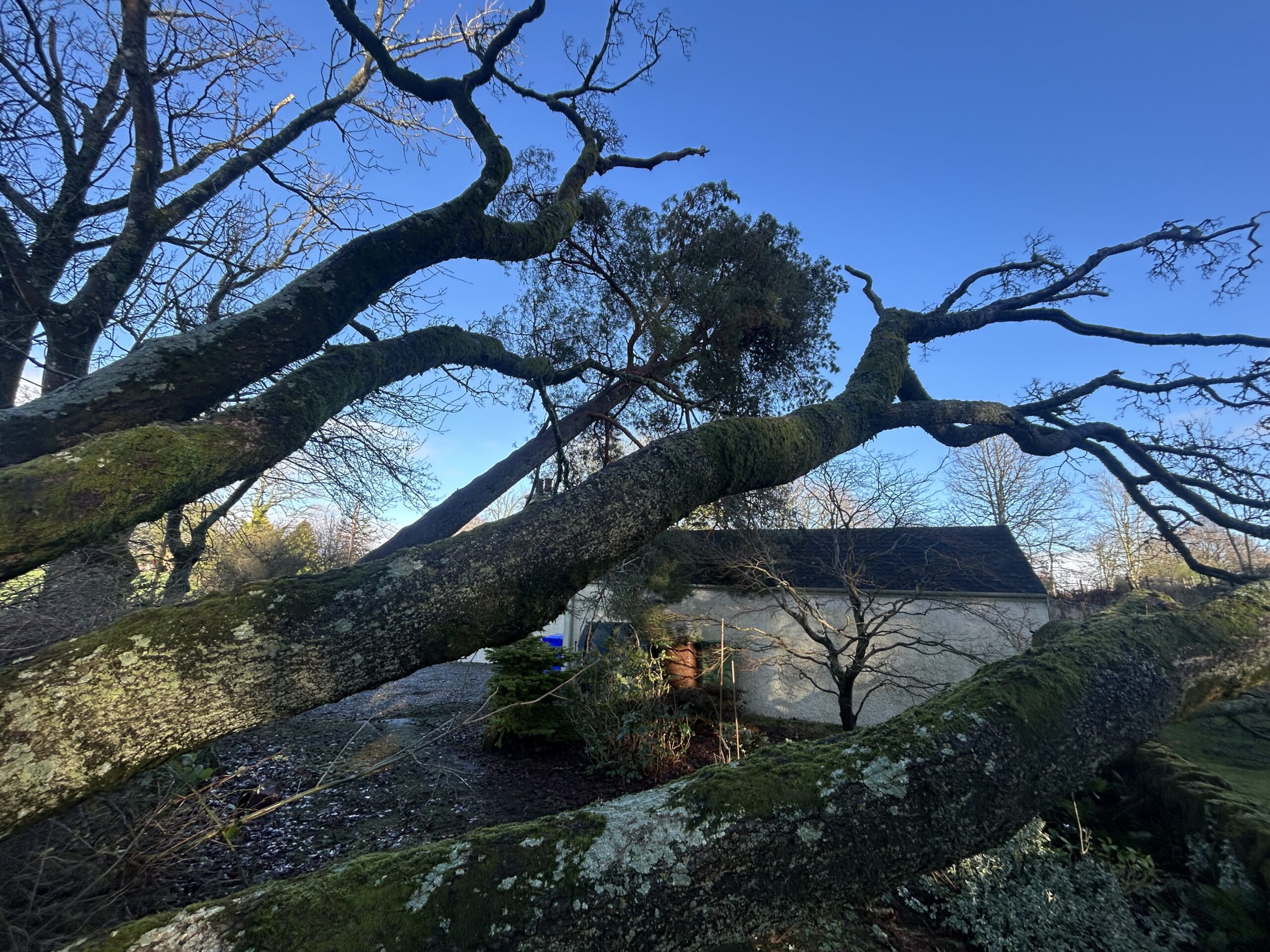
Root plate instability from lifted or partially failed root systems creates unpredictable movement patterns. Even apparently stable windblown trees can shift suddenly during removal operations, threatening workers and property.
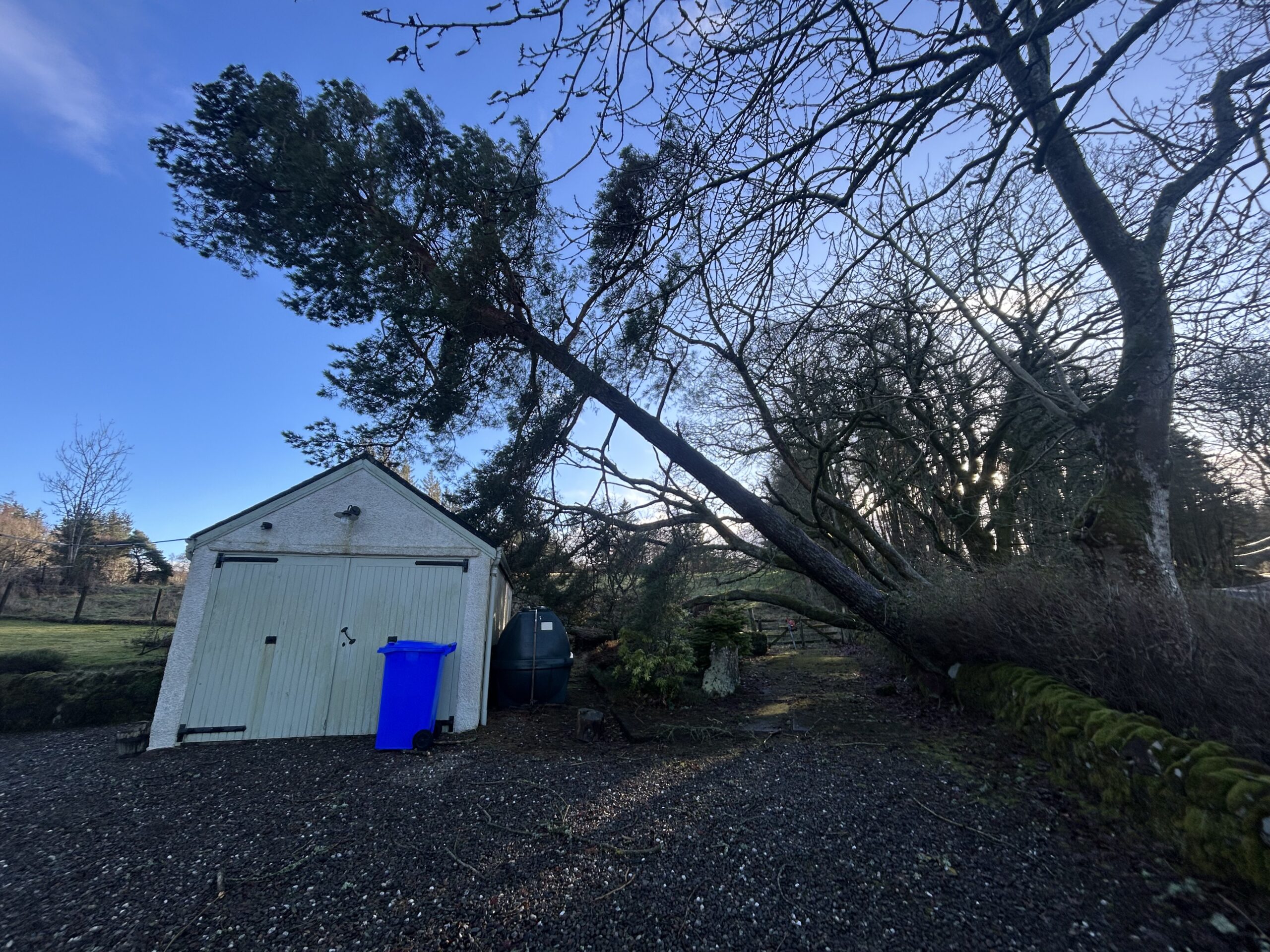
Hung-up situations occur when windblown trees become tangled in other trees or suspended by debris. These complex scenarios require specialist NPTC Level 3 windblown certification and advanced rigging techniques.
CNJ Tree Services Windblown Tree Removal Process
CNJ Tree Services is your trusted partner for tree removal in Glasgow and West Scotland. From storm-damaged removals to proactive removal of high-risk or unwanted trees, our team applies expert planning, safety protocols, and full compliance with local regulations to every job.
Specialist Assessment of Wind-Damaged Trees
Comprehensive stability evaluation examines root plate integrity, soil displacement, and visible ground movement indicating structural compromise requiring immediate attention.
Tension stress analysis identifies areas of stored energy using visual indicators and measurement techniques, determining safe cutting sequences and equipment requirements.
Environmental hazard assessment evaluates proximity to buildings, power lines, underground services, and public areas requiring protection during removal operations.
Sequential removal planning determines optimal cutting order and technique selection based on wind damage patterns and structural integrity assessment.
Equipment requirements analysis selects appropriate specialist tools including winches, rigging systems, and stabilisation equipment based on specific windblown tree characteristics.
Windblown Tree Removal Costs and Pricing Considerations
Factors Affecting Windblown Tree Removal Costs
- Complexity assessment determines pricing based on degree of structural damage, tension loading, and removal difficulty requiring specialist techniques.
- Specialist equipment requirements including winches, rigging systems, and stabilisation equipment increase costs but ensure safe professional removal.
- Access difficulty in urban environments and confined spaces affects equipment selection and labour requirements, influencing final pricing.
- Safety protocol intensity for high-risk windblown trees requires enhanced measures, additional personnel, and extended safety equipment deployment.
- Site restoration needs including ground repair, soil replacement, and landscaping restoration following extensive root plate removal.
Why Choose CNJ Tree Services for Windblown Tree Removal
Specialist Training and Professional Expertise
NPTC certified windblown tree specialists hold Level 3 certification specifically for “Severing Uprooted or Windblown Trees using a Chainsaw”.
30+ years combined experience handling Glasgow’s challenging windblown tree situations across diverse urban and suburban environments.
Specialist equipment capability including winches, cranes, and stabilisation systems operated by qualified personnel with appropriate certifications.
Owner-operated quality control ensures Callum Jackson’s personal attention to complex windblown removals maintaining professional standards.
Continuous professional development keeps the team current with the latest windblown tree removal techniques and safety protocols.
Glasgow Coverage Areas
City Areas: Merchant City, West End, South Side, East End, North Glasgow
Surrounding Areas: Paisley, East Kilbride, Hamilton, Motherwell, Coatbridge, Airdrie
Extended Coverage: Stirling, Falkirk, and throughout West and Central Scotland
Strategic location between Glasgow and Stirling enables rapid response with average emergency time under 2 hours.
Frequently Asked Questions
What makes windblown trees more dangerous than regular fallen trees?
Windblown trees present unique hazards due to stored tension and compression forces created by wind stress. Unlike trees that fall completely, windblown trees often remain partially upright or tangled in other trees, creating unpredictable movement when cut. These trees may suddenly spring or twist violently during removal, requiring specialist NPTC Level 3 windblown tree certification.
Can I remove a windblown tree from my garden myself?
DIY windblown tree removal is extremely dangerous and strongly discouraged by professional arborists. Windblown trees contain stored kinetic energy and may be under significant tension or compression forces that release unpredictably when cut. Even experienced tree surgeons require specialist training for windblown tree work. CNJ Tree Services’ NPTC certified specialists have the proper equipment, training, and experience to safely handle these complex situations.
How quickly can you respond to windblown tree emergencies in Glasgow?
CNJ Tree Services provides rapid response to windblown tree emergencies across Glasgow with average response times under 2 hours. Our strategic location between Glasgow and Stirling enables quick deployment throughout West Scotland during and after storm events.
Will insurance cover windblown tree removal costs?
Most home insurance policies cover windblown tree removal when storm damage affects property or creates safety hazards. CNJ Tree Services provides comprehensive documentation supporting insurance claims, including professional assessment reports, photographic evidence, and detailed removal specifications.
What should I do immediately after trees are windblown on my property?
Following windblown tree incidents, immediately ensure all people and pets are at safe distances from unstable trees and call emergency services if anyone is injured or trapped. Do not attempt to move or cut windblown trees yourself, as they may be under dangerous tension. Contact CNJ Tree Services on 0141-340-9722 for professional assessment and removal. Document the situation with photographs for insurance purposes if safely possible, avoiding areas near unstable trees. Keep children and pets away from windblown tree areas until professional removal is complete. If trees contact power lines, maintain safe distances and contact utility companies immediately. Our emergency response team provides immediate guidance and rapid deployment for windblown tree situations across Glasgow.
Can windblown trees be saved or do they always require removal?
Some windblown trees can be saved through professional assessment and corrective techniques, depending on the extent of root damage and structural integrity. CNJ Tree Services’ environmental compliance specialists evaluate each situation individually, considering factors like root plate stability, crown damage, and long-term viability. Trees with minor root lifting may be re-stabilised using proper techniques, whilst severely compromised trees require removal for safety.
Tree Services We Offer In Glasgow
CNJ Tree Services provides comprehensive tree services across Glasgow with windblown tree removal representing our specialist weather-damage response capability within our complete tree care portfolio. Our windblown tree expertise complements our 60+ specialist tree services including preventive tree care and storm preparation services.
For proactive tree management, explore our complete range of professional tree services Glasgow including tree health assessment, structural strengthening, and preventive pruning designed to improve wind resistance and reduce windblown tree risks through expert management.
Our windblown tree removal service integrates with our comprehensive tree care approach, ensuring Glasgow properties receive both specialist storm damage response and proactive tree services that strengthen trees against West Scotland’s challenging weather conditions.
Protect Your Property with Professional Windblown Tree Removal
Glasgow’s Atlantic weather systems create ongoing windblown tree challenges requiring specialist professional expertise. When wind damage creates unstable, tension-stressed trees, DIY removal attempts risk serious injury and additional property damage. CNJ Tree Services’ environmental compliance specialists provide safe, professional windblown tree removal across West Scotland.
Gallery of Previous Work Done
Why Choose CNJ Tree Services?
Scotland's leading comprehensive tree and property service company.
60+ Specialist Tree Services
From basic pruning to de-vegetation and complex ecological assessments
30+ Years of Experience
Core team made up of highly experienced third-generation tree surgeons
24-hour Availability For Emergencies
Average response time under 2 hours
Up to £5M
Insurance Cover
Comprehensive cover for complete peace of mind
Professional Credentials
NPTC, Lantra, FMO and NPORS certified professionals ensuring the highest standards of safety and expertise on every project.
Environmental Expertise
Ecological surveys and compliance specialists
What Our Clients Have Said About Us
Jackie Breen
From the first time getting in touch with Callum, the service was fantastic, he came out gave us a great quote and was able to do the job very quickly. The boys that came to carry out the work were professional, friendly and worked non stop to get the job done, they were so careful with machinery on the property as well and left the garden and paths spotless before they left. I would highly recommend them.
"
Alan
Callum and his team arrived on the agreed day & time, carried out the tree felling with impeccable professionalism and cleared up after. The work was done at the quoted price and they were very pleasant guys with no bad language. I highly recommend CNJ and I will certainly be using Callum and his 5 star tree fellas again.
"
Robin Campbell
Callum and his team felled four 40-foot+ trees in our garden, facing particular challenges (2 trees hanging over our LPG tank, one menacing a precious rhododendron). They worked incredibly hard, were great to deal with and we would thoroughly recommend them.
"
Our Service Areas
We Cover All of Glasgow and West Scotland
Primary Coverage
- Balfron
- East Dunbartonshire
- Glasgow City
- Killearn
- Renfrewshire
- South Lanarkshire (selected areas)
- Stirling
- Strathblane
- West Dunbartonshire
Key Locations
• Balfron • Bearsden • Bothwell • Clarkston • Clydebank • East Kilbride • Fintry • Giffnock • Hamilton • Killearn • Kippen • Kirkintilloch • Milngavie • Newton Mearns • Paisley • Strathblane • Stirling
Emergency Response
50-mile radius
Commercial Projects
We undertake commercial projects across Scotland.
Contact Us Today
Hazard Triage and Job Scope for a Windblown Tree
- Phone triage of the hazard – leaning on a structure, blocking a road or driveway, tangled in a neighbour’s tree, or near power lines
- On-site assessment of tension, compression and root-plate stability before any cutting begins
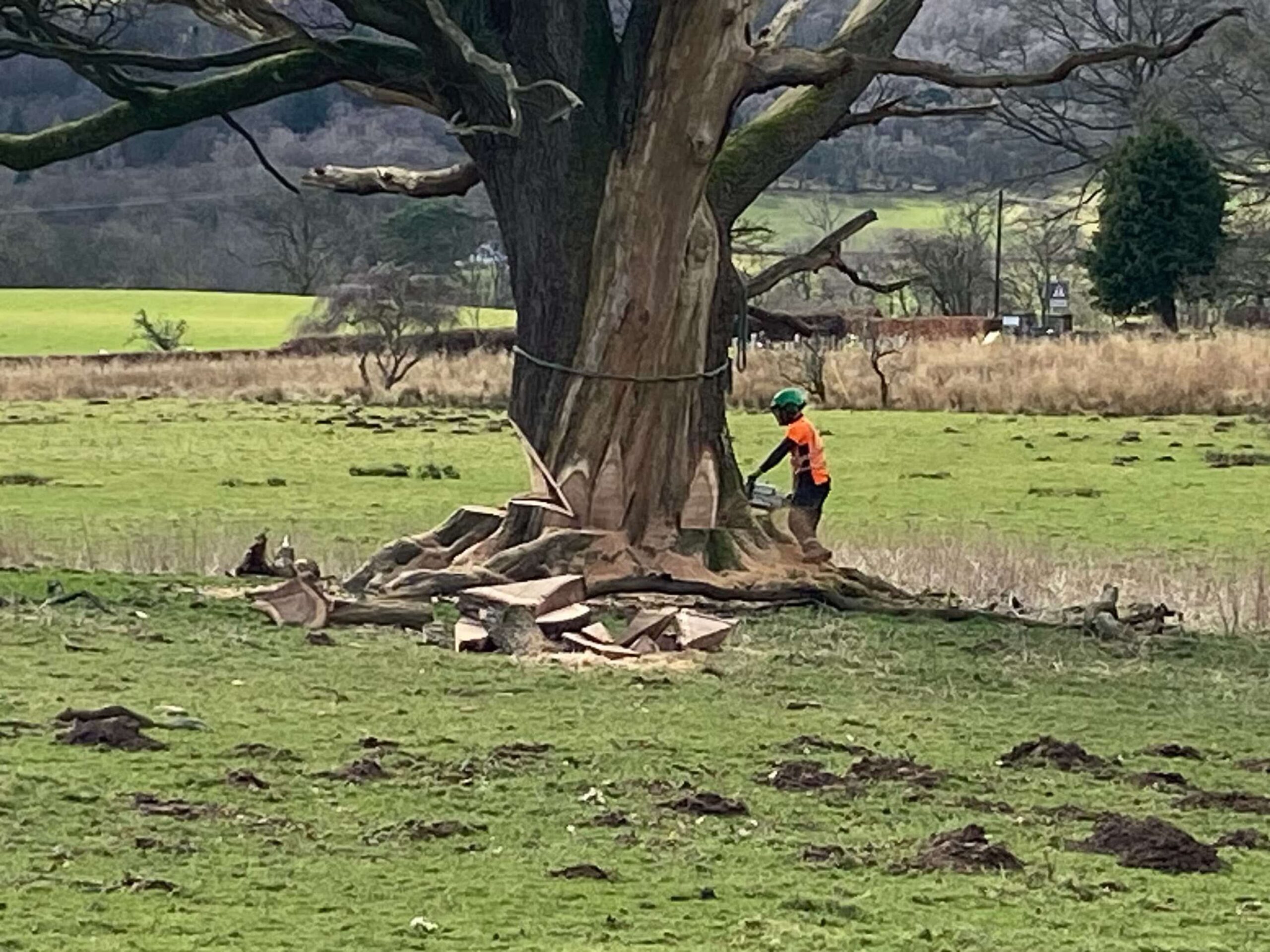
- Controlled sectional felling or dismantling using winches, rigging and stabilisation gear
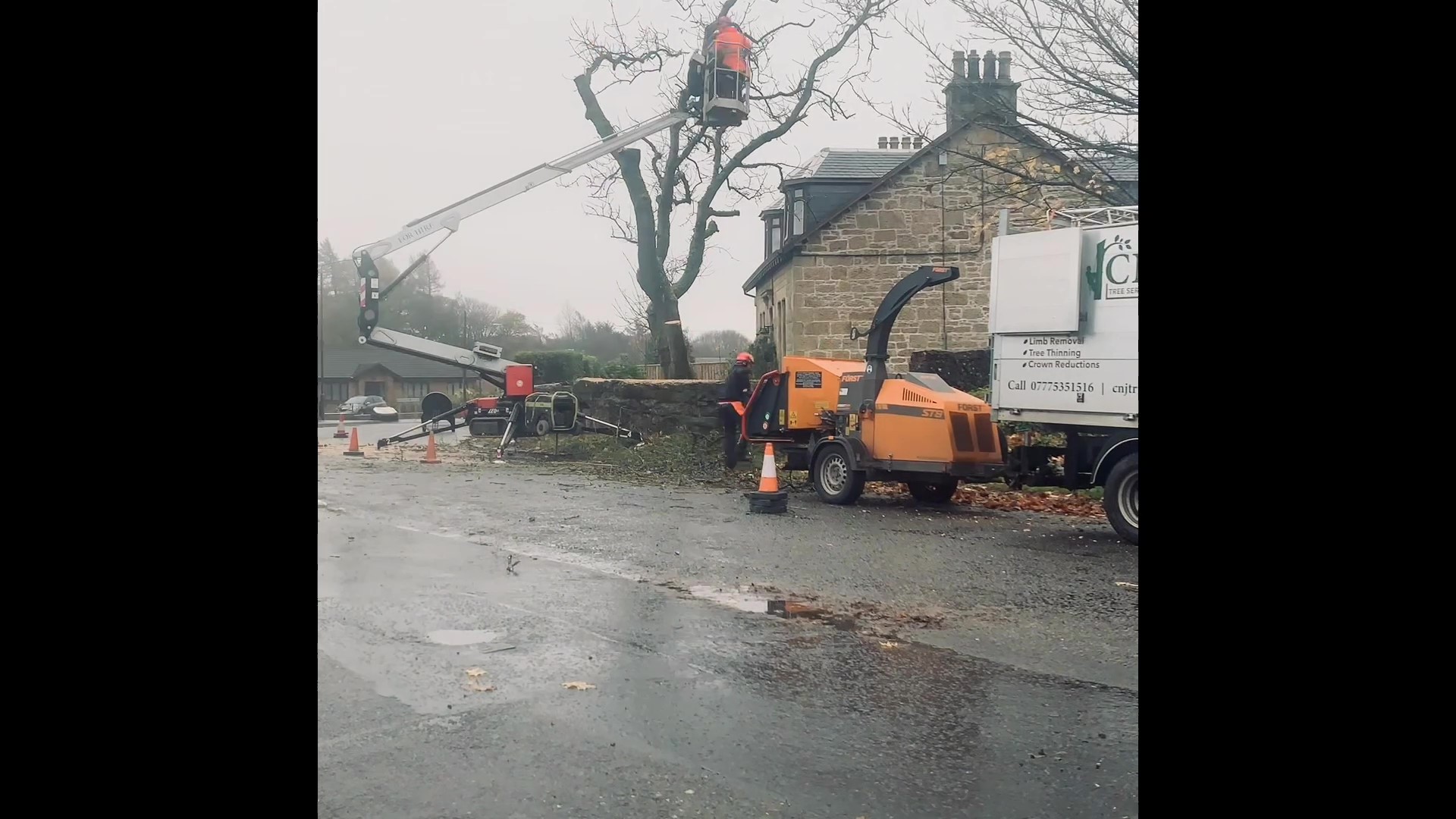
- Cherry-picker or crane-assisted removal where a tree is too unstable or awkwardly positioned to climb safely
- Coordination with the utility company where a tree is fouling power lines
- On-site chipping of brash, with larger timber taken to our own yard
- Written assessment report and photographs to support a home insurance claim
- Machinery matched to ground access – IPAF and NPORS-certified operators on the cherry-picker and 360 excavator, so the right piece of kit reaches an awkward garden or backland plot safely
Not Included / Costed Separately
- Stump grinding and root removal – usually quoted separately once the tree is down
- Repair of lawns, driveways, fences or garden structures damaged by the fall itself
- Keeping the felled timber as firewood, unless agreed beforehand – most of it goes back to our yard for seasoning or chipping
- Formal Tree Preservation Order or conservation area consent for a protected tree that isn’t an immediate hazard – that permission still needs to be sought before non-emergency work goes ahead
Triaging and Dismantling a Storm-Damaged Tree, Step by Step
- Call and triage: You describe what’s happened – a tree resting against the house, blocking access, hung up in a neighbour’s canopy, or near a power line – and we gauge the immediate risk over the phone.
- Rapid attendance: A crew attends, typically within our average two-hour response window, and assesses the tree from a safe distance before anyone gets close to it, with every climber on site trained to First Aid +F standard for chainsaw-specific and catastrophic bleed emergencies.
- On-site risk assessment: We check for root-plate lift, tension and compression in the stem and branches, and hang-up points, then decide whether to climb, rig from ground level, or work from the cherry-picker.
- Controlled dismantling: The tree is taken down in sections, using winches and rigging to control the direction of fall and release stored energy in a predictable way rather than an uncontrolled snap-back.
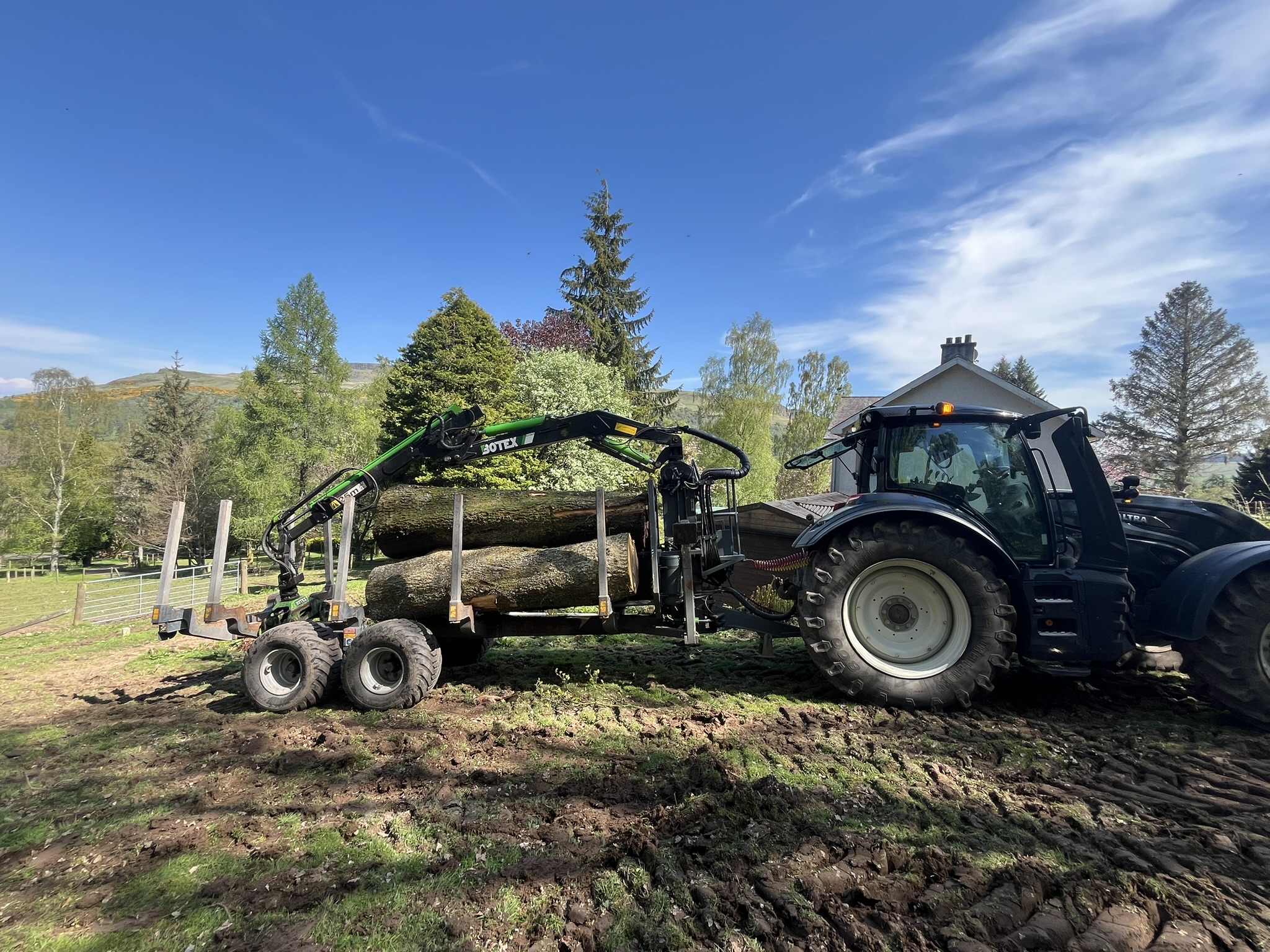
- Clearance and chipping: Brash is chipped on site; larger timber is extracted by forwarder where ground conditions allow, and taken back to CNJ’s own yard rather than to landfill.
- Report and handover: You’re given a written note of what was found and photographs of the completed site, useful for an insurance claim where the damage is storm-related.
Why Windblown Removal Pricing Varies So Much
The wide £400-£5,000+ range already quoted on this page reflects how much the price depends on what’s actually found on site: a small garden tree resting against a fence sits at the low end, while a mature tree hung up over a boundary wall, driveway or power line, needing a cherry-picker and rigging crew, sits at the top. Because tension and root-plate condition can only be judged safely once someone is standing in front of the tree, we don’t give a fixed price over the phone – a technician talks through the hazard by phone first, then confirms the cost on arrival, before any cutting starts. Access also plays into the figure quoted – a forwarder or 360 excavator can only be brought up a garden path or across soft ground where load and ground conditions allow it, and our FMO licensing for forwarder trailers and line skidders means that call is made by a qualified operator rather than guesswork on the day.
Windblown Tree Removal: CNJ Tree Services vs a Typical Local Tree Surgeon
| What matters after a storm | CNJ Tree Services | Typical local tree surgeon |
|---|---|---|
| Reading the hazard before any cutting | NPTC Professional Tree Inspector-led check of tension, compression and root-plate stability | Visual check only, without a formal PTI qualification |
| Heavy plant for dangerous dismantles | Owns its tracked spider lift, forwarders and 360 excavators outright | Books plant from a third-party hire firm, adding delay |
| Response | 24/7 emergency line, average arrival under two hours | Often next-working-day for non-life-threatening jobs |
| Where the timber goes | Brash chipped on site; larger timber taken to CNJ’s own yard for seasoning or woodfuel | Typically taken to landfill or a general waste tip |
| Insurance paperwork | Written assessment report and photographs provided to support a claim | Varies by firm |
Machinery Ownership and PTI Judgement on a Storm-Damaged Tree
Because CNJ owns its spider lift, forwarders and 360 excavators outright, a windblown tree pressed against a house wall or blocking a driveway doesn’t sit there for days waiting on a hired-in machine to become free – the right piece of kit is already at the yard and can go onto site the same day the crew attends. That ownership also means the low-ground-pressure tracks used to bring a forwarder up a garden path won’t cut ruts through the lawn on the way out, which matters once the job’s finished and the garden still has to be lived in.
Every climber on the crew is trained to First Aid +F standard, covering catastrophic bleed and chainsaw-specific injuries – worth knowing when the job in hand is a trunk holding stored tension that can release without warning. The hazard rating on a leaning or part-uprooted tree comes from Callum Jackson’s NPTC Professional Tree Inspector qualification, gained in 2023 specifically so that a case like this gets a formal, written judgement rather than a verbal opinion – the kind of paperwork an insurer or loss adjuster will ask to see if a tree was taken down as an emergency rather than as scheduled work. It’s a judgement built on close to two decades of cutting timber professionally, in a family that had already spent two generations working in Scottish forestry before him.
Neill Tannahill, who climbs and operates machinery on the crew as well as acting as chief fleet engineer, is the one who keeps that spider lift, forwarders, excavators and woodchippers in a state where they can be mobilised the same day a storm passes rather than waiting on a workshop slot. Some of that plant time also goes into Modern Apprenticeships and local woodland regeneration work across Central Scotland, so the machinery used on an emergency windblown callout is the same fleet that supports longer-term forestry work in the area between call-outs.
Storm Response Within Glasgow’s 10-Mile Radius
The 10-mile radius from our Newton Place office near Charing Cross is what defines a standard domestic windblown callout. Higher, more exposed ground – toward the Kilpatrick Hills, the southern edge of the Campsies and the Cathkin Braes – takes more wind loading in a gale and is where we see the most hang-ups and partial uproots once a storm front has passed through. Closer to the city centre, the clay-heavy ground of the Clyde basin holds water after heavy rain, which loosens root plates under mature trees rather than wind alone doing the damage, and that combination turns up often in the Victorian-era gardens of Pollokshields and the West End’s conservation areas.
Within the radius that covers Glasgow itself – Hyndland, Dowanhill, Kelvinside, Partick, Shawlands, Maryhill and Dennistoun among the neighbourhoods – together with Clydebank, Renfrew, Paisley and Bishopton to the west, Bearsden, Milngavie, Kirkintilloch, Bishopbriggs and Torrance to the north, and Pollokshields, Giffnock, Newton Mearns, Clarkston, Barrhead and East Kilbride to the south. A tree under a Tree Preservation Order or inside a conservation area still needs its council told about emergency work, and we handle that notification to Glasgow City, East Dunbartonshire or East Renfrewshire as part of the job rather than leaving it for the homeowner to chase up afterwards. Commercial storm clearance and estate work extends further across Scotland, but the area above is what we cover for standard domestic callouts. Which arterial route is passable also shapes how quickly a crew gets to a callout – the M8 through Charing Cross, the A82 Great Western Road, the M77 Southside corridor and the Erskine Bridge crossing are the roads most jobs in this radius depend on, and we factor local road conditions into the two-hour response estimate given over the phone.
Don’t Leave a Leaning Tree for the Next Wind to Finish Off
A tree that’s already leaning or hung up doesn’t get safer while you wait – rain can loosen the root plate further and the next gust can bring down more than the tree itself. Call for a phone triage of what you’re looking at, and we’ll tell you honestly whether it needs an emergency visit today or can wait for a scheduled slot. For anything that isn’t an emergency – routine felling, pruning or a planning-stage survey – the rest of our tree services covers that work too.