
Commercial Protected Species Survey Glasgow | CNJ Tree Services
A commercial site that turns up bats, badgers, otters or nesting birds partway through groundworks doesn’t just cause delay - working around a protected species without the right licence is a criminal offence under Scottish and UK wildlife law, whatever stage a project has reached. A protected species survey carried out before a planning application is submitted, or before site clearance begins, gives a developer, contractor or landowner an accurate read of what’s actually present on site, what NatureScot licensing that will require, and how the timescales fit against a build programme.
Where the main constraint on a site turns out to be bats specifically, our dedicated bat survey service covers the activity surveys and licence application in more depth. Where a survey has already identified what needs to be worked around, our ecological clearance team can carry out the physical site works itself once a mitigation strategy has been signed off, rather than handing that stage to a separate contractor.
Where the works needed alongside a survey are more about general vegetation clearance than protected species mitigation specifically, our general site clearance team quotes that separately, and the full spread of what we do across tree work sits under our tree services page.
At a Glance
- NatureScot licence applications prepared and managed in-house, not outsourced to a third party
- £5 million public liability cover on every commercial site
- BS5837 tree assessment available from the same site visit, delivered by an NPTC-qualified inspector
- City Areas: Merchant City, West End, South Side, East End, North Glasgow
- Surrounding Areas: Paisley, East Kilbride, Hamilton, Motherwell, Coatbridge, Airdrie Extended
- Coverage: Stirling, Falkirk, and throughout West and Central Scotland
- Strategic location between Glasgow and Stirling enables rapid response with average emergency time under 2 hours.
Commercial Protected Species Survey Glasgow
Expert Wildlife Assessments for Glasgow Businesses
Emergency Tree Removal
24/7 Response
Free Tree Quote
Professional assessment within 48 hours
Complete Tree Services
General and Specialist Services Available
Storm Damage Response
Immediate Callout
When your Glasgow commercial development faces protected species challenges, professional wildlife assessments eliminate costly delays and legal complications. CNJ Tree Services delivers specialist protected species surveys across West Scotland, combining ecological expertise with environmental compliance that protects your business from penalties up to £50,000.
Commercial protected species surveys identify wildlife that could halt your project, whilst our environmental compliance specialists create mitigation strategies ensuring development proceeds legally. Our 30+ years of ecological experience prevents the planning delays that cost businesses thousands in lost revenue. To learn how our preparation and clearance services support your project from start to finish, click here.
📞 FREE Commercial Protected Species Survey Consultation: 0141-340-9722
Why Glasgow Businesses Choose CNJ Tree Services for Commercial Protected Species Surveys
Why Choose Our Tree Service
Preventing Project Catastrophes
Commercial developments without proper protected species surveys face severe consequences:
- Enforcement orders stopping work immediately
- Criminal prosecution for wildlife disturbance with unlimited fines and director liability
- Project cancellation after significant investment, losing planning permissions and site preparation costs
- Insurance exclusions for wildlife-related claims, exposing businesses to unlimited liability
Professional Ecological Expertise
Commercial protected species surveys require specialist knowledge that general contractors don’t possess:
Licensed Ecological Specialists: Our qualified ecologists are experienced with a broad range of species, accessing restricted habitats and conducting legally-valid assessments. Amateur surveys lack legal standing, requiring expensive re-survey by qualified professionals.
Species Identification Expertise: Glasgow hosts over 15 protected species requiring different survey methodologies. Our specialists identify subtle signs amateur surveyors miss, preventing costly discoveries during construction phases.
Legal Compliance Guarantee: We guarantee complete compliance with Wildlife and Countryside Act 1981, Conservation of Habitats and Species Regulations 2017, and Nature Conservation (Scotland) Act 2004. This legal protection eliminates business risk completely.
⚡ Emergency Protected Species Assessment: Average Response Under 2 Hours
Glasgow’s urban environment hosts numerous protected species that can stop commercial developments instantly. Amateur ecological assessments miss critical wildlife populations, leading to enforcement action, unlimited fines, and project cancellation costing businesses hundreds of thousands.
CNJ Tree Services provides professional commercial protected species surveys that identify every legal constraint before you commit resources. Our ecological survey specialists understand Scotland’s complex wildlife legislation, ensuring complete compliance whilst developing practical solutions that keep projects moving.
Comprehensive Commercial Protected Species Survey Services Across Glasgow
CNJ Tree Services delivers complete wildlife assessment solutions covering every species that could impact your Glasgow commercial development. Our systematic survey approach identifies constraints early, allowing cost-effective mitigation planning.
Core Protected Species Surveys
Bat Survey Services Glasgow’s urban environment supports multiple bat species including Common Pipistrelle, Soprano Pipistrelle, and Brown Long-eared bats. Commercial developments affecting buildings or mature trees require professional bat surveys.
- Preliminary Roost Assessment: Initial building and tree inspection identifying bat potential
- Emergence/Re-entry Surveys: Detailed evening monitoring confirming bat activity
- Activity Surveys: Habitat usage assessment for development planning
- Mitigation Design: Roost compensation and habitat enhancement planning
Scotland’s badger populations are fully protected, with setts receiving 30-metre protection zones that can significantly impact development layouts. Our badger specialists identify active setts and territorial boundaries.
Bird Protection Surveys All nesting birds receive legal protection, with special penalties for Schedule 1 species. Our ornithologists identify breeding territories and seasonal constraints affecting project timing.
Specialist Wildlife Assessments
Water Vole Surveys Glasgow’s unique terrestrial water vole population requires specialist survey techniques. These fossorial water voles inhabit brownfield sites, parks, and development areas throughout the city’s east end.
Otter Surveys Scotland’s recovering otter population occupies watercourses throughout Glasgow. Developments within 200 metres of suitable habitat require professional otter assessment.
Great Crested Newt Assessment European Protected Species requiring seasonal survey programmes. Our licensed specialists conduct Habitat Suitability Index assessments and population monitoring where required.
Red Squirrel Surveys Native red squirrel populations in Glasgow’s parks and mature woodland receive full legal protection. Commercial developments affecting suitable habitat require professional assessment.
Invasive Species Management
Japanese Knotweed Surveys Invasive species create legal liability for landowners and can contaminate neighbouring properties. Professional identification and management planning prevents expensive treatment obligations.
Giant Hogweed Assessment This dangerous invasive species requires specialist handling due to serious health risks. Our qualified specialists safely assess infestations and design eradication programmes.
Himalayan Balsam Control Rapidly spreading invasive species affecting riparian areas. Early identification prevents establishment and reduces long-term management costs.
Our Professional Commercial Protected Species Survey Process
CNJ Tree Services follows rigorous ecological survey protocols ensuring legally-compliant wildlife assessments that support successful commercial development across Glasgow.
Stage 1: Desktop Assessment and Site Scoping
Ecological Data Review: Our specialists analyse existing wildlife records, statutory designations, and habitat connectivity within 2km of your development site. This desktop assessment identifies likely protected species and survey requirements.
Legal Constraints Analysis: We evaluate all applicable wildlife legislation, local biodiversity policies, and planning requirements, creating comprehensive legal framework understanding for your project.
Survey Programme Design: Based on site characteristics and development proposals, we design optimal survey programmes minimising costs whilst ensuring complete legal compliance.
Stage 2: Preliminary Ecological Assessment
Habitat Assessment: Our ecological specialists conduct Phase 1 Habitat Surveys identifying species-specific habitat features and evaluating wildlife potential across your commercial site.
Protected Species Potential Evaluation: We assess habitat suitability for all relevant protected species, identifying survey requirements and optimal timing for cost-effective assessment programmes.
Initial Constraint Identification: Early constraint identification allows development design modification reducing mitigation costs and improving project viability.
Stage 3: Species-Specific Survey Programmes
Licensed Survey Implementation: Our licensed ecologists conduct statutory surveys using appropriate methodologies for each species, ensuring data meets consultation and planning requirements.
Multi-Species Coordination: Where multiple species are present, we coordinate survey programmes reducing site visits and minimising disruption to your commercial operations.
Quality Assurance Monitoring: All surveys undergo internal peer review ensuring data quality and legal compliance before report production.
Stage 4: Impact Assessment and Mitigation Design
Legal Impact Analysis: We evaluate development impacts against wildlife legislation, identifying legal constraints and designing compliant solutions for your commercial project.
Mitigation Strategy Development: Our specialists create practical mitigation measures maintaining development viability whilst ensuring complete wildlife protection.
Licensing Support: Where required, we prepare European Protected Species Licence applications with NatureScot, managing the consent process through to approval.
Stage 5: Implementation Support and Monitoring
Ecological Clerk of Works: During construction, our specialists provide on-site ecological supervision ensuring mitigation implementation and legal compliance throughout development phases.
Monitoring Programme Design: Post-development monitoring ensures mitigation effectiveness and legal compliance, providing ongoing protection against future wildlife-related complications.
Adaptive Management: Where monitoring identifies issues, we adjust mitigation measures ensuring continued compliance and project success.
Commercial Protected Species Survey Costs in Glasgow
Professional commercial protected species surveys vary based on site complexity, species diversity, and development scale. CNJ Tree Services provides transparent pricing that eliminates hidden costs whilst delivering guaranteed legal compliance.
Cost-Affecting Factors
Site Accessibility: Difficult access commercial sites requiring specialist equipment increase survey costs by 20-35%. Our advanced access capabilities often reduce these premiums compared to competitors.
Species Complexity: Rare or sensitive species requiring specialist survey techniques affect pricing but ensure complete legal compliance protecting your investment.
Survey Timing: Seasonal survey requirements may extend project timelines but early booking reduces costs and prevents development delays.
Development Scale: Large commercial projects benefit from economies of scale, with per-hectare costs reducing significantly for developments over 10 hectares.
Frequently Asked Questions
How long do commercial protected species surveys take?
Survey duration depends on species types and development complexity, typically requiring 3-8 months for complete assessment programmes. Bat surveys need specific seasonal timing from May-September, whilst bird surveys require March-August coverage. Our project planning identifies optimal survey scheduling minimising delays whilst ensuring complete legal compliance. Multi-species programmes run concurrently reducing overall timescales compared to sequential surveys.
What’s the penalty for proceeding without protected species surveys?
Wildlife legislation carries unlimited fines plus potential imprisonment for serious violations. Typical enforcement penalties range from £5,000-£50,000 for commercial developments, with costs escalating to hundreds of thousands including habitat restoration and legal expenses. Company directors face personal liability under environmental crime legislation. Professional surveys eliminate these risks completely whilst demonstrating due diligence should any issues arise.
Which Glasgow locations need protected species surveys?
Any commercial development affecting buildings over 10 years old, mature trees, watercourses, or greenfield sites likely requires protected species assessment. Glasgow’s brownfield sites often support unexpected wildlife populations including terrestrial water voles and urban-adapted species. Our preliminary assessment identifies survey requirements based on habitat features and development proposals, preventing costly assumptions about site wildlife potential.
How do protected species surveys affect development timelines?
Professional survey programmes typically add 3-6 months to development planning but prevent much longer delays from wildlife discoveries during construction. Early survey identification allows design modifications reducing mitigation costs and complexity. Emergency discoveries during construction can halt projects for 12+ months whilst remedial surveys and licensing procedures are completed. Early assessment eliminates these catastrophic delays.
Can developments proceed if protected species are found?
Most developments can proceed with appropriate mitigation measures, though design modifications may be required. Our specialists design practical solutions maintaining commercial viability whilst ensuring complete species protection. European Protected Species require licensing from NatureScot, typically taking 8-12 weeks for approval. Common species often need only seasonal timing restrictions and habitat compensation measures.
What insurance protection covers protected species issues?
Standard commercial insurance excludes wildlife-related claims requiring specialist environmental liability coverage. Our surveys qualify for reduced insurance premiums whilst our £5 million professional indemnity protects against assessment errors. Environmental insurance covers cleanup costs, legal expenses, and business interruption from wildlife issues, typically costing 0.1-0.3% of project values but providing essential financial protection.
How do you ensure survey quality and legal compliance?
All surveyors hold appropriate species licences from NatureScot with regular continuing professional development maintaining expertise. Our surveys follow best practice guidelines from Chartered Institute of Ecology and Environmental Management, with internal quality assurance ensuring report standards. We guarantee legal compliance with unlimited rectification if surveys fail to meet statutory requirements, providing complete professional assurance.
What happens if surveys miss protected species later found?
Professional surveys include detection probability analysis accounting for species behaviour and survey limitations. Where species are subsequently discovered, our insurance covers additional assessment and mitigation costs. Amateur surveys lacking statistical analysis provide no protection against missed species, leaving businesses exposed to unlimited liability. Our systematic approach with appropriate survey effort provides legal defensibility should any issues arise.
Choose CNJ Tree Services for Professional Commercial Protected Species Surveys in Glasgow
Don’t risk your commercial development with amateur ecological assessments that miss critical wildlife constraints. Professional protected species surveys eliminate legal risks whilst providing practical solutions that keep projects moving forward successfully.
CNJ Tree Services combines statutory licensing authority with commercial development expertise, delivering surveys that protect your business whilst supporting Glasgow’s urban wildlife. Our emergency response capability ensures wildlife issues never derail your project timelines.
Ready to safeguard your Glasgow development project with expert protected species surveys? Embrace Nature Protections and Economic Growth by choosing ecological compliance that supports both environmental integrity and long-term development success.
Gallery of Previous Work Done
Why Choose CNJ Tree Services?
Scotland's leading comprehensive tree and property service company.
60+ Specialist Tree Services
From basic pruning to de-vegetation and complex ecological assessments
30+ Years of Experience
Core team made up of highly experienced third-generation tree surgeons
24-hour Availability For Emergencies
Average response time under 2 hours
Up to £5M
Insurance Cover
Comprehensive cover for complete peace of mind
Professional Credentials
NPTC, Lantra, FMO and NPORS certified professionals ensuring the highest standards of safety and expertise on every project.
Environmental Expertise
Ecological surveys and compliance specialists
Our Service Areas
We Cover All of Glasgow and West Scotland
Primary Coverage
- Balfron
- East Dunbartonshire
- Glasgow City
- Killearn
- Renfrewshire
- South Lanarkshire (selected areas)
- Stirling
- Strathblane
- West Dunbartonshire
Key Locations
• Balfron • Bearsden • Bothwell • Clarkston • Clydebank • East Kilbride • Fintry • Giffnock • Hamilton • Killearn • Kippen • Kirkintilloch • Milngavie • Newton Mearns • Paisley • Strathblane • Stirling
Emergency Response
50-mile radius
Commercial Projects
We undertake commercial projects across Scotland.
Contact Us Today
Where the Survey Stops and Licensed Mitigation Begins
- Desktop study checking existing biological records (NBN Atlas and local records centre data) and any previous survey history for the site and a surrounding buffer
- Full walkover of the site and its boundaries to identify features with potential to support protected species - tree cavities, ivy-clad trunks, old outbuildings, log piles, hedgerows, rough grassland and watercourses
- Bat activity surveys (dusk emergence and dawn re-entry visits) on any trees or structures flagged during the walkover as having roost potential
- Badger sett survey across the site and adjoining land, checking for active, disused and potential setts and recording latrines, snuffle holes and well-used paths
- Otter and water vole survey along any watercourse, ditch or culvert on or bordering the site, checking banks for holts, burrows, spraints and feeding remains
- Great crested newt habitat suitability assessment of ponds within range of the site, with eDNA testing where a pond scores as suitable for the species
- Red squirrel and breeding bird surveys where the site includes woodland or retained mature trees
- A written survey report setting out findings, the licensing position and a proposed mitigation strategy, formatted to support a planning application or NatureScot licence submission
- Direct liaison with the planning authority’s ecologist or a NatureScot case officer where a finding needs discussing before an application goes in
Not Included / Costed Separately
- Environmental liability insurance is a separate policy, typically costing 0.1-0.3% of project value, rather than something bundled into the survey fee itself
- Physical mitigation work - installing bat boxes, building an alternative badger sett, or creating replacement habitat - is quoted separately once the mitigation strategy has been designed and agreed, not included in the survey price
- NatureScot’s own licence application fee is paid direct to NatureScot; the survey team prepares and manages the paperwork but doesn’t cover that statutory fee
- A re-survey if the project stalls past the relevant species season - protected species data doesn’t stay valid indefinitely, so a development that pauses for a year or more usually needs an updated check before work restarts
How Seasonal Deadlines Set the Order of a Protected Species Survey
- Scoping call and desktop check: A free initial consultation establishes site boundaries, the proposed works and the project timeline. Existing biological records are checked straight away to flag which species groups have already been recorded in the surrounding area, so the walkover can be targeted rather than speculative.
- Site walkover: A surveyor inspects trees, buildings, watercourses and ground cover in person for physical evidence of protected species - droppings, feeding signs, holts, setts, cavities - and confirms which further seasonal surveys the site genuinely needs, rather than defaulting to a full multi-species programme regardless of what’s actually there.
- Seasonal surveys booked to species-specific windows: Bat activity surveys run within the May to September activity season and usually need two or more visits; breeding bird checks are timed to the nesting season, broadly March to August; great crested newt eDNA sampling has a fixed mid-April to June testing window set by the laboratory method, not by the survey team. Missing one of these windows can add a year to a project, so visits are booked as soon as the walkover confirms they’re needed.
- Report and NatureScot licensing: Findings are written up against NatureScot guidance. Where a protected species is confirmed on site, a mitigation strategy is drafted and the NatureScot licence application is prepared and submitted on the client’s behalf, alongside anything the planning authority needs for the wider application.
- Mitigation, supervised clearance and sign-off: Once a licence is granted, physical mitigation - bat box installation, sett closure and exclusion, timed vegetation clearance - is carried out within the licence’s working window, with a watching brief kept if construction or felling is happening nearby. A completion report confirms the mitigation was carried out as licensed, for the client’s planning file or NatureScot compliance record.
Why There’s No Flat Fee Until the Site’s Been Seen
Site accessibility, how many species groups are realistically present, and how many separate seasonal visits a project needs all move the price before a survey starts, which is why a figure given over the phone is only ever a starting estimate. A single-species desktop-and-walkover check on a small brownfield plot costs a fraction of a multi-species programme spanning a bat activity season and a bird nesting season on a larger development site. The free initial consultation identifies which species groups are actually likely on your site; a fixed cost for the full survey programme follows a site visit, once the real scope is known rather than assumed.
CNJ Tree Services Compared With a Standalone Ecologist or General Contractor
| What you need | CNJ Tree Services | Standalone ecological consultancy | General landscaping/clearance contractor |
|---|---|---|---|
| Licensed protected species surveys with NatureScot licensing support | Yes, in-house | Yes | No - usually subcontracted out or skipped |
| BS5837 tree survey and risk assessment alongside the ecology work | Yes - NPTC Professional Tree Inspector qualified | Rarely - referred to a separate arborist | No |
| Mechanised site clearance once mitigation is agreed, using owned plant | Yes - owns its excavators, forwarders and woodchippers outright | No - refers the clearance work out | Yes, but without ecological sign-off |
| £5 million public liability cover | Yes | Varies by consultancy | Varies by contractor |
| 24/7 response if a protected tree comes down mid-survey | Yes, average under 2 hours | No | Varies |
The Practical Difference Between a Report and Getting the Right Answer Fast
A licence application doesn’t move at a fixed speed once it lands with NatureScot. A single isolated bat roost with no other constraint on site can clear in a few weeks; a badger sett closure or a maternity bat roost more often draws back a request for further information before a case officer is willing to sign off a mitigation licence, and every round of that correspondence eats into a build programme that may not have budgeted for it. Where the person answering NatureScot’s questions is the same person who carried out the walkover and wrote the report - rather than an ecologist emailing a finished file to a client who then relays the case officer’s queries second-hand - each answer comes from direct memory of the site rather than a re-read of the paperwork, which is usually what shaves days off a round of correspondence rather than adding them.
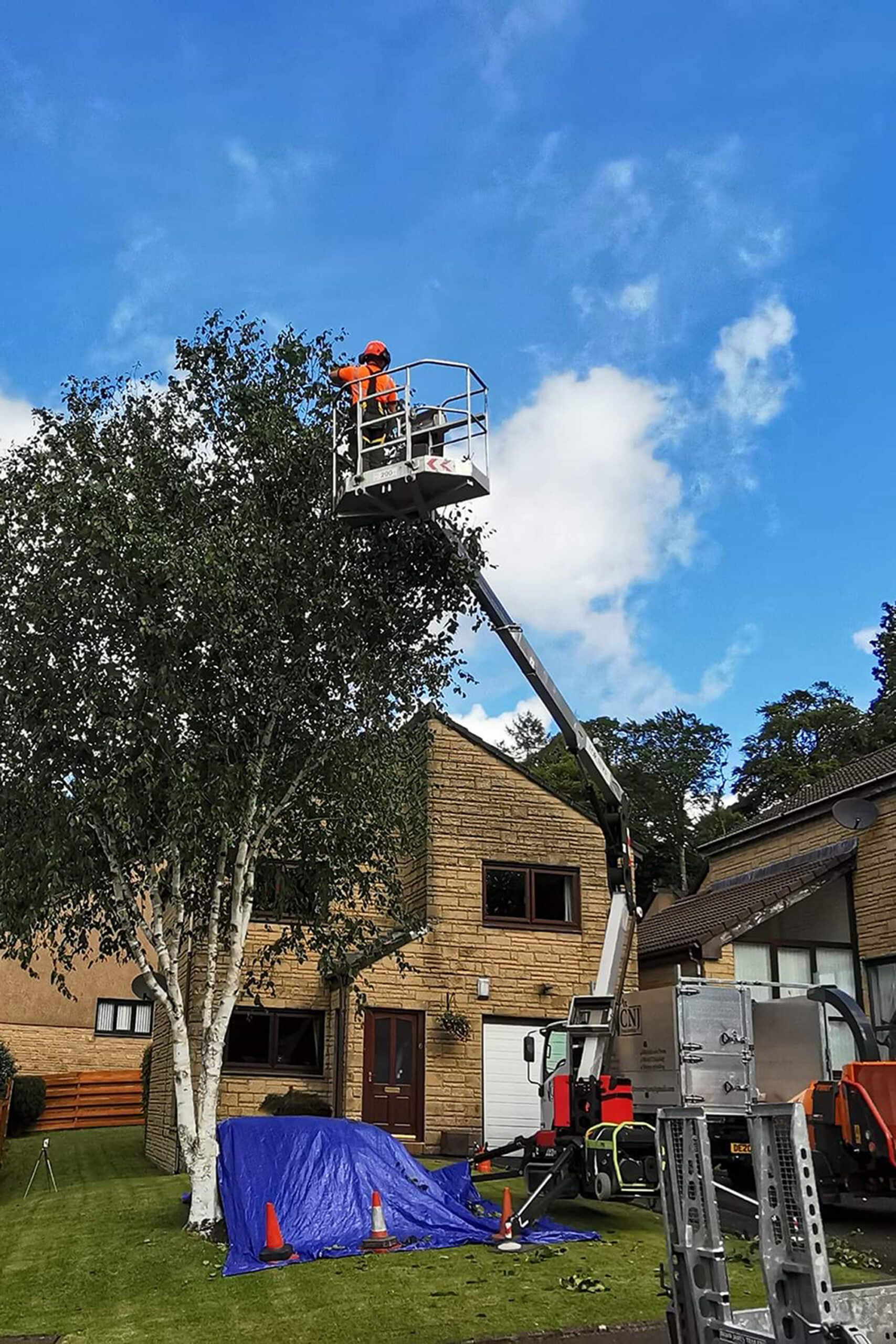
Some of what a survey needs to check sits well out of ladder reach: a cavity high in a retained street tree, a gap under a soffit three storeys up, an old rookery in crown growth nobody can get eyes on safely from the ground. Rather than defaulting to binoculars and an assumption, our tracked spider lift cherry picker - IPAF and NPORS certified for our own operators - gets a surveyor to that kind of feature directly, on the same visit the rest of the site gets walked. That matters most against a fixed seasonal window: booking a scaffold firm or an external MEWP hire for a second visit can cost a project a week it doesn’t have during bat activity season, and it’s a cost most standalone ecology consultancies pass straight on because the access equipment isn’t theirs to schedule.
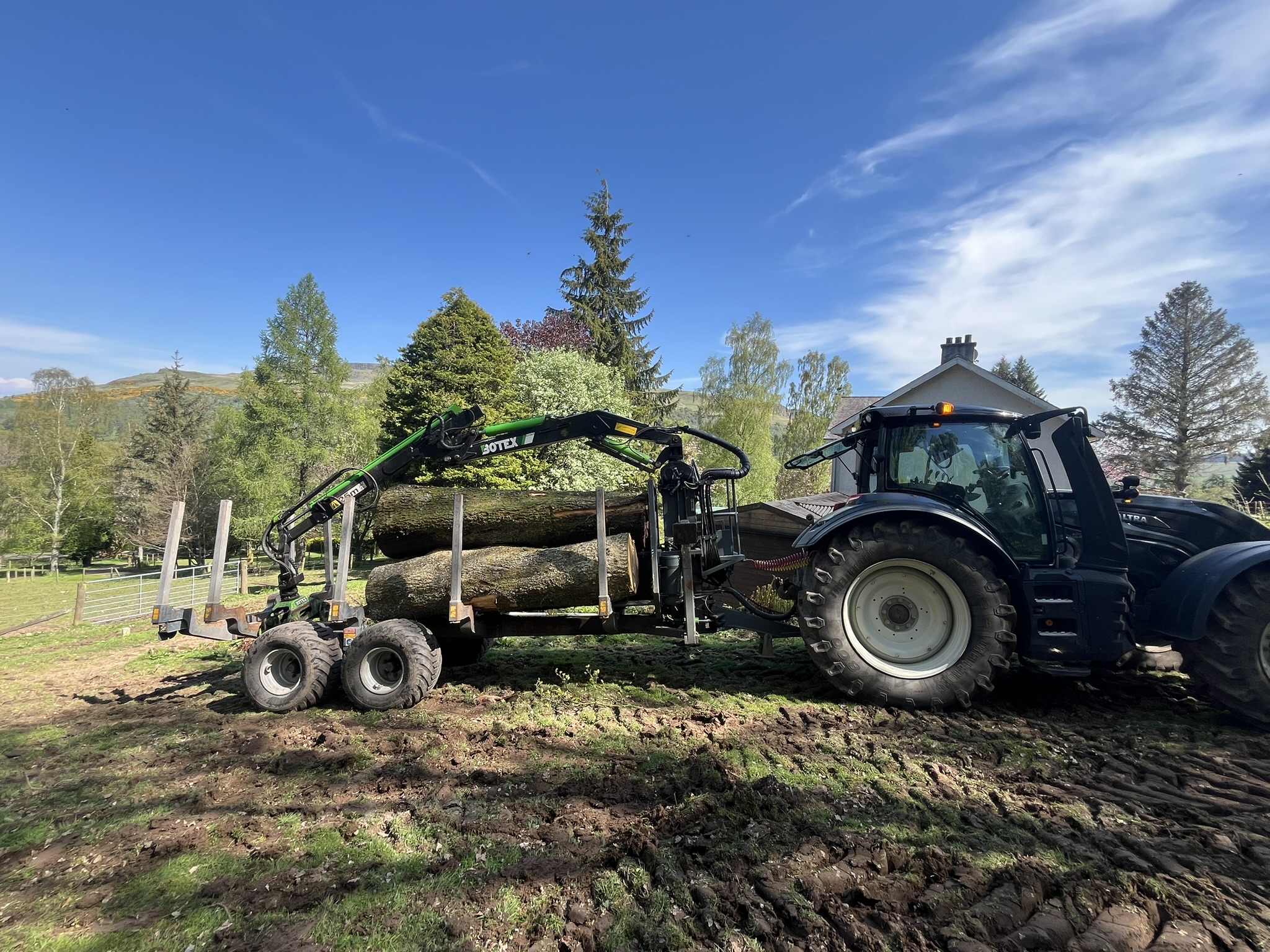
The same fleet carries the case through past sign-off. Where a licence comes back requiring a badger sett closure, timed vegetation clearance or supervised felling, the crew doing that work is the one that already knows the site from the survey stage, using excavators, forwarders and a woodchipper we own outright rather than machinery hired in once a licence window opens - so mitigation starts on the day the licence allows it, not on whatever day hired plant happens to be free.
Why Diary Density Matters as Much as Distance
A bat activity survey needs two or more dusk emergence or dawn re-entry visits inside a single May-to-September season, and great crested newt eDNA sampling has an even narrower mid-April to June testing window - which makes how tightly a caseload sits together on a map as much a factor in getting a survey done inside its season as anything about the habitat itself. A caseload concentrated around Greater Glasgow rather than spread the length of Scotland means a dusk visit in Renfrew and a second one that same evening in Rutherglen is usually realistic, rather than one site a night with hours lost on the road between them - and on a five-visit badger and bat programme, that difference can be the gap between finishing inside a season and carrying part of the survey over to next year.
Within that radius, the habitat feature on site tends to say more about which species survey gets triggered than the postcode does. Tenement and warehouse conversions close to the Clyde or the Forth & Clyde Canal - Partick, Finnieston, the dockland stretches around Renfrew and Clydebank - turn up roosting bats in gable gaps and lifted slate more often than in garden trees. A hedgerow, disused rail formation or a burn draining toward the river is what usually pulls badger or water vole survey into scope on sites at the city’s edge, rather than the presence of bats on its own. Ground that sits wet late into spring - common on the clay subsoils through the Clyde basin - is what most often pushes a great crested newt check onto a quote, independent of whether the site has trees or buildings on it at all. Which of Glasgow City, East Dunbartonshire or East Renfrewshire ends up reviewing the resulting application tends to follow that same geography, and it’s confirmed at the scoping call rather than assumed from a postcode, since a report written to the wrong authority’s expectations is one of the more avoidable reasons a submission comes back with questions.
Utility and road-corridor instructions run to a different clock again: a watermain diversion near the M8 at Charing Cross or clearance along the A82 has to work to a road-closure permit or a utility company’s own fixed dates, which don’t move for a bat season or a bird nesting season, so the survey gets scheduled around whichever deadline is tighter rather than the reverse. Sites closer to the Kilpatrick Hills or the southern edge of the Campsies bring a straightforward physical constraint on top of whatever the habitat calls for - wind exposure during the walkover itself, at height, on ground steep enough that footing needs planning for as much as roost-spotting does.
Get a Protected Species Survey Scoped Before Your Planning Application Goes In
Bat activity season, bird nesting season and the newt eDNA testing window all run on fixed calendar dates, not on a construction programme, so the earlier a site gets a scoping visit, the more options stay open for when licensed mitigation can actually happen. A short conversation now, before a design is finalised or a contractor is booked, is the easiest way to keep a development moving rather than working backward from a missed season.