
Commercial Bat and Wildlife Survey Glasgow
A commercial bat or wildlife survey usually comes up at the same point in a project as a tree survey or felling application — a site is being cleared, developed or re-landscaped, and a planning authority or NatureScot needs to see that protected species have been checked for before work starts. Skipping that step, or leaving it until the felling date is already fixed, is the most common reason a Glasgow development site ends up stalled: bats, badgers, otters and nesting birds are all protected by law, and a programme that disturbs a roost or sett without the right licence in place can be halted by a stop notice no matter how far along the build already is.
This service covers the desktop records check, site walkover and, where bats are indicated, the dusk emergence or dawn re-entry surveys that a planning application or NatureScot licence needs. Where a site also needs tree risk information for the same planning submission, the survey runs alongside CNJ’s BS5837 tree survey work, so the ecological findings and the tree assessment come from the same site visit rather than two contractors working to separate timelines.
At a Glance
- NPTC-qualified Professional Tree Inspector on every planning-related survey
- £5 million public liability cover as standard
- Survey findings are written straight into the tree work method statement, so nothing gets lost between contractors
City Areas: Merchant City, West End, South Side, East End, North Glasgow
Surrounding Areas: Paisley, East Kilbride, Hamilton, Motherwell, Coatbridge, Airdrie Extended
Coverage: Stirling, Falkirk, and throughout West and Central Scotland
Strategic location between Glasgow and Stirling enables rapid response with average emergency time under 2 hours.
Commercial Bat and Wildlife Survey Glasgow
Professional Protected Species Assessments for Glasgow Business Properties
Emergency Tree Removal
24/7 Response
Free Tree Quote
Professional assessment within 48 hours
Complete Tree Services
General and Specialist Services Available
Storm Damage Response
Immediate Callout
Planning commercial tree work in Glasgow requires professional bat and wildlife surveys meeting NatureScot licensing requirements. Wildlife crime can carry unlimited fines if convicted. CNJ Tree Services delivers comprehensive protected species assessments that prevent planning delays and criminal prosecution for wildlife disturbance violations. For an engaging overview of the kinds of animals commonly encountered in wooded and forested areas - and how they interact with their habitats - learn more about forest animals here.
Every Glasgow commercial property faces potential protected species complications when planning tree work or site development. Criminal prosecution for bat disturbance carries unlimited fines plus project stop notices. Professional wildlife surveys eliminate these risks through systematic assessment and regulatory compliance that satisfies planning authorities.
Comprehensive Commercial Bat and Wildlife Survey Services Across Glasgow
Why Choose Our Tree Service
Wildlife Survey for Commercial Development
Protected species surveys cover all wildlife affected by commercial development. Badgers, otters, nesting birds, and rare plants create legal obligations that require specialist assessment. Our wildlife survey coordination eliminates multiple contractor complications.
Comprehensive wildlife assessment covers:
- Breeding bird surveys during March-August construction planning
- Badger activity assessment and sett location mapping
- Red squirrel presence evaluation in woodland development areas
- Protected plant species identification and mitigation planning
Protected Species Survey Integration
Commercial projects require integrated ecological assessment coordinating multiple specialist surveys with development timelines. Our project management approach aligns ecological requirements with business objectives while maintaining complete legal compliance.
Integration benefits include:
- Coordinated survey scheduling minimising site disruption and access requirements
- Consolidated reporting streamlining planning application submission
- Unified mitigation planning creating coherent wildlife protection strategies
- Single invoice billing simplifying project cost management
FREE consultation available - call 0141-340-9722 today
Professional Bat Survey for Tree Work
Scotland’s bat populations roost in trees 95% of the time making bat surveys mandatory for most commercial tree work. All 10 Scottish bat species are protected under Wildlife and Countryside Act 1981, creating criminal liability for disturbance without proper assessment and licensing. All bat and wildlife surveys are conducted by NPTC/Lantra certified professionals, providing legally compliant documentation and expert interpretation for planning submissions.
Our coordinated bat survey services include:
- Preliminary roost assessment identifying potential bat habitats in trees scheduled for work
- Emergence and re-entry surveys documenting actual bat activity and roost usage patterns
- Licensed survey coordination with NatureScot registered bat specialists
- Mitigation planning designing tree work schedules that avoid protected species disturbance
Our Professional Commercial Wildlife Survey Process
Initial Ecological Assessment and Project Scoping
Every commercial project begins with comprehensive ecological scoping that identifies potential protected species constraints. Our environmental compliance specialists evaluate development plans alongside ecological specialists to determine survey requirements and regulatory obligations.
Scoping assessment includes:
- Desktop ecological data analysis reviewing local wildlife records and designated sites
- Site walkover surveys identifying habitat features supporting protected species
- Regulatory requirement evaluation determining NatureScot licensing and planning obligations
- Survey timeline planning coordinating ecological assessments with project schedules
Licensed Specialist Survey Implementation
Professional wildlife surveys require NatureScot licensed specialists with specific training and certification. Our established partnerships with Scotland’s leading ecological consultants deliver comprehensive surveys that satisfy regulatory requirements while supporting business objectives.
Licensed survey implementation covers:
- Bat emergence and re-entry surveys documenting roost usage and species identification
- Breeding bird assessments timed to avoid nesting season construction conflicts
- Protected mammal surveys identifying badger, otter, and red squirrel presence
- Botanical assessments evaluating rare plant species and habitat significance
Comprehensive Report Preparation and Regulatory Submission
Professional documentation protects businesses from prosecution while supporting planning applications and NatureScot licensing. Our coordinated reporting integrates ecological findings with tree work requirements, creating cohesive mitigation strategies.
Report components include:
- Executive summaries highlighting key findings and regulatory implications
- Species-specific assessments detailing population estimates and conservation significance
- Impact evaluations analysing development effects on protected species
- Mitigation recommendations designing wildlife protection measures that enable development
Ongoing Monitoring and Compliance Support
Wildlife survey compliance continues throughout project implementation. Our ongoing coordination services maintain regulatory compliance while supporting tree work activities through construction phases.
Ongoing support includes:
- Pre-construction briefings educating contractors about wildlife protection requirements
- Site supervision monitoring compliance with mitigation measures during tree work
- Regulatory liaison maintaining communication with NatureScot throughout projects
- Completion certification documenting successful mitigation implementation
Commercial Wildlife Survey Costs in Glasgow
Investment-Based Pricing for Regulatory Protection
Commercial wildlife survey coordination reflects the complexity and legal protection value of professional assessment. Glasgow commercial wildlife surveys typically cost £350 -£5,000 depending on site complexity, species present, and survey duration requirements.
Factors affecting survey investment:
- Site size and habitat complexity determining survey effort and specialist time requirements
- Species diversity affecting the number of specialist surveys and assessment duration
- Survey season timing with some species requiring multiple visits across months
- Regulatory complexity including NatureScot licensing and planning authority coordination
Cost-Effective Risk Management Investment
Professional wildlife surveys prevent exponentially higher prosecution and delay costs. Criminal prosecution, project stop notices, and planning refusals create massive unbudgeted expenses that systematic survey coordination eliminates.
Investment protection analysis:
- Professional survey coordination: £350 -£5,000
- Criminal prosecution fines: £20,000-£150,000+ plus legal costs
- Planning delay costs: £5,000-£25,000+ monthly
- Project stop notice impacts: £10,000-£100,000+ operational losses
Integrated Project Pricing
Our coordinated approach combines wildlife surveys with tree work planning, delivering cost efficiencies unavailable through separate contractor arrangements. Integrated pricing reduces total project costs while improving communication and timeline management.
Frequently Asked Questions
What commercial wildlife surveys are required for tree work in Glasgow?
Most commercial tree work requires bat surveys as Scottish bats predominantly roost in trees rather than buildings. Protected species surveys may also be needed for badgers, nesting birds, and rare plants depending on site characteristics and work timing. NatureScot requires professional assessment before licensing tree work affecting protected species, making surveys mandatory for legal compliance and planning permission.
How much do commercial wildlife surveys cost in Glasgow?
Commercial wildlife surveys in Glasgow typically cost £350-£5,000 depending on site complexity, species present, and survey duration. This investment prevents criminal prosecution fines exceeding £150,000 plus project delays costing £5,000-£25,000+ monthly. CNJ Tree Services coordinates wildlife surveys with tree work planning, reducing total project costs through integrated scheduling and documentation.
When should commercial wildlife surveys be scheduled?
Wildlife surveys are seasonally restricted with optimal timing varying by species. Prior to works that may impact protected species the relevant ecological assessments should be carried out. Bat surveys typically require April-October timing with June-July preferred. Breeding bird surveys are a must during March-August nesting periods. Early survey scheduling prevents project delays and ensures regulatory compliance before critical project milestones.
Do all commercial tree projects need NatureScot licensing?
No. Initial surveys are carried out to assess for likely impact on any protected species. If no species are affected then a naturescot license is not required. Any commercial tree work affecting protected species requires NatureScot licensing or risk criminal prosecution. Scotland’s Wildlife and Countryside Act protects all bat species, nesting birds, badgers, and other wildlife commonly found in commercial settings. Professional wildlife surveys determine licensing requirements while coordinating with tree work planning to prevent legal complications.
Can wildlife surveys be combined with tree safety assessments?
Yes, coordinated ecological and arboricultural assessments reduce costs while improving project efficiency. CNJ Tree Services coordinates wildlife surveys with tree risk assessments, condition evaluations, and safety inspections. Combined assessments eliminate multiple contractor complications while providing comprehensive documentation for planning applications and regulatory compliance.
What happens if protected species are found during surveys?
Discovering protected species doesn’t prevent development but requires mitigation planning and NatureScot licensing. Our specialists design work schedules and protection measures that enable projects while protecting wildlife. Mitigation may include timing restrictions, alternative roost provision, or monitoring requirements that can be integrated with commercial project planning.
How do wildlife surveys affect commercial insurance requirements?
Commercial wildlife surveys demonstrate due diligence for insurance coverage while providing professional indemnity protection for ecological decisions. Insurance companies increasingly require documented environmental compliance for commercial developments. Our coordinated approach includes appropriate insurance coverage for both ecological assessment and tree work implementation, protecting businesses from multiple liability exposures.
Choose CNJ Tree Services for Professional Commercial Bat and Wildlife Survey Coordination in Glasgow
Protect your Glasgow commercial project with Scotland’s leading wildlife survey coordination specialists. Since 2019, CNJ Tree Services has delivered integrated ecological and arboricultural solutions that prevent prosecution while enabling development success.
Gallery of Previous Work Done
Why Choose CNJ Tree Services?
Scotland's leading comprehensive tree and property service company.
60+ Specialist Tree Services
From basic pruning to de-vegetation and complex ecological assessments
30+ Years of Experience
Core team made up of highly experienced third-generation tree surgeons
24-hour Availability For Emergencies
Average response time under 2 hours
Up to £5M
Insurance Cover
Comprehensive cover for complete peace of mind
Professional Credentials
NPTC, Lantra, FMO and NPORS certified professionals ensuring the highest standards of safety and expertise on every project.
Environmental Expertise
Ecological surveys and compliance specialists
Our Service Areas
We Cover All of Glasgow and West Scotland
Primary Coverage
- Balfron
- East Dunbartonshire
- Glasgow City
- Killearn
- Renfrewshire
- South Lanarkshire (selected areas)
- Stirling
- Strathblane
- West Dunbartonshire
Key Locations
• Balfron • Bearsden • Bothwell • Clarkston • Clydebank • East Kilbride • Fintry • Giffnock • Hamilton • Killearn • Kippen • Kirkintilloch • Milngavie • Newton Mearns • Paisley • Strathblane • Stirling
Emergency Response
50-mile radius
Commercial Projects
We undertake commercial projects across Scotland.
Contact Us Today
What’s Covered in a Bat and Wildlife Survey, and What’s Priced Separately
- A desktop check of local wildlife records plus a site walkover looking for roost features, badger setts, otter signs, nesting habitat and protected plants
- Preliminary roost assessment and, where bats are indicated, dusk emergence or dawn re-entry surveys carried out by licensed surveyors
- A written report formatted for submission with a planning application or a NatureScot licence application
- Mitigation design — timing restrictions, method statements, alternative roost specification — built around your tree work programme rather than handed over as a standalone document
Not Included / Costed Separately
- The NatureScot licence application fee itself, which is paid to NatureScot separately from the survey
- Physical mitigation work, such as fitting bat boxes or building alternative roost features, priced once the survey confirms what’s actually needed
- A return visit if the first survey falls outside a species’ active season — a bat survey booked in December, for example, has to wait for spring before it can go ahead
- A watching brief with an ecologist present throughout construction, where a project needs someone on site continuously rather than at agreed checkpoints
How a Bat and Wildlife Survey Actually Gets Delivered
- Enquiry and desktop scoping: First contact covers what’s driving the survey — a planning condition, a felling licence application, or a NatureScot licence — and what the site’s timeline looks like. A desktop check of local biological records and aerial imagery follows, flagging any known roost, sett or protected species records within range of the site before anyone visits.
- Site walkover and preliminary assessment: A licensed surveyor walks the site looking for roost features on trees and buildings — cracks, lifted bark, gaps under soffits or ridge tiles — along with badger setts, otter signs, bird nesting habitat and any protected plants. This determines whether further survey work is needed and, if so, which species and what season it has to run in.
- Emergence or re-entry surveys where bats are indicated: If the walkover flags a potential roost, dusk emergence or dawn re-entry visits are booked within the active season (April to October, with June and July giving the clearest results). NatureScot guidance sets how many visits a given roost category needs, which is confirmed once the preliminary assessment result is in.
- Report and mitigation write-up: Findings are written into a report formatted for whichever submission it’s going to — a planning application or a NatureScot licence application — with mitigation measures such as timing restrictions or alternative roost provision built around the felling or construction programme rather than left as a generic add-on.
- Licence submission and works coordination: Where a NatureScot licence is needed, the report goes in alongside the application and any case officer queries are handled directly. Once consent is confirmed, felling or construction is scheduled to fall inside the licensed conditions and any agreed check-in points with the ecologist.
Coordinated Survey and Tree Work vs Going It Alone
| Approach | Who coordinates it | Effect on your timeline | Risk if a protected species turns up |
|---|---|---|---|
| Survey and tree work booked through CNJ | One team schedules the ecologist around your felling or pruning programme and writes mitigation into the method statement | Survey and tree work can run back to back once the report is in | Mitigation is already built into the programme, so a positive result adjusts the plan rather than stopping it |
| Ecologist booked separately from your tree contractor | Two contracts, two diaries, and the tree contractor waiting on paperwork it doesn’t control | Weeks are often lost to correspondence between ecologist, tree contractor and client | Mitigation has to be renegotiated with the tree contractor after the report lands |
| Proceeding without a survey | No one | No upfront delay — but no protection either | Unlimited fine exposure under the Wildlife and Countryside Act, plus a possible stop notice if a roost is disturbed |
The Access Kit Changes What a Preliminary Survey Can Actually Confirm
A preliminary roost assessment done from the ground, with a torch and a pair of binoculars aimed at a crack forty feet up a mature beech, produces a judgement call rather than an answer: roost potential moderate, further survey recommended. Getting close enough to look inside a cavity, check for staining under a lifted section of bark, or confirm a gap is genuinely bat-sized rather than just wide enough for a nesting bird, means getting a person up to the feature itself rather than reading it through binoculars from the ground. CNJ owns its tracked spider lift cherry picker outright, and the operators hold IPAF and NPORS certification for MEWP and 360 excavator work, so a roost feature flagged at ground level on a commercial site doesn’t sit on a waiting list behind hired-in access equipment before it can be confirmed one way or the other — the machine is already on the yard, and the same operator can reposition to check a second or third tree on the same visit rather than booking a separate platform hire for each one. That access capability sits alongside the climbing and rigging side of the business covered under CNJ’s arborist services, and the crew working at height on a survey day carries First Aid +F training — catastrophic bleed and chainsaw-specific emergency response — because inspecting a storm-damaged or structurally compromised tree at height is still a working-at-height job even on a day when no chainsaw is running. Where the same site goes on to need a BS5837 risk assessment alongside the ecology report, that document comes from Callum Jackson, who holds NPTC Professional Tree Inspector accreditation gained in 2023, working from notes taken on the same visit rather than a second specialist starting again from nothing — and the survey, the risk assessment and any tree work that follows all sit under one £5 million public liability policy rather than three separate ones. The same investment shows up off the survey site too: CNJ runs its own Modern Apprenticeship intake and backs woodland regeneration and conservation work across Central Scotland, so a mitigation recommendation that calls for replacement habitat planting, timing restrictions around a nesting season or a sett buffer zone isn’t an unfamiliar ask handed to a crew that’s never done anything like it — it sits close to work the business already does independently of any one contract. Founder Callum Jackson grew up in a multi-generational Scottish forestry family and has been using a chainsaw professionally for around 18 years, which is less a marketing line than a practical one on a survey visit: reading whether a cavity, a split limb or a section of dead bark is old and stable or fresh and structurally live is a judgement built on that kind of time served, and it feeds directly into how a preliminary roost assessment gets written up rather than left as a guess pending a second opinion. Where mitigation does end up needing ground clearance — ivy stripped back from a gable end, scrub cut back from a sett entrance, or a section of understorey removed to make way for a replacement roost feature — that work runs through Ron Bowes-Taylor’s climbing and rigging team or Neill Tannahill’s plant operation depending on what the site calls for, rather than being scoped out to whichever subcontractor happens to be free that month, and the same £5 million public liability policy that covers the survey visit itself extends across that follow-on ground work without a separate certificate needing to be chased down.
Why the Season Matters As Much As the Postcode
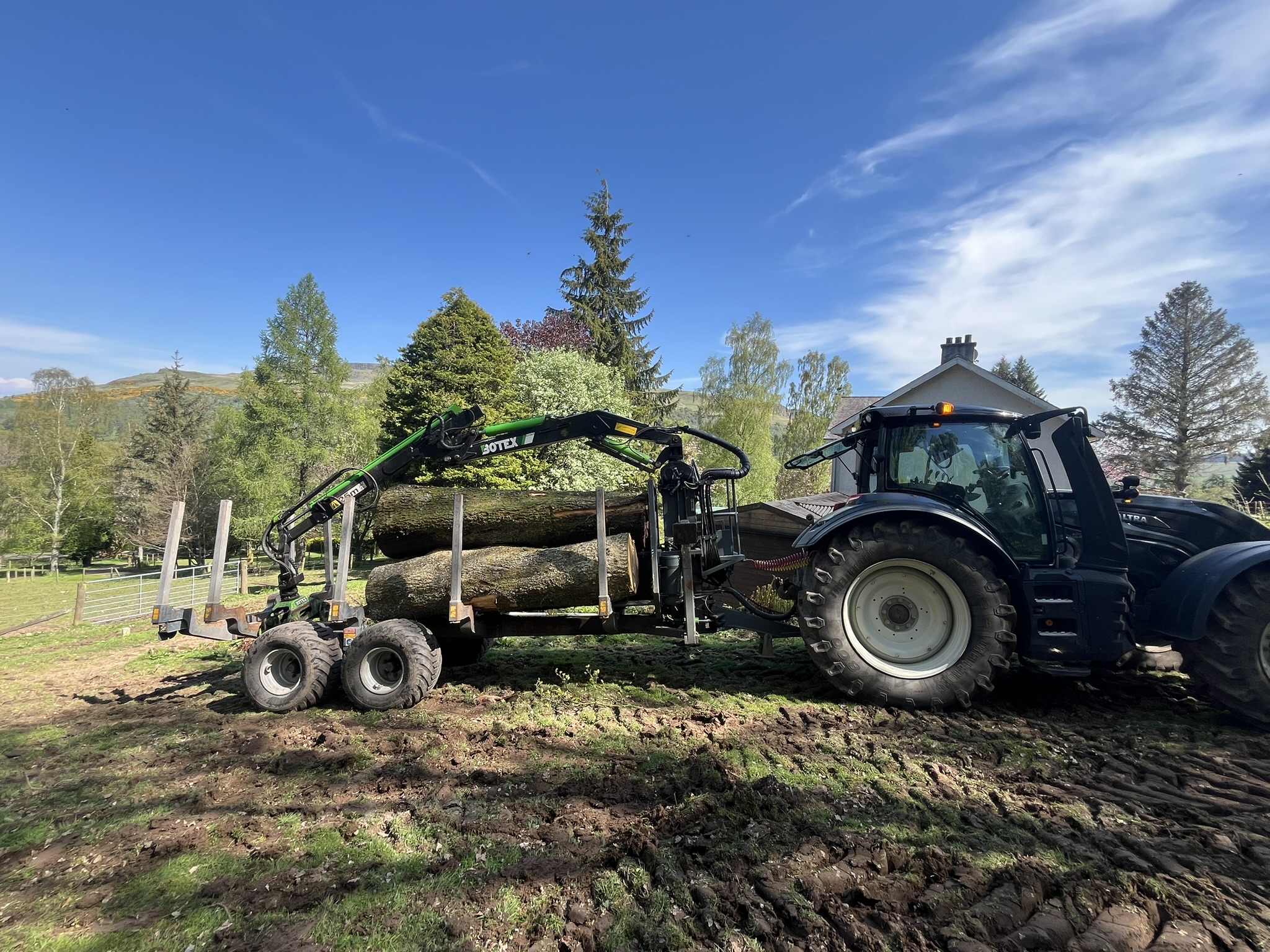
A bat and wildlife survey isn’t held to the same 10-mile radius that covers CNJ’s routine domestic tree work out of the Newton Place base — commercial and development instructions are taken on anywhere in Scotland, because the licensed surveyor travels to wherever the site is rather than the site needing to sit within reach of Glasgow. What changes by location isn’t whether the work gets picked up, it’s what the walkover is likely to find, and that’s a more useful thing to plan a scoping visit around than a boundary on a map. Two site types account for most of the calls that come in around Glasgow itself. The first is converted or redeveloped sandstone tenements, former mill buildings and warehouse units close to the Clyde and the Forth & Clyde Canal, where a roost is just as likely to be behind a gable-end gap, under lifted slate or inside an old soffit box as it is inside a tree — a survey scoped only to check street trees and garden specimens can walk straight past that kind of roost without ever finding it. The second is higher, more exposed ground toward the Cathkin Braes, the Kilpatrick Hills and the southern edge of the Campsies, where forestry-adjacent clearance and access-track work bring badger setts and ground-nesting birds into the same assessment, and where wind at height adds a genuine access constraint to the walkover on top of whatever the habitat itself calls for. Timing cuts across both site types the same way: April to October is the window in which a dusk emergence or dawn re-entry survey produces a usable result, with June and July giving the clearest picture, so a felling or construction programme fixed to a date outside that window has to build the wait into its schedule rather than treat the survey as something that slots in whenever the diary allows. Once the walkover and any follow-on visits are done and mitigation is agreed, tree work arising from the findings runs through CNJ’s own tree services rather than being handed to a separate contractor working from a written report alone. Whichever council ends up reviewing the paperwork — Glasgow City, East Dunbartonshire and East Renfrewshire are the three that come up most often on sites within reach of Glasgow — sets its own expectations for survey timing and report format, so that gets confirmed on the first call rather than assumed to be the same everywhere. Where a survey does confirm protected species presence and physical mitigation follows — a badger sett buffer zone that needs scrub cleared without disturbing the sett itself, or vegetation removed to make way for a replacement roost feature — that groundwork runs through the same in-house plant fleet used on CNJ’s tree work generally: forwarder trailers and line skidders for extracting cleared material without repeated site traffic, and FMO licensing that covers the crew operating them. None of that material goes to a third-party tip — it’s processed on CNJ’s own ground, with larger sections seasoned for the company’s woodfuels division and smaller brash chipped for landscaping or biomass fuel, so a mitigation instruction that includes clearance work doesn’t add a second waste contractor to the job on top of the ecologist and the tree crew already booked in.
Get a Bat Survey Booked Before the Season Window Closes
Bat emergence and re-entry surveys need the active season to produce a usable result, with April to October the workable window and June and July giving the clearest picture. If a development or tree work programme is pinned to a fixed start date, the survey has to go in the diary first — booking a scoping visit early is the difference between a report that’s ready when the contractors are, and a project stuck waiting on next year’s bat season. Call to talk through what a specific site is likely to need before committing to a date.