
Commercial Ecological Clearance Surveys Glasgow
Professional Environmental Compliance for Glasgow Business Properties
At a Glance
A felling or clearance crew turning up on a commercial site before ecological sign-off is confirmed is the single biggest scheduling risk on a Glasgow redevelopment job – work that disturbs an active bat roost or badger sett mid-clearance can mean a stop notice, a licence application filed under pressure, and hired machinery standing idle while it’s sorted out. An ecological clearance survey is what removes that risk before a clearance crew is ever booked: a walkover and, where the site’s trees, ground and watercourses call for it, species-specific surveys run to the season each one requires, ending in a written report and, if something is found, a mitigation licence application to NatureScot. Once that’s in place the site is legally clear to move into felling or clearance, which we can carry out as a separate instruction through our site clearance and vegetation management service, using the same crew and machinery that already knows the site from survey stage.
Callum Jackson, our founder, holds an NPTC Professional Tree Inspector qualification and leads the BS5837 planning survey and tree risk assessment work that usually sits alongside the ecology survey on the same site, so one team can sign off both the arboricultural and ecological sides of a planning condition rather than a site waiting on two separate consultants to compare notes.
- NPTC-qualified tree inspector on every planning survey
- One team from ecology sign-off through to physical clearance
- £5 million public liability cover on every site
City Areas: Merchant City, West End, South Side, East End, North Glasgow
Surrounding Areas: Paisley, East Kilbride, Hamilton, Motherwell, Coatbridge, Airdrie Extended
Coverage: Stirling, Falkirk, and throughout West and Central Scotland
Strategic location between Glasgow and Stirling enables rapid response with average emergency time under 2 hours.
Get FREE quote – Call 0141-340-9722
Commercial Ecological Clearance Glasgow
Professional Environmental Compliance for Glasgow Business Properties
Emergency Tree Removal
24/7 Response
Free Tree Quote
Professional assessment within 48 hours
Complete Tree Services
General and Specialist Services Available
Storm Damage Response
Immediate Callout
Glasgow’s commercial property developers face complex environmental compliance challenges that can halt development projects and trigger unlimited fines. Inadequate ecological clearance causes project delays exceeding £30,000+ weekly, while protected species violations create legal liability and enforcement action. CNJ Tree Services delivers professional commercial ecological clearance across Glasgow and West Scotland, eliminating these risks through systematic environmental compliance and comprehensive ecological survey expertise. For projects needing broader site preparation and vegetation management, see our comprehensive services at www.cnjtreeservices.co.uk/general-tree-and-vegetation-contractor-site-clearance which include environmental compliance, protected species consideration, and full site readiness.
FREE Commercial Ecological Clearance Assessment Available – Call 0141-340-9722
Why Glasgow Businesses Choose CNJ Tree Services for Commercial Ecological Clearance
Why Choose Our Tree Service
Environmental Specialist Expertise: Our strategic location between Glasgow and Stirling enables rapid environmental response across West Scotland. Owner-operated quality control means Callum Jackson personally coordinates every ecological clearance project with environmental consultants and regulatory authorities.
Regulatory Authority Relationships: Established working relationships with SEPA, NatureScot, and Glasgow City Council enable efficient permit processing and compliance management. Our environmental specialists understand regulatory requirements protecting your project from enforcement complications.
Commercial ecological clearance demands specialist environmental knowledge and regulatory compliance expertise that general contractors cannot provide. CNJ Tree Services combines 30+ years experience with environmental compliance specialisation, delivering ecological services that protect your development investment and regulatory standing.
Environmental Compliance Risk Elimination:
- Legal penalty protection preventing unlimited fines for protected species violations
- Development timeline protection avoiding regulatory delays and enforcement suspension
- Insurance liability reduction eliminating environmental damage claims and third-party costs
- Professional reputation protection maintaining regulatory compliance and environmental responsibility
Comprehensive Commercial Ecological Clearance Services Across Glasgow
CNJ Tree Services delivers complete environmental compliance solutions for Glasgow’s commercial and industrial developments. Our systematic approach integrates ecological requirements with development programmes maintaining regulatory compliance.
Protected Species Surveys & Management
Professional identification and management of protected wildlife species affecting commercial development sites. Our ecological specialists handle all survey requirements and regulatory compliance.
Protected Species Services:
- Bat surveys and mitigation for roosting and foraging sites
- Bird nesting surveys preventing disturbance during breeding seasons
- Badger surveys and sett protection maintaining habitat connectivity
- Great crested newt surveys and population management where required
Environmental Impact Assessment Support
Comprehensive environmental evaluation supporting planning applications and development consent requirements. Our ecological assessments identify constraints and mitigation requirements.
Environmental Assessment Capabilities:
- Preliminary ecological appraisal identifying survey requirements and constraints
- Extended Phase 1 habitat surveys mapping ecological value and protected areas
- Species-specific surveys targeting protected and priority species populations
- Environmental impact assessment preparation supporting planning consent applications
Habitat Management & Mitigation
Professional habitat management creating environmental benefits whilst supporting development objectives. Our ecological approach balances conservation requirements with commercial viability.
Habitat Services:
- Habitat creation and restoration compensating for development impacts
- Species translocation programmes protecting wildlife populations during development
- Ecological mitigation implementation meeting planning consent conditions
- Long-term habitat management supporting biodiversity enhancement objectives
Environmental Compliance Monitoring
Ongoing environmental monitoring maintaining regulatory compliance throughout development phases. Our ecological specialists coordinate with environmental consultants and regulatory authorities, delivering detailed Terrestrial Biodiversity Monitoring to track habitat quality, species presence, and mitigation effectiveness throughout construction and post-development phases.
Compliance Monitoring Benefits:
- Construction phase ecological monitoring maintaining protected species compliance
- Environmental method statement implementation protecting wildlife during development
- Regulatory reporting and liaison maintaining consent condition compliance
- Adaptive management responding to ecological discoveries and regulatory requirements
Our Professional Commercial Ecological Process
CNJ Tree Services follows a systematic environmental methodology maintaining regulatory compliance whilst supporting development programme integrity and commercial objectives.
Phase 1: Environmental Baseline Assessment (2-4 Weeks)
Comprehensive ecological evaluation identifying environmental constraints, protected species presence, and regulatory requirements before development planning proceeds.
Baseline Assessment Includes:
- Desktop study and data search identifying ecological designations and protected species records
- Preliminary ecological appraisal mapping habitats and identifying survey requirements
- Protected species assessment determining presence likelihood and survey timing requirements
- Regulatory requirement evaluation identifying permits and consent condition obligations
Phase 2: Detailed Ecological Surveys (Variable Timeline)
Systematic ecological surveys providing regulatory-compliant data supporting development planning and environmental compliance management.
Survey Programme Components:
- Extended Phase 1 habitat surveys mapping ecological value and constraint areas
- Protected species surveys following regulatory methodologies and timing requirements
- Breeding bird surveys identifying nesting activity and protection requirements
- Additional species surveys targeting site-specific protected species populations
Phase 3: Impact Assessment & Mitigation Planning (2-3 Weeks)
Professional environmental impact assessment identifying development effects and designing mitigation measures meeting regulatory requirements and commercial objectives.
Assessment Process:
- Impact evaluation determining development effects on protected species and habitats
- Mitigation design creating environmental benefits whilst enabling development progress
- Compensation planning offsetting unavoidable environmental impacts through habitat creation
- Method statement preparation detailing protective measures during construction phases
Phase 4: Implementation & Compliance Monitoring (Ongoing)
Professional implementation of environmental mitigation measures with ongoing monitoring maintaining regulatory compliance throughout development and operational phases.
Implementation Standards:
- Environmental method statement implementation protecting wildlife during construction activities
- Species translocation programmes relocating protected wildlife to suitable alternative habitats
- Habitat creation and restoration delivering environmental compensation and enhancement
- Long-term monitoring programmes maintaining compliance and demonstrating environmental success
Commercial Ecological Costs in Glasgow
Commercial ecological survey pricing reflects survey complexity, species protection requirements, and ongoing compliance obligations. CNJ Tree Services provides transparent environmental pricing enabling accurate development budget planning.
Factors Affecting Your Ecological Quote
Species Complexity: Multiple protected species require specialist surveys and complex mitigation measures increasing environmental compliance costs.
Survey Timing: Seasonal constraints and extended survey periods affect project scheduling and resource requirements.
Mitigation Requirements: Habitat creation, species translocation, and compensation measures add specialist implementation costs.
Compliance Monitoring: Long-term monitoring obligations and regulatory reporting requirements affect ongoing project costs.
Why Environmental Compliance Matters for Commercial Ecological Clearance
Glasgow’s environmental legislation protects biodiversity whilst supporting sustainable development. Compliance protects your development from regulatory enforcement, unlimited fines, and project suspension.
Protected Species Legislation
UK and Scottish protected species legislation creates comprehensive protection for wildlife with severe penalties for violations during commercial development.
Legal Protection Framework:
- Wildlife and Countryside Act 1981 providing statutory protection for native species and habitats
- Conservation (Natural Habitats) Regulations creating European level protection for priority species
- Nature Conservation (Scotland) Act 2004 establishing additional protection for Scottish biodiversity
- Planning legislation requiring environmental consideration in development consent decisions
Penalty Exposure & Enforcement Risk
Environmental violations carry unlimited fines, imprisonment, and project suspension creating severe business risks for commercial developers.
Enforcement Consequences:
- Unlimited fines for protected species disturbance and habitat destruction
- Development stop notices halting construction and triggering contractor claims
- Director liability and potential imprisonment for serious environmental offences
- Reputational damage affecting future development opportunities and business relationships
CNJ Environmental Compliance Advantage
Our environmental compliance specialists provide complete protection against regulatory violations through systematic survey work and proactive mitigation management.
Environmental Protection Benefits:
- Qualified ecological surveyors providing regulatory-compliant survey data and species assessment
- Environmental licensing specialists managing permit applications and regulatory compliance
- Established regulatory relationships enabling efficient consent processing and compliance management
- Comprehensive insurance protection covering environmental liability and professional indemnity risks
Frequently Asked Questions
What protected species surveys are required for commercial development in Glasgow?
Survey requirements depend on site location, habitat types, and development scale. Common surveys include breeding bird assessments during March-August, bat activity and roosting surveys between April-October, and badger surveys year-round. Great crested newt surveys may be required near water bodies during March-June. Our ecological specialists conduct site assessment identifying specific survey requirements and optimal timing for regulatory compliance whilst minimising development programme delays.
How long do ecological surveys take for commercial development projects?
Survey duration depends on species requirements and seasonal constraints. Preliminary ecological appraisal typically requires 1-2 weeks, whilst protected species surveys may extend across multiple seasons. Bat surveys require minimum 3 visits between May-September, breeding bird surveys need 2-3 visits during March-July, and badger surveys can be completed year-round within 2-4 weeks. We coordinate survey timing with development programmes minimising project delays.
What happens if protected species are discovered during development work?
Protected species discovery during construction requires immediate work cessation and specialist assessment. Our emergency ecological response provides species identification, regulatory compliance advice, and mitigation planning within 24 hours. Depending on species and circumstances, solutions may include exclusion measures, habitat modification, or species translocation. We coordinate with regulatory authorities securing appropriate licences enabling development continuation under environmental supervision.
Can ecological surveys be completed outside standard survey seasons?
Limited survey work can be undertaken outside optimal seasons using alternative methodologies, though results may have reduced validity requiring additional survey work during appropriate periods. Emergency surveys provide interim assessment enabling development planning whilst comprehensive surveys await suitable weather and breeding conditions. Our ecological specialists advise on alternative approaches balancing development programme requirements with regulatory compliance standards.
What environmental mitigation is typically required for commercial developments?
Mitigation requirements vary by species affected and development impact severity. Common measures include habitat creation compensating for losses, species exclusion preventing construction impacts, and population management relocating wildlife to suitable areas. Compensation ratios typically require 2-3 times habitat replacement for losses. Long-term management agreements may be required to maintain mitigation effectiveness for 25+ years supporting biodiversity enhancement objectives.
Do you provide long-term environmental monitoring services?
Yes, our long-term monitoring services maintain regulatory compliance and demonstrate environmental success following development completion. Monitoring programmes typically continue for 5-25 years depending on mitigation requirements and planning conditions. Services include habitat establishment monitoring, species population monitoring, and management plan implementation. Annual reporting to regulatory authorities demonstrates compliance whilst adaptive management responds to changing ecological conditions.
What insurance coverage do you provide for environmental liability?
Our comprehensive environmental insurance includes £5 million professional indemnity covering survey accuracy and advice quality, environmental liability insurance protecting against species disturbance and habitat damage claims, and regulatory compliance insurance covering enforcement costs and penalty exposure. Coverage includes legal defence costs, remediation expenses, and third-party environmental damage claims protecting development investment and business reputation.
Choose CNJ Tree Services for Professional Commercial Ecological in Glasgow
Glasgow’s commercial developments require environmental compliance expertise that prevents regulatory violations, protects against unlimited fines, and maintains development programme integrity. CNJ Tree Services combines 30+ years experience with ecological specialisation, delivering environmental compliance services that eliminate regulatory risks whilst supporting commercial development objectives.
Gallery of Previous Work Done
What Our Clients Have Said About Us
Jackie Breen
From the first time getting in touch with Callum, the service was fantastic, he came out gave us a great quote and was able to do the job very quickly. The boys that came to carry out the work were professional, friendly and worked non stop to get the job done, they were so careful with machinery on the property as well and left the garden and paths spotless before they left. I would highly recommend them.
"
Alan
Callum and his team arrived on the agreed day & time, carried out the tree felling with impeccable professionalism and cleared up after. The work was done at the quoted price and they were very pleasant guys with no bad language. I highly recommend CNJ and I will certainly be using Callum and his 5 star tree fellas again.
"
Robin Campbell
Callum and his team felled four 40-foot+ trees in our garden, facing particular challenges (2 trees hanging over our LPG tank, one menacing a precious rhododendron). They worked incredibly hard, were great to deal with and we would thoroughly recommend them.
"
Why Choose CNJ Tree Services?
Scotland's leading comprehensive tree and property service company.
60+ Specialist Tree Services
From basic pruning to de-vegetation and complex ecological assessments
30+ Years of Experience
Core team made up of highly experienced third-generation tree surgeons
24-hour Availability For Emergencies
Average response time under 2 hours
Up to £5M
Insurance Cover
Comprehensive cover for complete peace of mind
Professional Credentials
NPTC, Lantra, FMO and NPORS certified professionals ensuring the highest standards of safety and expertise on every project.
Environmental Expertise
Ecological surveys and compliance specialists
Contact Us Today
One Fee Covers the Report and the Licence Application – the Felling Is Booked Separately
- A desktop biodiversity records search against local records centre and NatureScot data before anyone visits site, so likely species are flagged early rather than found for the first time on the walkover.
- An extended Phase 1 habitat walkover of the whole site, not just the trees or vegetation earmarked for removal.
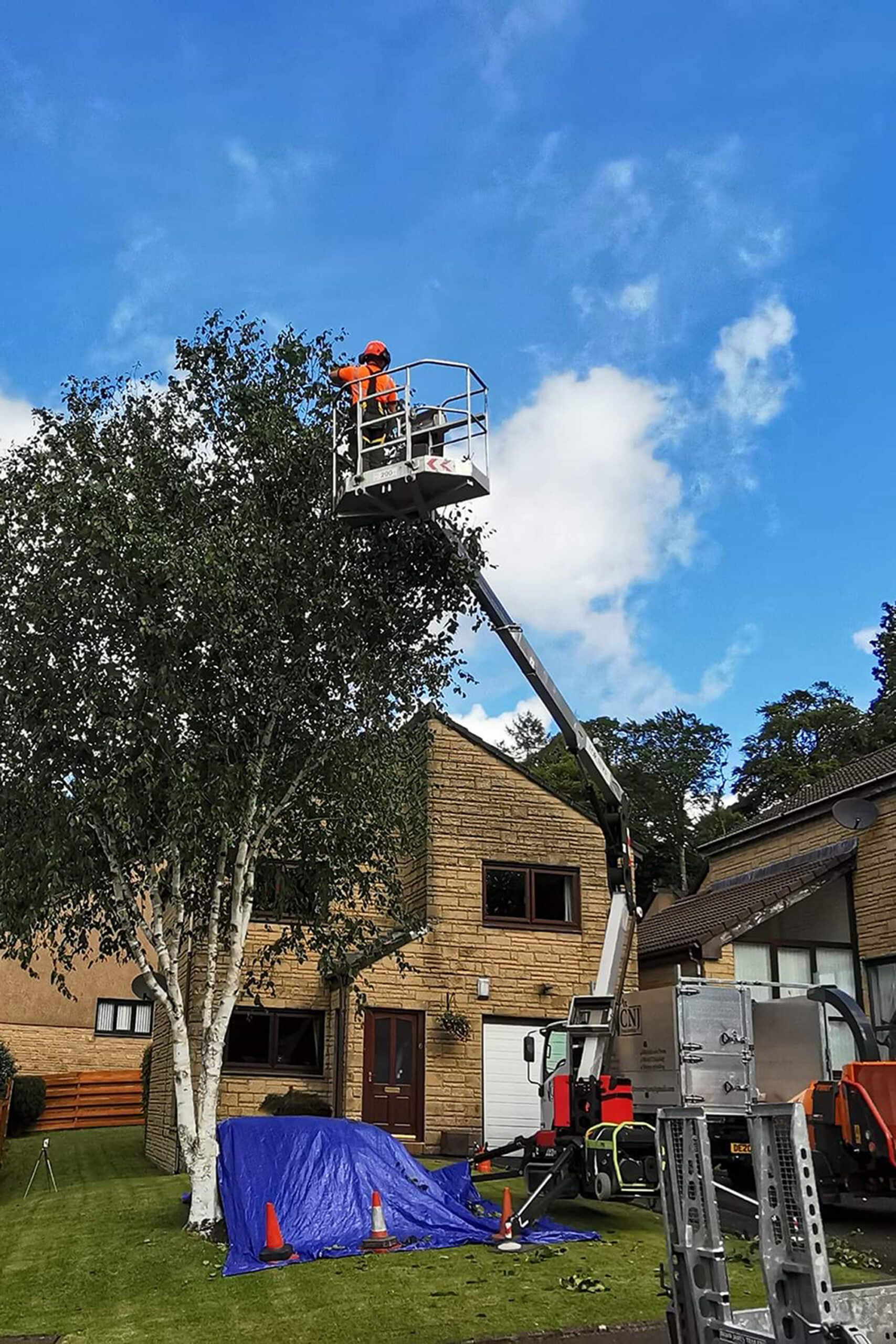
- Bat roost potential inspection of trees and any buildings due to come down, using ground-level checks and, where access allows, aerial inspection from our own cherry picker rather than a hired one – the same machine that comes back to do the clearance.
- Badger sett searches, breeding bird assessment timed to the nesting season, and water vole or otter checks on any watercourse or drainage feature on or bordering the site.
- A timing plan that lines the survey programme up against when clearance or felling is actually meant to start, so a crew and machinery aren’t booked before sign-off can realistically be granted.
- A written ecology report in the format planning officers expect, ready to submit alongside a planning application.
- Preparation of a method statement and mitigation licence application to NatureScot where a protected species is confirmed on site.
Not Included / Costed Separately
- Felling or clearing the vegetation itself once ecological sign-off is granted – that’s a separate instruction, booked and priced once survey results are known (see our site clearance and vegetation management service).
- Statutory licence application fees charged directly by NatureScot for European Protected Species licences – our fee covers preparing and submitting the application; the regulator’s own processing fee is separate.
- A repeat survey visit if the first one falls outside a species’ suitable survey window (for example bats are only reliably surveyed between May and September) – this is quoted as an addition once the timing constraint is known, not folded into the original fee.
- Long-term post-development monitoring beyond the agreed compliance period – ongoing monitoring programmes running for several years are scoped and contracted separately once mitigation requirements are confirmed.
The Survey Calendar That Actually Sets Your Clearance Date
- Enquiry and desktop check: You tell us what’s planned for the site and which planning authority is involved; before anyone visits, we run a records search against local biodiversity data and NatureScot records to see what’s already known to be present nearby.
- Site walkover: Callum Jackson or a member of the team walks the site, checking trees for bat roost features, ground and boundaries for badger activity, and any watercourse or pond for otter, water vole or great crested newt signs, then scopes out which species-specific surveys the site will actually need.
- Scheduling around seasonal windows: Species surveys have to run in the periods each one is active or detectable – bat activity surveys between May and September, breeding bird checks in the nesting season – so visits are booked against those windows rather than the client’s preferred timeline, and any risk to a planning deadline is flagged early.
- Report and licensing: Findings go into a written ecology report suitable for a planning submission; where a protected species is confirmed, we prepare the mitigation method statement and licence application for NatureScot rather than leaving that step to the client.
- Sign-off and handover: Once conditions are met and any licence is granted, we issue written confirmation that the site is clear to proceed, and can move straight into the felling or clearance work ourselves, or hand the report to another contractor if that’s already in place.
Getting an Accurate Figure for Your Site
We don’t publish a fixed price list for ecological clearance work, because the survey programme for one commercial site can look nothing like another of the same size – it depends entirely on which protected species are present, how many separate site visits and seasonal survey windows that triggers, and what mitigation or licensing follows on from the results. A desktop record search can rule some things out early, but an accurate quote needs a site visit: Callum Jackson or a member of the team walks the habitats present, checks what’s already recorded for the area, and scopes out which surveys the site will actually need before pricing the job. If you’re working to a planning submission deadline, flag that when you call so the survey timing can be checked against the season before it’s quoted.
How This Compares to a Stand-Alone Ecologist or a General Contractor
| What matters on a commercial site | CNJ Tree Services | Stand-alone ecology consultancy | General landscaping/vegetation contractor |
|---|---|---|---|
| NPTC-qualified assessor for BS5837 tree surveys | In-house (Callum Jackson, NPTC Professional Tree Inspector, 2023) | Sometimes subcontracted | Rarely offered |
| Physical clearance carried out once licensed | Yes – own plant fleet, no waiting on hired machinery or a separate contractor | No – refers the clearance out to a contractor | Yes, but not ecology-trained |
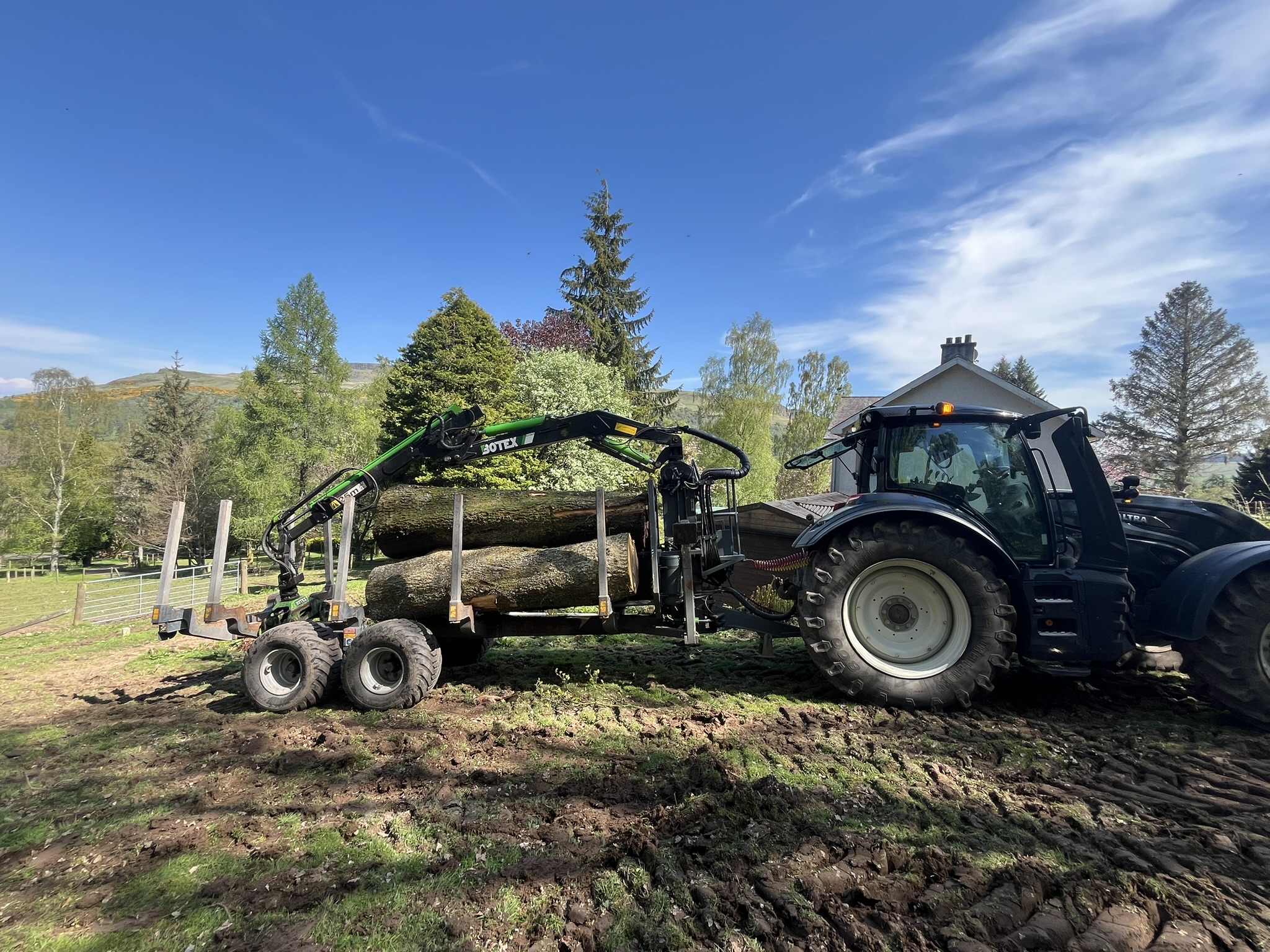
| Low-ground-pressure machinery for sensitive sites | Tracked forwarders and a spider lift cherry picker | Not applicable – no plant | Not always available |
| Single point of contact from survey to sign-off to clearance | Yes | No – handover between firms | No – ecology work is subcontracted out |
| Public liability cover | £5 million | Varies by firm | Varies by firm |
Eighteen Years on the Chainsaw Before the First Survey Was Ever Written
Callum Jackson founded CNJ in 2019, but the experience behind the NPTC ticket goes back further – around 18 years of professional chainsaw work, learned inside a multi-generational Scottish forestry family before he trained as a Professional Tree Inspector in 2023. That’s the background the BS5837 survey and risk assessment work draws on whenever it sits alongside an ecology instruction: judgment on which trees are actually worth retaining, and which are a genuine risk once habitat features are stripped out, rather than a checklist applied by someone reading the site for the first time.
The clearance side of the job carries its own separate licensing, which is easy to overlook next to a survey qualification. Operating a forwarder or line skidder on soft ground near a watercourse, or lifting a cherry picker into a badger sett buffer zone, is FMO and IPAF/NPORS-licensed work, and it’s what keeps low-ground-pressure machinery from turning a clean clearance into a soil compaction or drainage problem the ecology report was trying to prevent in the first place. The team also carries First Aid +F training, built around chainsaw-specific and catastrophic bleed response, which matters more on a clearance site than a survey walkover, given the equipment involved once felling actually starts.
All of it – survey, licence application and clearance – sits under one £5 million public liability policy, and the timber and brash the clearance produces doesn’t leave the business: larger material is seasoned for our own woodfuels division, smaller branches are chipped for landscaping or biomass. Where a site needs wider tree work beyond the ecology instruction itself, our full range of tree services covers that without bringing in a second contractor.
The Ground Conditions That Shape a Glasgow Ecological Survey
Most of our ecological clearance instructions sit on brownfield and redevelopment land in and around Glasgow – former dockland and shipyard sites along the Clyde in Renfrew and Clydebank, and smaller infill plots elsewhere in the city, where derelict sheds, overgrown boundary scrub and disused rail or canal corridors tend to hold more bat roost potential and badger activity than a green-field site would, simply because they’ve been left undisturbed for years. A large share of that work sits under a Tree Preservation Order or inside a Conservation Area, and where it does, we handle the ecology and the arboricultural sign-off together with Glasgow City, East Dunbartonshire or East Renfrewshire planning teams, rather than running them as two separate applications that have to be reconciled afterwards – a distinction that matters most on the mature Victorian-era tree stock found across the West End and Pollokshields.
Watercourses feeding into the Clyde or Kelvin, and stretches of the Forth & Clyde Canal that border development land, are usually what triggers the otter, water vole and great crested newt checks rather than the felling itself. Where a site also carries storm-exposed or windblown trees – more common on higher ground near the Cathkin Braes or the Kilpatrick Hills – there’s sometimes real tension between an urgent felling need and a bat or bird survey season that can’t be rushed, and that’s the conflict we flag at the walkover stage rather than after a licence application is already filed. For site clearance and estate management instructions we work across Scotland, wherever that timing tension ends up landing.
Get Your Survey Booked Before This Season’s Windows Close
Bat activity surveys and breeding bird checks only run for part of the year, so a site walkover booked now can still catch this season’s window rather than pushing a planning submission into next year. Call to talk through what’s on your site and what the survey programme is likely to involve.