
Commercial Woodland Health Assessment Glasgow
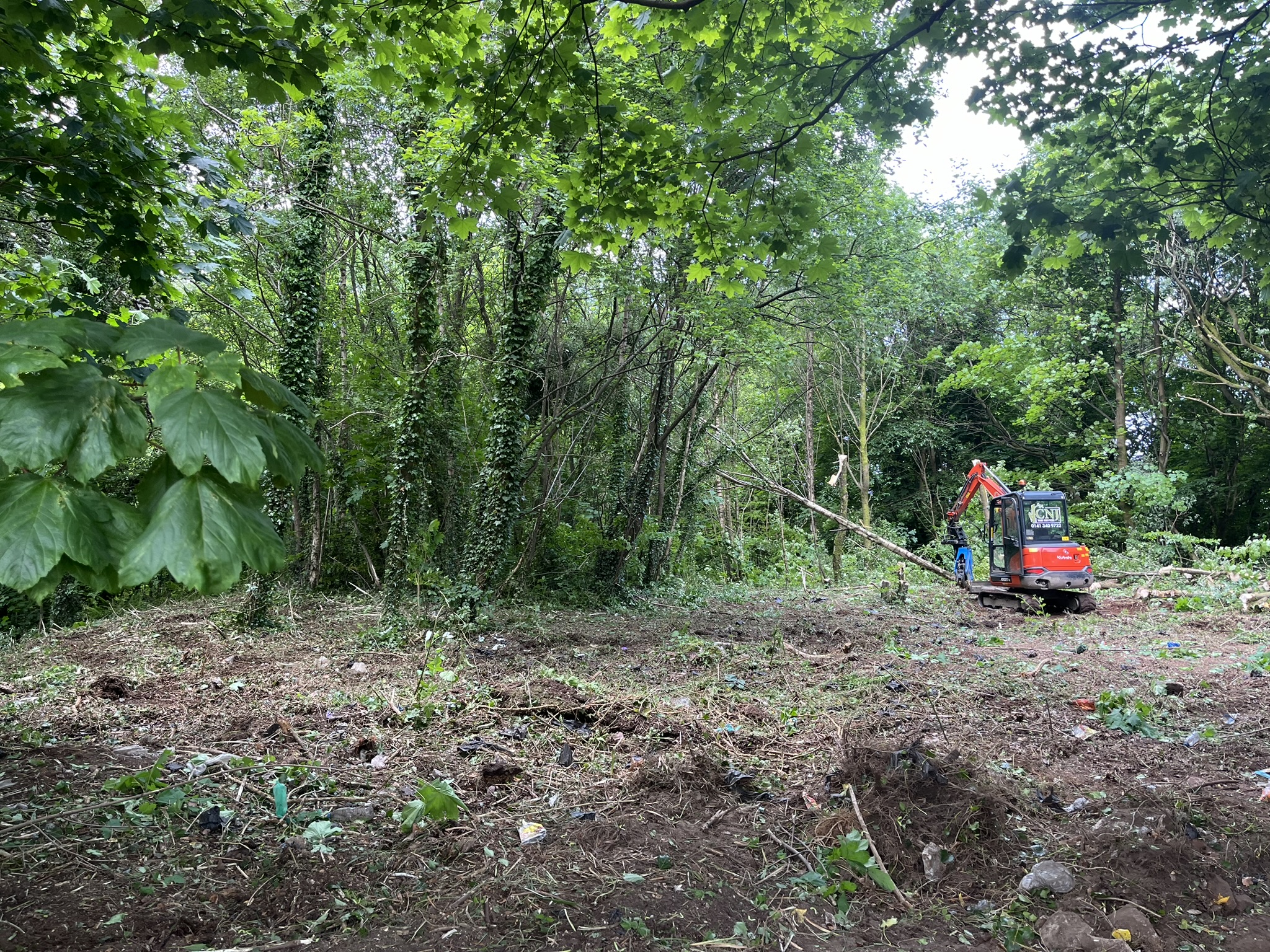
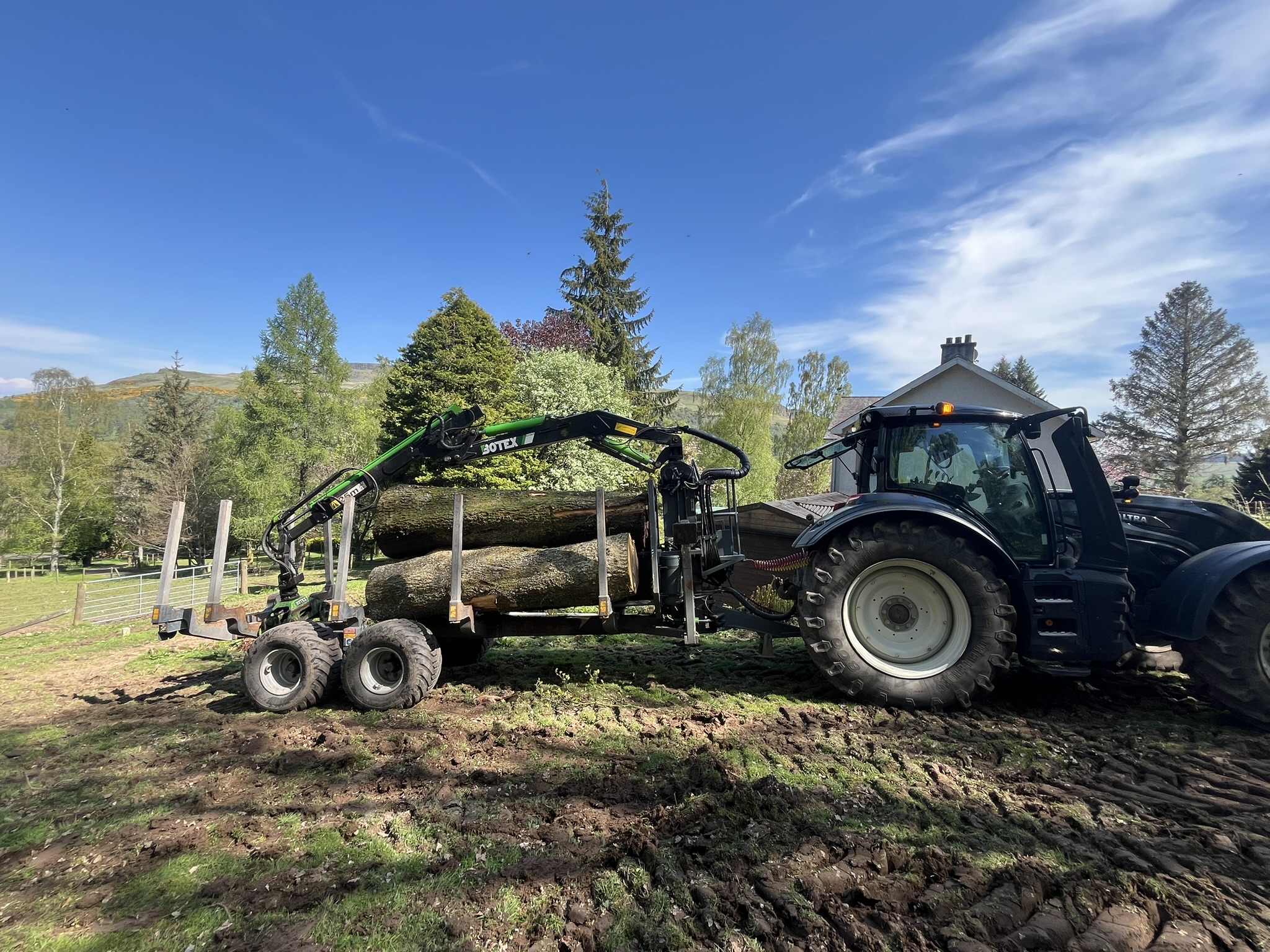
CNJ Tree Services carries out condition and health assessments across commercial woodland, estates and larger tree stock throughout Central Scotland, working out of a Glasgow base. Assessments are led by Callum Jackson, our NPTC Professional Tree Inspector, and are built to hold up whether the reason for commissioning one is a felling licence application, an insurer’s requirement, or simply wanting a clear picture of how a stand is developing before problems become expensive to fix. Every visit uses the company’s own tracked spider lift, forwarders, line skidders and 360 excavator, so wet or difficult ground doesn’t hold a site visit up while hired plant gets arranged. Reports are written to be used rather than filed away – findings are set out plainly enough for an insurer, a funding body or a council planning officer to act on without a follow-up call to translate the technical detail into plain language.
At a Glance
- Own plant fleet, so no waiting on hired-in machinery
- NPTC Professional Tree Inspector-led risk grading on every report with a safety angle
- £5 million public liability cover on every assessment
- All green waste and timber from follow-on work processed locally rather than landfilled
City Areas: Merchant City, West End, South Side, East End, North Glasgow
Surrounding Areas: Paisley, East Kilbride, Hamilton, Motherwell, Coatbridge, Airdrie Extended
Coverage: Stirling, Falkirk, and throughout West and Central Scotland
Strategic location between Glasgow and Stirling enables rapid response with average emergency time under 2 hours.
Commercial Woodland Health Assessment Glasgow
Expert Forest Evaluation for Glasgow Properties
Emergency Tree Removal
24/7 Response
Free Tree Quote
Professional assessment within 48 hours
Complete Tree Services
General and Specialist Services Available
Storm Damage Response
Immediate Callout
Your Glasgow commercial woodland faces serious health challenges that can devastate property values and create dangerous liability situations. CNJ Tree Services delivers comprehensive commercial woodland health assessment across Glasgow and West Scotland, combining qualified forestry expertise with proven woodland management solutions. As part of our extensive team of Scotland professional arborists and forestry specialists, we bring local insight and industry-leading diagnostic skills to every commercial woodland evaluation.
Woodland diseases, invasive species, and environmental stresses threaten entire forest ecosystems within months. Property damage from failing trees exceeds £100,000 annually across Glasgow’s commercial estates. Professional woodland health assessment eliminates these risks whilst preserving valuable mature forest assets.
Comprehensive Commercial Woodland Health Services Across Glasgow
Why Choose Our Tree Service
Woodland condition assessments follow Forestry Commission methodology with standardised scoring systems for objective health evaluation. Professional reports include habitat assessment, biodiversity evaluation, and management priority recommendations for optimal woodland stewardship.
Forest Health Monitoring and Disease Detection
Glasgow’s urban environment creates unique disease pressures requiring specialist monitoring and intervention. Our forest pathology specialists identify fungal infections, bacterial diseases, and pest infestations before they spread throughout woodland areas. Early detection programmes prevent catastrophic losses through targeted treatment interventions.
Disease monitoring includes ash dieback surveillance, oak decline assessment, and invasive species detection. Professional treatment programmes combine chemical controls, biological interventions, and cultural practices for effective disease management.
Woodland Management Plan Development
Sustainable woodland management requires comprehensive planning that balances commercial objectives with environmental responsibilities. Our forestry consultants develop detailed management plans including harvesting schedules, regeneration strategies, and conservation priorities. Long-term planning optimises woodland productivity whilst maintaining ecological integrity.
Management plans include timber assessment, biodiversity enhancement opportunities, and recreational development potential. Professional guidance maximises woodland value through sustainable management practices and strategic planning.
Environmental Impact and Compliance Assessment
Commercial woodland management faces complex environmental regulations requiring specialist knowledge and compliance expertise. Our environmental consultants evaluate protected species impacts, habitat regulations compliance, and biodiversity net gain opportunities. Professional advice prevents regulatory violations whilst optimising environmental outcomes.
Environmental assessments include wildlife survey requirements, protected species licensing, and habitat enhancement opportunities. Compliance planning eliminates regulatory risks whilst maximising woodland development potential.
CNJ Tree Services provides complete woodland health solutions for Glasgow’s diverse commercial property portfolio. From industrial estates in East Kilbride to business parks in Paisley, our forestry services adapt to your specific woodland challenges and management objectives.
Professional Woodland Condition Assessment
Commercial woodland requires systematic condition evaluation following recognised forestry standards for accurate health determination. Our qualified foresters conduct comprehensive baseline surveys including species composition analysis, age structure evaluation, and health status assessment. Detailed condition mapping identifies areas requiring immediate intervention.
Our Professional Commercial Woodland Health Assessment Process
CNJ Tree Services follows Forestry Commission guidelines and industry best practice for systematic woodland evaluation that delivers reliable, actionable results. Our structured approach identifies health constraints early whilst providing practical management solutions for optimal woodland stewardship.
Phase 1: Desktop Study and Initial Site Assessment
Professional woodland assessment begins with comprehensive desktop analysis to identify site constraints, historical management, and potential health issues. Our forestry specialists review Ordnance Survey mapping, aerial photography, and historical records to understand woodland development and current condition indicators.
Initial site reconnaissance identifies access requirements, safety considerations, and survey methodology planning. Preliminary health assessment guides detailed survey requirements and equipment specification for comprehensive woodland evaluation.
Phase 2: Comprehensive Woodland Condition Survey
Systematic woodland survey follows Forestry Commission Woodland Condition Assessment methodology for standardised condition evaluation. Our qualified surveyors assess 15 key indicators including species diversity, age structure, regeneration potential, and health status throughout woodland areas.
Survey methodology includes sample plot establishment, GPS mapping, and photographic documentation for accurate condition recording.
Phase 3: Disease Detection and Health Analysis
Detailed health analysis identifies current disease threats, pest infestations, and environmental stresses affecting woodland condition. Our forest pathology specialists conduct systematic disease surveillance including ash dieback monitoring, oak decline assessment, and invasive species detection.
Phase 4: Management Priority Assessment and Planning
Professional woodland management requires strategic planning that prioritises interventions for optimal health outcomes and resource utilisation. Our forestry consultants evaluate management options including selective felling, disease control, and regeneration enhancement for sustainable woodland development.
Priority assessment includes safety risk evaluation, economic opportunity analysis, and environmental enhancement potential. Management recommendations balance immediate health requirements with long-term sustainability objectives for optimal woodland stewardship.
Phase 5: Reporting and Implementation Support
Comprehensive woodland health reports follow professional forestry standards with detailed findings, management recommendations, and implementation guidance. Professional documentation supports grant applications, planning submissions, and insurance requirements for commercial woodland operations.
Implementation support includes contractor specification, supervision services, and progress monitoring for successful management plan delivery. Regular review schedules track woodland response to interventions with adaptive management recommendations.
Average assessment completion time: 4-8 weeks depending on woodland size.
Health monitoring frequency: Annual assessment recommended for commercial woodland.
Management plan duration: 10-year strategic planning with 5-year reviews.
Annual Woodland Health Monitoring Contracts - Long-term Value
Commercial properties benefit from ongoing woodland health monitoring:
- Annual condition assessments with trend analysis
- Disease monitoring and early warning systems
- Management plan updates and adaptive recommendations
- Regulatory compliance monitoring and support
- 20% discount on additional forestry services
What Affects Your Assessment Costs: Woodland size significantly influences survey effort and associated costs. Large woodland areas require extensive field work compared to smaller commercial plantations. Species diversity increases assessment complexity requiring specialist identification expertise and extended survey duration.
Access difficulty affects survey logistics and equipment requirements. Remote woodland areas may require specialist access equipment and extended survey periods. Steep terrain and difficult ground conditions increase safety requirements and survey duration.
Health complexity influences assessment detail and specialist input requirements. Multiple disease threats require pathology expertise and laboratory analysis. Environmental compliance issues demand specialist regulatory knowledge and detailed documentation.
No hidden costs policy - all quotations include comprehensive assessment, detailed reporting, and initial management consultation. Additional specialist services clearly identified with transparent pricing structures.
Frequently Asked Questions
How Often Should Commercial Woodlands Receive Professional Health Assessment?
Commercial woodland health assessment frequency depends on species composition, age structure, and environmental pressures affecting site conditions. Annual monitoring is recommended for mature commercial woodland with high-value timber species or significant disease pressure. Young plantation woodland may require assessment every 2-3 years during establishment phases. Our forestry specialists develop monitoring schedules based on specific woodland characteristics and management objectives for optimal health maintenance.
Can Woodland Health Problems Be Successfully Treated and Managed?
Most woodland health issues can be successfully managed through appropriate intervention strategies and professional treatment programmes. Early detection significantly improves treatment success rates and reduces management costs compared to advanced disease situations. Professional intervention includes disease treatment, habitat modification, and species management for comprehensive health improvement. Our forestry specialists develop programmes optimising woodland recovery whilst maintaining long-term sustainability objectives.
What Environmental Regulations Affect Commercial Woodland Health Management?
Commercial woodland management faces complex environmental regulations including felling licence requirements, Environmental Impact Assessment obligations, and protected species legislation. Forestry Commission approval is required for significant woodland operations with professional assessment mandatory for complex management activities. Our environmental specialists handle all regulatory compliance preventing violations whilst optimising management outcomes through strategic planning and professional expertise.
What Technology Is Used in Modern Woodland Health Assessment?
Modern woodland assessment utilises GPS mapping for accurate plot location, digital photography for condition documentation, and tablet-based recording systems for efficient data collection. Specialist equipment includes increment borers for age determination, soil augers for soil analysis, and disease identification tools for pathogen detection. Our assessment technology follows Forestry Commission digital standards ensuring compatibility with national woodland databases and monitoring systems.
Can Woodland Health Assessment Identify Investment and Development Opportunities?
Professional woodland assessment identifies numerous opportunities including timber harvesting potential, recreational development possibilities, and environmental enhancement projects. Economic evaluation includes timber valuation, grant eligibility assessment, and development opportunity analysis for optimal woodland utilisation. Strategic planning maximises woodland value whilst maintaining environmental compliance and sustainability objectives through professional forestry expertise and comprehensive site evaluation.
What Documentation and Reporting Standards Apply to Commercial Woodland Assessment?
Commercial woodland assessment requires comprehensive documentation following Forestry Commission reporting standards and professional forestry guidelines. Reports include detailed condition assessment, management recommendations, and regulatory compliance certification for planning and insurance purposes. Professional documentation supports grant applications, planning submissions, and management plan development through standardised reporting formats and technical specifications meeting industry standards and regulatory requirements.
Choose CNJ Tree Services for Professional Commercial Woodland Health Assessment in Glasgow
Glasgow’s commercial woodland faces unprecedented environmental challenges requiring specialist expertise and proven management strategies. CNJ Tree Services delivers comprehensive woodland health assessment that protects valuable forest assets whilst optimising long-term sustainability and commercial returns through professional forestry excellence.
Why Choose CNJ Tree Services?
Scotland's leading comprehensive tree and property service company.
60+ Specialist Tree Services
From basic pruning to de-vegetation and complex ecological assessments
30+ Years of Experience
Core team made up of highly experienced third-generation tree surgeons
24-hour Availability For Emergencies
Average response time under 2 hours
Up to £5M
Insurance Cover
Comprehensive cover for complete peace of mind
Professional Credentials
NPTC, Lantra, FMO and NPORS certified professionals ensuring the highest standards of safety and expertise on every project.
Environmental Expertise
Ecological surveys and compliance specialists
Survey Scope: What a Woodland Health Assessment Covers
- A Forestry Commission-methodology condition survey across the whole site, recording species mix, age structure, canopy condition and regeneration potential stand by stand
- On-site disease and pest screening, including ash dieback surveillance and oak decline checks, with GPS-tagged sample plots and photographs for each area assessed
- A risk-focused inspection of individual trees or groups where safety is a concern, led by our NPTC Professional Tree Inspector and carried out to BS3998, with BS5837 applied where there is a planning angle
- Access into wet ground, dense understorey or steep terrain using our own low-ground-pressure forwarders, tracked spider lift or 360 excavator, so a survey is not held up waiting for hired-in plant
- A written report covering findings, priority actions and a management plan you can pass to insurers, funders or a planning authority
- The option to move onto an annual monitoring contract afterwards, so condition data builds up year on year rather than starting from zero each time
Not Included / Costed Separately
- Remedial tree work itself - felling, crown reduction, deadwooding or disease treatment - which is scoped and quoted separately once you have seen the assessment findings
- Laboratory pathogen or soil testing, where a sample has to go to an external lab rather than being identified on site
- Felling licence, planning application or other statutory fees payable to Forestry Commission Scotland or the local council - these are the landowner’s cost, though we will flag when they are likely to apply
- A formal timber valuation for sale purposes - the report will flag harvesting potential, but valuing standing timber for sale is a separate exercise
How a Woodland Health Assessment Is Carried Out
- Initial scoping call: We talk through the size of the site, the reason for the assessment - insurance, felling licence, TPO application or ongoing management - and any problem areas already known about before a visit is booked.
- Site walkover and stand-by-stand survey: Species mix, age structure, canopy condition and regeneration are recorded stand by stand using Forestry Commission survey methodology, with GPS-tagged plots and photographs kept against each area.
- Disease and risk screening: Ash dieback, oak decline and other visible pest or pathogen signs are checked alongside a risk-focused inspection of any individual trees or groups flagged as a safety concern, carried out to BS3998 and, where a planning application is involved, BS5837.
- Report and management plan: Findings are written up with priority actions and a management plan suitable for passing to an insurer, funder or planning authority, along with the option to move onto an annual monitoring contract.
- Follow-on work, if needed: Where the assessment flags felling, crown reduction or disease treatment, that work is scoped and quoted separately once the findings have been reviewed, and can usually be carried out by the same team using the same fleet rather than a second contractor starting from a standing start.
Budgeting for a Woodland Health Assessment
Cost depends on the size of the site, how many stands need walking, and whether the report has to satisfy a specific planning authority’s checklist rather than a general health check. A short initial consultation to discuss scope and give a fixed quote is free of charge, and estates already running an annual monitoring contract typically pay less per visit than a one-off assessment booked cold, since baseline data from the previous visit cuts down the time needed on site. A small site with a single stand and no planning angle sits at the lower end of that range, while a multi-stand estate needing GPS-tagged plots across several fields, or a report written specifically to satisfy a council’s validation checklist, takes longer on site and in the write-up, and is quoted accordingly once the scoping call has clarified what’s actually needed.
Assessment Options for Commercial Woodland Owners
| Assessment approach | Who carries it out | Site access | What you receive |
|---|---|---|---|
| CNJ Tree Services woodland health assessment | NPTC Professional Tree Inspector, working to BS3998/BS5837 and Forestry Commission survey methodology | Own tracked spider lift, forwarders and 360 excavator reach wet or dense stands without waiting on hired plant | Written findings, disease and risk priorities, and a management plan, with annual monitoring available |
| General tree surgeon call-out | Varies - not always PTI-qualified | On foot, plus hired machinery if the site needs it | Verbal opinion or a short note, rarely referenced to a written standard |
| No professional assessment | Landowner’s own inspection | Whatever access already exists on site | No documentation - limited use for TPO, insurance or felling licence purposes |
What Makes an Annual Monitoring Contract Worth Trusting
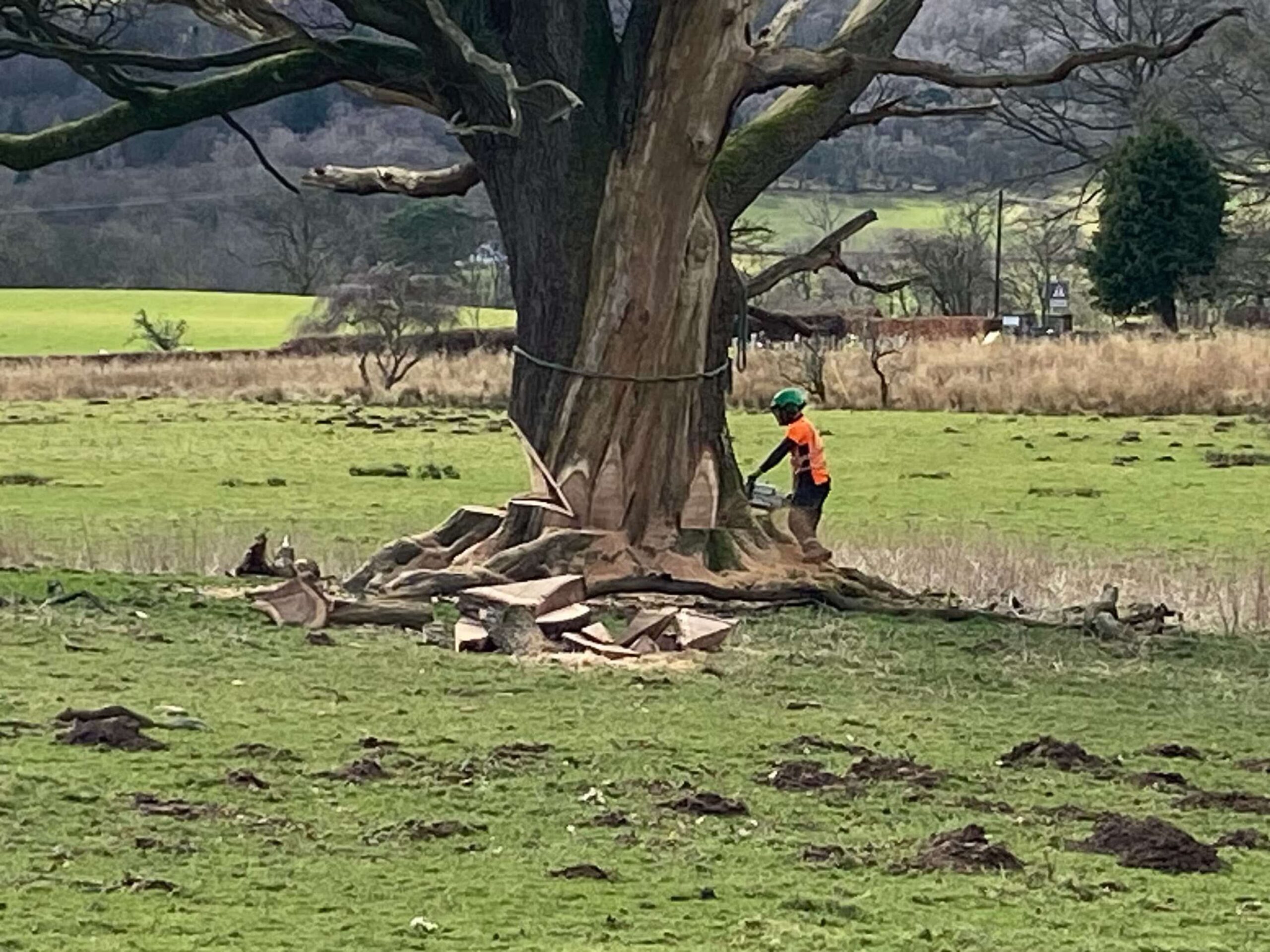
An annual monitoring contract only earns its keep if the person reading the canopy this year applies exactly the same yardstick as they did last year, so continuity of judgement matters as much as the paperwork itself. That continuity comes down to one person: every assessment with a risk or planning element is signed off by Callum Jackson, our NPTC Professional Tree Inspector, against BS3998 and, where a planning authority is involved, BS5837 - a qualification gained in 2023 that sits on top of close to eighteen years with a chainsaw, forestry roots through his father and grandfather, and an earlier career in healthcare before he came back to the family trade, so a thinning crown gets read against decades of watching similar stands rather than a checklist applied cold. Reaching the stand in the first place is Neill Tannahill’s department: as chief fleet engineer he keeps the forwarders, tracked spider lift and 360 excavator running, which is why wet ground, dense understorey or a steep bank rarely holds a survey up waiting on hired-in plant, and it means any felling or clearance a report recommends can start with the same machinery rather than a second contractor being briefed from scratch. The wider team carries IPAF and NPORS certification for the cherry picker and 360 excavator, and everyone on site has First Aid +F training covering catastrophic bleed and chainsaw-specific injuries, so machinery access and on-site safety don’t rest on any one person being present. Public liability cover on every assessment runs to £5 million. Timber that comes off a site during follow-on work is seasoned through our own woodfuels division instead of going to landfill, which sits alongside the same long-run outlook that has us backing Modern Apprenticeships and woodland regeneration projects across Central Scotland - see our arborist services for the qualifications behind that work in more detail.
How Local Ground and Terrain Shape an Assessment’s Findings
Assessment work runs out of a Glasgow base, but because this is site visit and estate-management work rather than a single-tree call-out, it reaches into commercial ground right across Central Scotland instead of stopping at a fixed radius. The heaviest concentration of annual monitoring contracts sits north of the city, in the Kirkintilloch and Bishopbriggs corridor and along the Bearsden/Torrance fringe toward Milngavie, simply because a same-season revisit is quick to arrange once the last set of GPS-tagged plots and photographs is already on file. A second, smaller cluster sits southeast, taking in Blantyre, Uddingston, Rutherglen and Cambuslang. Estates further west, nearer Paisley and the Erskine Bridge crossing, with Renfrew and Bishopton close by, come up less often for woodland-scale work, though the same assessment and monitoring approach applies wherever a site sits within that Central Scotland reach.
Ground along the Clyde and Kelvin valleys, and the corridor either side of the Forth & Clyde Canal, tends to be clay-heavy and holds water for longer after wet weeks than a fixed survey timetable always allows for, which is one reason the low-ground-pressure forwarders and tracked spider lift stay on the fleet rather than being hired in as needed: a wheeled machine that compacts wet clay can do more damage to a stand’s root zone than the storm damage it was sent in to clear. The same equipment keeps golf courses, lawns and business park turf intact on sites where a hired-in digger would leave rutting behind.
Stands sitting higher and more exposed, toward the Kilpatrick Hills, the southern edge of the Campsies, and the Cathkin Braes above the city, carry a different set of priorities on a monitoring report: windthrow risk gets weighed more heavily against root plate movement than against disease indicators, and those sites are also the ones most likely to need an out-of-cycle storm-response visit, which is covered separately within a 50-mile radius and averages under two hours’ arrival. Where a site falls inside a Conservation Area or carries a Tree Preservation Order, we confirm during the scoping call which of Glasgow City, East Dunbartonshire or East Renfrewshire’s planning format the report needs to follow, rather than guessing from the map before anyone has looked at the title deeds. Commercial site clearance and estate management following on from an assessment is available anywhere in Scotland, even where the assessment itself sat right at the edge of the usual Central Scotland reach; see our tree services for the wider range of work that can follow a report.
Images
Book a Woodland Health Assessment
Get in touch for a free consultation and a fixed quote for a site visit if a stand’s condition needs putting into writing for an insurer, a felling licence application, a Tree Preservation Order enquiry, or simply your own peace of mind about how a woodland is developing. Assessments can be booked as a one-off or set up straight away as the first visit of an annual monitoring contract, whichever suits how the site is likely to be used. Sites already on a felling licence timetable or facing a council planning deadline are prioritised for an earlier visit where the dates allow it, and a written quote follows the scoping call rather than being estimated over the phone. Existing monitoring clients can also request a mid-contract visit outside the usual annual schedule if a storm, a neighbouring development or a change on site raises a concern the last report didn’t cover.
What Our Clients Have Said About Us
Jackie Breen
From the first time getting in touch with Callum, the service was fantastic, he came out gave us a great quote and was able to do the job very quickly. The boys that came to carry out the work were professional, friendly and worked non stop to get the job done, they were so careful with machinery on the property as well and left the garden and paths spotless before they left. I would highly recommend them.
Alan
Callum and his team arrived on the agreed day & time, carried out the tree felling with impeccable professionalism and cleared up after. The work was done at the quoted price and they were very pleasant guys with no bad language. I highly recommend CNJ and I will certainly be using Callum and his 5 star tree fellas again.
Robin Campbell
Callum and his team felled four 40-foot+ trees in our garden, facing particular challenges (2 trees hanging over our LPG tank, one menacing a precious rhododendron). They worked incredibly hard, were great to deal with and we would thoroughly recommend them.
Our Service Areas
We Cover All of Glasgow and West Scotland
Primary Coverage
- Balfron
- East Dunbartonshire
- Glasgow City
- Killearn
- Renfrewshire
- South Lanarkshire (selected areas)
- Stirling
- Strathblane
- West Dunbartonshire
Key Locations
• Balfron • Bearsden • Bothwell • Clarkston • Clydebank • East Kilbride • Fintry • Giffnock • Hamilton • Killearn • Kippen • Kirkintilloch • Milngavie • Newton Mearns • Paisley • Strathblane • Stirling
Emergency Response
50-mile radius
Commercial Projects
We undertake commercial projects across Scotland.
CNJ Tree Services
Address
Office 1, Technology House,
9 Newton Pl, Glasgow G3 7PR, United Kingdom
Call Now
Office Hours
Monday–Friday: 8AM–6PM
Saturday: 8AM–4PM
Sunday: Emergency only
24/7 Availability
Online Presence
Website: www.cnjtreeservices.co.uk
Rated People: Callum Jackson