
Crown Thinning Glasgow
Professional Tree Crown Pruning Services for Glasgow Properties
A crown that’s grown too dense usually shows itself as a patch of garden that stays shaded and damp long after the rest has dried out, or a stretch of lawn where the grass has given up growing directly under the tree. Crown thinning takes out a proportion of the secondary and crossing branches from inside the canopy to let light and air back through, without changing the tree’s overall shape or size. Crown lifting solves a different problem - branches that have dropped low enough to catch on a fence, brush a shed roof, or make you duck on the way to the washing line - by shortening or removing those lower limbs back to a bark collar so the canopy sits higher while its spread stays the same. Both jobs come down to judgement as much as cutting: which limbs come out, and how many, matters more than how fast the job gets done.
Most of the gardens we’re called to have a mature sycamore, lime or beech that’s been left unmanaged for a season or two too long, and thinning or lifting is usually all that’s needed to put it right. If a tree has outgrown its plot altogether and needs its overall size brought down, that’s a crown reduction job rather than thinning, and if there’s an old stump left over from previous work, that’s covered separately by our stump grinding service.
Where We Work
City Areas: Merchant City, West End, South Side, East End, North Glasgow
Surrounding Areas: Paisley, East Kilbride, Hamilton, Motherwell, Coatbridge, Airdrie Extended
Coverage: Stirling, Falkirk, and throughout West and Central Scotland
Strategic location between Glasgow and Stirling enables rapid response with average emergency time under 2 hours.
Crown Thinning Glasgow and Professional Crown Lifting
Professional Tree Crown Pruning Services for Glasgow Properties
Emergency Tree Removal
24/7 Response
Free Tree Quote
Professional assessment within 48 hours
Complete Tree Services
General and Specialist Services Available
Storm Damage Response
Immediate Callout
Is your tree’s dense canopy blocking precious light from your Glasgow garden? Are overcrowded branches creating safety concerns? CNJ Tree Services transforms problematic dense canopies into healthy, manageable assets through professional crown thinning and crown lifting services that preserve your tree’s natural beauty.
Our NPTC certified tree surgeons bring 30+ years combined experience to every Glasgow property. As environmental compliance specialists, we ensure your crown thinning enhances tree health whilst supporting Glasgow’s urban forest initiatives.
What is Professional Crown Thinning?
Crown thinning removes selected branches from within your tree’s canopy to reduce density whilst maintaining natural size and shape. Unlike crown reduction that shrinks trees, professional crown thinning improves health, light penetration, and air circulation without changing your tree’s overall appearance.
Crown Lifting is a technique used to increase the space between the ground and the lowest branches of the tree.
Crown lifting is another common practice in tree surgery. Usually specified in metres, this technique is used to increase the space between the ground and the lowest branches of the tree. The most common reasons for lifting a crown are:
- To increase light levels at the base of a tree (possibly to improve grass)
- To remove branches that are too low over footpaths and roads
- To prevent lower branches interfering with structures such as fences, garden gates
Crown lifting should be achieved through a combination of reducing the lower hanging secondary branches back to the main branches, and the removal of the lowest main branches.
When removing the lower main branches it is important that neat pruning cuts are made at a bark collar to promote healing over the wounds. “Flush cutting” against the trunk is not advised.
CNJ Tree Services determines the optimal technique based on your tree’s condition and property requirements through comprehensive assessment.
Crown Thinning vs Crown Reduction - Understanding the Difference
Professional crown thinning selectively removes internal branches, weak growth, and crossing limbs whilst preserving your tree’s size and character. This technique focuses on tree health improvement and light management.
Crown reduction reduces overall tree height and spread by cutting back branch ends. This addresses size management when trees outgrow their space.
Our Crown Thinning Process
- ✅ Comprehensive tree health assessment by qualified arborists
- ✅ Species-specific planning for Glasgow’s common trees
- ✅ Selective branch removal targeting weak and competing growth
- ✅ Maximum 25-30% density reduction following BS3998 standards
- ✅ Complete cleanup and responsible waste recycling
Key Benefits:
- Improved light penetration to gardens and homes
- Enhanced air circulation preventing disease
- Reduced wind resistance and storm damage risk
- Better tree structure and balanced growth
- Maintained natural appearance and species characteristics
Why Glasgow Properties Need Crown Thinning
Glasgow’s challenging weather and urban environment create unique pressures on residential trees. Professional crown thinning addresses these challenges whilst maintaining healthy, attractive trees.
Common Crown Thinning Scenarios
Light Improvement: Dense canopies block natural light from Glasgow homes and gardens. Crown thinning opens interior structure whilst preserving privacy and tree character.
Disease Prevention: Poor air circulation in dense crowns creates fungal infections and decay problems. Crown thinning dramatically improves airflow and reduces disease risk.
Storm Safety: Overcrowded branches can increase the “sail effect” and threaten property during Glasgow’s storms. Thinning reduces wind resistance whilst maintaining tree stability.
Tree Health Enhancement: Competing branches stress trees and reduce vigour. Professional thinning eliminates competition whilst preserving structural framework.
Aesthetic Improvement: Unbalanced, overgrown canopies detract from property appearance. Crown thinning restores natural beauty whilst improving tree form.
Risks of Neglecting Dense Tree Canopies
Disease Susceptibility: Poor air circulation encourages fungal infections that can kill trees and spread to others.
Storm Damage: Dense crowns catch wind like sails, increasing failure risk during Glasgow’s challenging weather.
Reduced Property Value: Dark gardens and blocked light reduce property appeal and usability.
Safety Hazards: Weak, overcrowded branches pose falling risks to people and property.
Crown thinning supports tree longevity whilst addressing property owners’ light and safety concerns.
Crown Thinning Pricing Glasgow
Transparent pricing helps you budget tree management whilst understanding the value of professional crown thinning services.
Service Pricing Groups
Small Trees (up to 8m): Straightforward access, moderate density reduction. £200-£400.
Medium Trees (8-15m): Standard residential specimens, normal complexity. £400-£1000.
Large Trees (15m+): Complex structures requiring specialist equipment. £1500+.
Pricing Factors:
- Tree size, species, and current density
- Access difficulties and site constraints
- Proximity to buildings and utilities
- TPO requirements and permissions
- Cleanup and disposal needs
Glasgow Service Areas
Glasgow Districts: West End, South Side, East End, City Centre, North Glasgow
Surrounding Areas: Paisley, East Kilbride, Hamilton, Motherwell, Coatbridge, Airdrie
Extended Coverage: Stirling, Falkirk, throughout West and Central Scotland
Strategic location between Glasgow and Stirling enables rapid response with emergency availability under 2 hours.
Frequently Asked Questions
What is crown thinning and how does it differ from crown reduction?
Crown thinning removes selected branches from within the tree’s canopy to reduce density whilst maintaining natural size and shape. Crown reduction reduces overall height and spread by cutting branch ends. Crown thinning focuses on tree health improvement through better light and air circulation, whilst crown reduction addresses size management. CNJ Tree Services determines the most appropriate technique based on your tree’s condition and property requirements.
What are the main benefits of crown thinning for my Glasgow property?
Crown thinning provides improved light penetration to gardens and homes, enhanced air circulation preventing fungal diseases, and reduced wind resistance protecting against storm damage. It promotes better tree health by eliminating competition between branches and improves structural integrity. Many Glasgow property owners notice immediate garden light improvements and long-term tree health benefits.
When is the best time for crown thinning in Glasgow?
Optimal timing is during dormant season from late autumn to early spring when trees have minimal sap flow and reduced stress response. We avoid the bird nesting season (February-August) unless emergency safety concerns require immediate action. CNJ Tree Services schedules work to maximise tree health benefits whilst complying with wildlife protection and Glasgow’s environmental standards.
How much of the tree crown can be safely thinned?
Professional standards limit crown thinning to maximum 25-30% of foliage removal in single sessions. Exact amounts depend on species, age, and health. We selectively remove secondary and smaller branches whilst preserving the main structural framework. Excessive thinning stresses trees and creates long-term problems, so our certified arborists carefully plan removal for optimal results.
Will crown thinning make my tree look unnatural?
Professional crown thinning preserves natural appearance whilst improving structure and health. Our NPTC certified arborists understand species characteristics and remove branches strategically to maintain natural growth patterns. Properly thinned trees often appear more attractive with improved shape, better light distribution, and enhanced balance showing minimal intervention signs.
How much does crown thinning cost in Glasgow?
Crown thinning costs typically range £150-£1,500+ depending on tree size, species, access complexity, and requirements. Factors include proximity to buildings, TPO permissions, and disposal needs. CNJ Tree Services provides FREE detailed quotations with transparent pricing and no hidden costs. We explain all factors affecting quotes and demonstrate clear value for professional service.
Do I need permission for crown thinning work?
Permission may be required for Tree Preservation Orders (TPO) or Conservation Area locations. Glasgow City Council and surrounding authorities regulate tree work protecting valuable specimens. CNJ provides FREE TPO checking and handles applications, preventing potential £2,500 fines for unauthorised work. Our environmental compliance expertise ensures full legal compliance.
How often should crown thinning be carried out?
Crown thinning frequency depends on species, age, and growth rates. Most mature urban trees benefit from thinning every 3-5 years, whilst fast-growing species need more frequent attention. Young trees often require annual formative thinning. Regular maintenance prevents excessive density and maintains optimal health. CNJ Tree Services provides personalised maintenance schedules based on specific tree needs.
Complete Domestic Tree Services Glasgow
Crown thinning forms part of comprehensive tree management for Glasgow properties. Our integrated approach ensures optimal tree health whilst addressing all property requirements.
Additional Tree Services
- Crown Reduction: Size management when trees outgrow available space
- Crown Lifting: Lower branch removal for clearance and access
- Tree Pruning: General maintenance and health improvement programmes
- Tree Removal: Safe removal when trees become unviable or dangerous
- Tree Planting: Species selection and establishment for new landscapes
Integrated Benefits: Crown thinning often combines with other treatments for optimal results. Regular maintenance programmes prevent problems whilst keeping trees as valuable property assets rather than expensive liabilities.
Choose CNJ Tree Services Glasgow
Glasgow property owners choose CNJ Tree Services because we deliver unmatched crown thinning expertise and environmental compliance.
- ✅ FREE comprehensive assessments within 48 hours
- ✅ NPTC/Lantra certified expertise with 30+ years experience
- ✅ Up to £5 million insurance protection
- ✅ Environmental compliance specialists preventing complications
- ✅ 24/7 emergency response for safety situations
- ✅ Complete cleanup included with zero waste policy
- ✅ Owner-operated quality ensuring personal attention
- ✅ Strategic location enabling rapid response
Contact CNJ Tree Services
Transform dense, problematic canopies into healthy, beautiful assets through professional crown thinning.
📞 Call: 0141 340 9722
🌐 Email: [email protected]
📍 Serving Glasgow and West/Central Scotland
Get FREE crown thinning consultation and discover why CNJ Tree Services is Glasgow’s trusted choice. Our environmental compliance expertise and comprehensive approach provide the security and quality your trees deserve.
Gallery of Previous Work Done
Why Choose CNJ Tree Services?
Scotland's leading comprehensive tree and property service company.
60+ Specialist Tree Services
From basic pruning to de-vegetation and complex ecological assessments
30+ Years of Experience
Core team made up of highly experienced third-generation tree surgeons
24-hour Availability For Emergencies
Average response time under 2 hours
Up to £5M
Insurance Cover
Comprehensive cover for complete peace of mind
Professional Credentials
NPTC, Lantra, FMO and NPORS certified professionals ensuring the highest standards of safety and expertise on every project.
Environmental Expertise
Ecological surveys and compliance specialists
Contact Us Today
What’s Included When We Thin or Lift a Crown
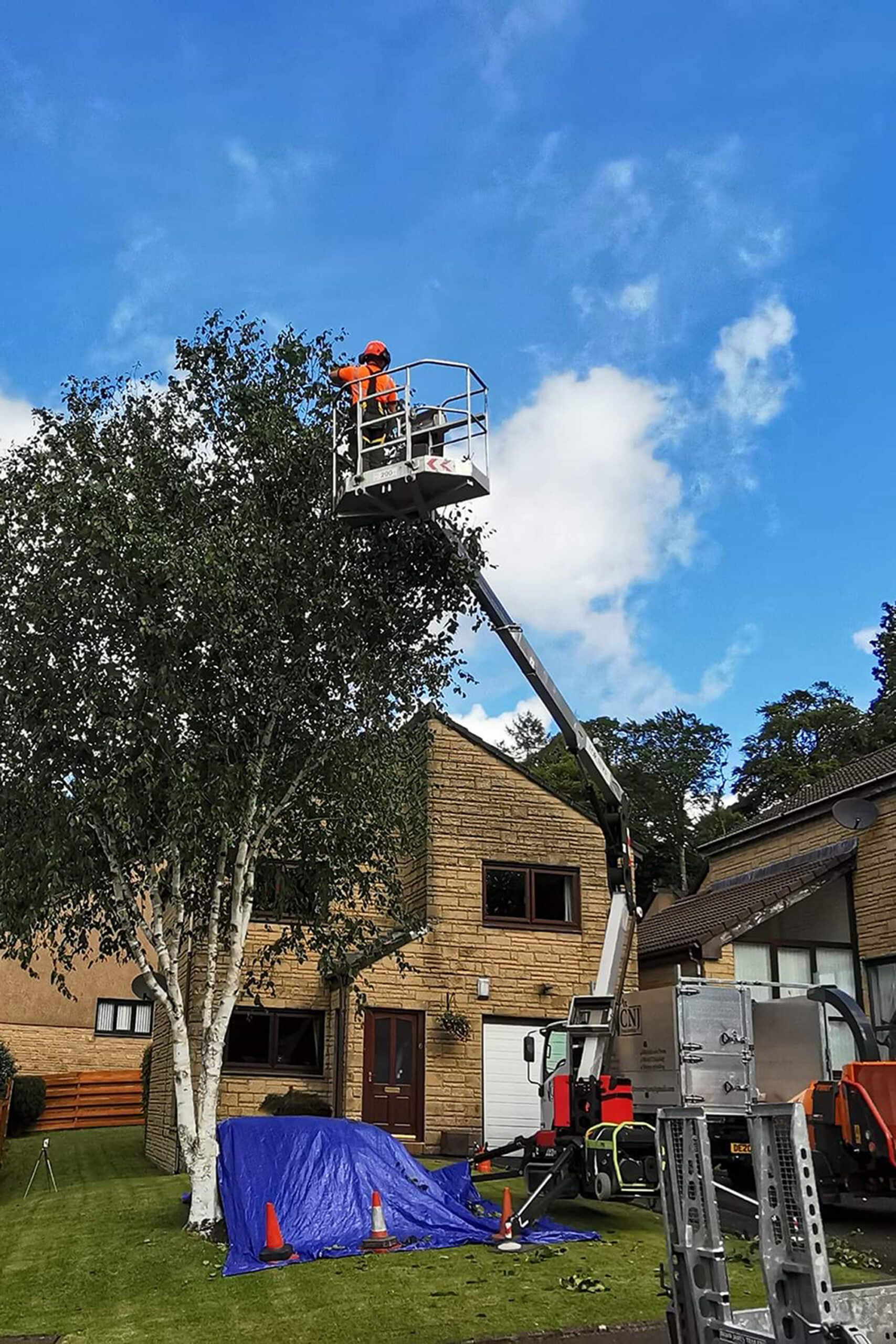
- A full assessment of the crown from the ground, and from the tracked spider lift cherry-picker on taller specimens, to mark which secondary and crossing limbs need to come out before any cutting starts
- Selective removal of the identified branches, kept to a maximum of 25-30% of the crown’s foliage in one visit so the tree isn’t put under unnecessary stress
- Crown lifting to an agreed height, with lower limbs taken back to a main branch or bark collar rather than cut flush against the trunk, so the wound can callus over properly
- A free check of Tree Preservation Order and Conservation Area status with the relevant council before any cutting is agreed
- Full site clean-up with all brash and timber removed the same day - branchwood is chipped for landscaping and biomass, and larger sections are seasoned for the firm’s own woodfuel supply rather than sent to landfill
Not Included / Costed Separately
- Stump grinding or root removal - priced and booked as a separate job once the crown work is finished
- A formal written TPO or Conservation Area application, where the council requires a determination period before consent - we handle the paperwork but can’t control the council’s own timescale
- Crown reduction or full felling - if a tree has outgrown thinning and needs its overall size cut back, or needs to come down altogether, that’s quoted as a different job
- Cherry-picker access for very tall or awkward crowns is costed separately from a standard climb, since it needs a second operator on the ground and takes longer to set up
How a Crown Thinning or Lifting Job Runs From First Call to Clean-Up
- Initial call and photos: Describe the tree, its rough height and what’s prompting the work - blocked light, low branches over a path, a canopy that’s grown dense - a few photos sent over the phone often let us give a ballpark figure before anyone visits.
- Site visit and assessment: An arborist walks the crown from the ground, checks species, condition and access, and confirms whether thinning, lifting, or a combination of both is the right approach for that particular tree.
- TPO and Conservation Area check: Before cutting is agreed, we check whether the tree sits under a Tree Preservation Order or within a Conservation Area, which is common on Glasgow’s mature Victorian-era streets.
- Written quote: A fixed price based on tree size, access and the amount of work involved, with anything that would add cost - cherry-picker access, awkward disposal, permission delays - set out up front rather than added later.
- The work itself: Climbing or cherry-picker based branch removal carried out to BS3998, with lifting cuts made back to a bark collar rather than flush against the trunk so the tree can heal over the wound.
- Clean-up and waste processing: Brash is chipped on site and larger timber taken away the same day - all of it processed locally rather than landfilled, either chipped for landscaping and biomass or seasoned for the company’s own woodfuel.
Crown Thinning, Crown Lifting and Crown Reduction Compared
| Technique | What actually happens | Typical reason for the work | Effect on the tree’s size |
|---|---|---|---|
| Crown thinning | Selected secondary and crossing branches removed from inside the canopy | Canopy too dense for light or airflow, or catching too much wind | None - the tree keeps its overall size and shape |
| Crown lifting | Lowest branches shortened or removed back to a bark collar | Branches sitting too low over a path, driveway, lawn or fence line | Raises the base of the canopy; overall spread is unchanged |
| Crown reduction | Branch ends cut back across the whole crown | Tree has outgrown its space or is overhanging a building | Reduces overall height and spread |
Getting the Judgement Call Right on Every Thinning and Lifting Cut
Thinning or lifting a crown badly doesn’t usually show up on the day - it shows up two or three years later. Strip out too much inner growth and a tree responds by throwing thin, whippy epicormic shoots along the branches that are left; they look soft and feathery for a season, then thicken back into the same dense growth you paid to have removed. Take too many lower limbs off in one go - what arborists call lion-tailing, where all the foliage ends up bunched at the branch tips - and the weight shifts outward, which increases the leverage a gust of wind can put through that limb and can crack a branch that was perfectly sound before the cut. That’s why we cap any single visit at 25-30% of the crown’s foliage and, if a tree needs more taken off than that, split the work over a return visit a year or two later rather than doing it all in one pass because it prices out quicker. The same judgement decides which branch comes off first: on a tree with two competing leading stems, removing the wrong secondary can take away the growth that’s been keeping one stem in check, and a fork that looked stable on the day of the quote can start splitting apart a few summers on. Every lifting cut is taken back to the branch collar rather than flush to the trunk, to BS3998, so the tree seals the wound with its own callus growth instead of being left with an open face that decay can get into. On thin-barked species like beech, we’re also careful not to lift the crown so high in one go that bark low on the trunk goes from years of shade into full sun, which is a common cause of sunscald splitting the following summer. Where a crown needs a second opinion before we commit to a cutting plan, that call draws on the same tree-risk training behind our BS5837 planning survey work, so what’s left in place gets the same scrutiny as what comes out. The job carries £5 million public liability insurance throughout, and everything that comes off - brash or larger limbs - is chipped for landscaping and biomass or seasoned for our own woodfuel rather than sent to landfill.
Where Crown Thinning and Lifting Jobs Come From Across Glasgow
Our standard domestic radius runs around 10 miles from the Newton Place office in Glasgow’s West End, covering the city itself plus towns to the west (Clydebank, Renfrew, Paisley), north (Bearsden, Milngavie, Kirkintilloch), south (Giffnock, Newton Mearns, Clarkston, Barrhead) and south-east (Cambuslang, Rutherglen, Uddingston). Within that area, thinning and lifting call-outs tend to fall into two patterns. The first is tenement back greens in neighbourhoods such as Hyndland, Dowanhill, Shawlands and Langside, where a mature sycamore, lime or beech overhangs a shared drying green or a neighbour’s window and the only way in is through a close or a narrow lane, which usually means the job is climbed rather than done from a cherry-picker. The second is larger detached gardens further out - Bearsden, Newton Mearns, Clarkston - where low branches over a lawn, patio or greenhouse roof are the more common reason for the call. Because thinning and lifting take off a modest amount of foliage rather than the whole tree, the TPO or Conservation Area check that precedes the work is usually a straightforward notification rather than a full felling application, which matters on Pollokshields’ and the West End’s Victorian-era streets where a large share of the mature stock sits inside a Conservation Area boundary. Trees overhanging the Kelvin Walkway, the Botanic Gardens grounds and the Forth & Clyde Canal towpath also come up regularly, where the council or canal authority wants branches lifted clear of the public path rather than removed altogether. Commercial site clearance and estate management projects are taken on further afield across Scotland, but that wider reach doesn’t extend to this domestic thinning and lifting service.
Our Service Areas
We Cover All of Glasgow and West Scotland
Primary Coverage
- Balfron
- East Dunbartonshire
- Glasgow City
- Killearn
- Renfrewshire
- South Lanarkshire (selected areas)
- Stirling
- Strathblane
- West Dunbartonshire
Key Locations
• Balfron • Bearsden • Bothwell • Clarkston • Clydebank • East Kilbride • Fintry • Giffnock • Hamilton • Killearn • Kippen • Kirkintilloch • Milngavie • Newton Mearns • Paisley • Strathblane • Stirling
Emergency Response
50-mile radius
Commercial Projects
We undertake commercial projects across Scotland.