
Dangerous Tree Removal Glasgow
A tree that’s leaning, cracked through the trunk, or dropping large deadwood over a path or drive is a different job from routine pruning – the priority is getting it down safely without anyone needing to climb it in the process. CNJ Tree Services carries out emergency and planned dangerous tree removal across Glasgow, with the risk assessment behind every job led by an NPTC Professional Tree Inspector and backed by an in-house fleet of cherry pickers, excavators and cranes rather than plant hired in for the day. If the tree in question is structurally sound and the issue is really about size, shape or access rather than safety, our tree felling service may be the better fit, and once a hazardous tree is down we can usually deal with the stump the same visit through our stump grinding service, rather than leaving it as a trip hazard or a source of regrowth. For a homeowner, that call carries a personal stake a business premises doesn’t – it’s your garden, your neighbours’ fences and cars, and ultimately your own position with your insurer if a known defect is left standing rather than dealt with.
At a Glance
- NPTC Professional Tree Inspector-led risk assessment, not a drive-by guess
- Own cherry picker, excavator and timber crane fleet – no waiting on hired plant for a leaning or storm-damaged tree
- £5 million public liability cover and a First Aid +F trained crew
- A written, photographed BS3998 report you can hand to your own insurer, or a neighbour’s, if a dispute follows later
City Areas: Merchant City, West End, South Side, East End, North Glasgow
Surrounding Areas: Paisley, East Kilbride, Hamilton, Motherwell, Coatbridge, Airdrie Extended
Coverage: Stirling, Falkirk, and throughout West and Central Scotland
Strategic location between Glasgow and Stirling enables rapid response with average emergency time under 2 hours.
Dangerous Tree Removal Glasgow
Emergency Tree Safety Services for Glasgow Properties
Emergency Tree Removal
24/7 Response
Free Tree Quote
Professional assessment within 48 hours
Complete Tree Services
General and Specialist Services Available
Storm Damage Response
Immediate Callout
When Your Tree Becomes a Safety Hazard – Expert Assessment and Removal
CNJ Tree Services provides emergency dangerous tree removal across Glasgow with 24/7 response and average callout times under 2 hours. Our NPTC certified tree surgeons combine environmental compliance expertise with rapid emergency response capabilities throughout West Scotland.
Glasgow’s unpredictable weather creates dangerous tree situations that demand immediate professional intervention. When trees become structurally compromised or storm-damaged, your family’s safety and property value are at risk.
As environmental compliance specialists, we handle all legal requirements including Tree Preservation Order exemptions and Glasgow City Council notifications. Our third-generation expertise ensures safe, professional removal regardless of tree size or location constraints. When you need reliable tree service professionals in Glasgow, you can trust CNJ Tree Services to deliver expert assessment, compliant removal and clear pricing – even in the most urgent and hazardous tree situations.
Emergency dangerous tree removal typically costs £300-£2,500. Our FREE assessment provides immediate cost clarity, and our fixed-price guarantee eliminates surprise charges.
- ✅ Eliminate legal liability from dangerous tree incidents
- ✅ Protect property value from thousands in potential damage
- ✅ Ensure family safety and public compliance
- ✅ Avoid insurance complications and coverage disputes
- ✅ Professional documentation for complete legal protection
⚠️ Protect your family and property – Call CNJ Tree Services: 0141-340-9722
Identifying Dangerous Trees – Warning Signs That Demand Action
Why Choose Our Tree Service
- Fungal growth on bark or around the trunk base indicates internal decay, even when trees appear healthy. This hidden weakness requires professional assessment.
- Sudden lean following storms suggests root system failure and creates immediate fall danger requiring urgent intervention.
Don’t wait for emergency situations to develop. Professional assessment identifies risks before they threaten your safety.
Critical Safety Indicators Every Property Owner Must Recognise
Professional tree risk assessment identifies these immediate danger signs:
- Dead or dying branches pose serious storm damage risk, especially during Glasgow’s frequent Atlantic weather systems. Large deadwood threatens people and property below during high winds.
- Trunk cracks and splits indicate structural failure that can cause sudden collapse. Deep cracks running along the trunk signal immediate removal necessity.
- Root problems appear as soil heaving, exposed roots, or decay around the base. Root failure causes dangerous leaning and represents the highest risk scenario.
Professional Dangerous Tree Assessment and Emergency Response
CNJ Tree Services’ Comprehensive Safety Evaluation
Our environmental compliance specialists conduct thorough tree risk assessments following British Standards BS3998:
- Environmental assessment evaluates tree location, building proximity, public access areas, and potential impact zones. We identify immediate dangers and assess surrounding risks.
- Structural inspection utilises advanced techniques to detect internal decay, assess cavity development, and determine structural integrity. Professional documentation supports insurance claims.
- Root system analysis examines soil stability, drainage patterns, and foundation interference. We identify problems before visible symptoms appear.
- Crown evaluation analyses branch connections, deadwood distribution, and overall canopy balance to determine failure probability.
- Professional reporting provides photographic documentation and detailed analysis for insurance and legal compliance.
Emergency Action Categories
Immediate removal
Trees with major structural failure or significant lean threatening occupied areas require same-day response.
Urgent removal
High-risk trees with advancing decay or developing cracks need removal within 48-72 hours.
Essential removal
Structurally compromised trees that aren’t immediately dangerous but pose significant future risk
Preventive removal
Declining trees showing early warning signs that proactive removal can address cost-effectively.
24/7 Emergency Dangerous Tree Removal Service
Rapid Response Across Glasgow and Central Scotland
Under 2-hour emergency response across our coverage area including Glasgow, Paisley, Stirling, Falkirk, and surrounding areas. Our strategic location enables optimal response times.
Storm damage specialists handle windblown tree removal, fallen tree clearance, and weather-damaged assessment. We work directly with insurance companies for seamless claims processing.
Advanced removal techniques include sectional dismantling for confined spaces, crane-assisted removal for large specimens, and precision rigging for challenging positions.
Emergency scenarios we handle:
- Storm-damaged trees threatening buildings
- Windblown trees blocking access routes
- Leaning trees with imminent fall risk
- Large branch failures over occupied areas
- Root failure causing ground instability
Legal Compliance for Dangerous Tree Removal
Tree Preservation Orders and Emergency Exemptions
Understanding TPO requirements protects you from costly legal complications:
Dangerous tree exemptions allow immediate removal of genuinely hazardous protected trees without prior consent when immediate danger exists. We will notify the council and provide evidence and justifications.
Glasgow City Council notification – 5 days advance notice recommended when possible, though true emergencies permit immediate action with subsequent reporting.
Professional justification requires photographic evidence and structural analysis proving immediate danger to satisfy legal requirements.
Conservation area provisions include similar exemptions for dangerous trees, with notification requirements when circumstances permit.
CNJ Environmental Compliance Advantage
Complete legal checking covers Tree Preservation Orders, conservation areas, protected species, and building regulations before work commences.
Direct council liaison maintains relationships with Glasgow tree officers for rapid communication and compliance verification.
Professional documentation meets BS3998 standards and legal requirements for dangerous tree justification and insurance claims.
Replacement planting guidance ensures compliance with legal obligations following protected tree removal.
- ✅ Avoid £20,000+ fines for unauthorised protected tree work
- ✅ Professional TPO compliance checking included
- ✅ Emergency exemption documentation provided
- ✅ Council notification handling managed professionally
- ✅ Complete legal liability protection guaranteed
Transparent Pricing for Dangerous Tree Removal
Cost Factors and Pricing Structure
Tree size and complexity – Height, diameter, and species affect removal difficulty and time requirements.
Location challenges – Building proximity, access limitations, and neighbouring property considerations impact equipment needs.
Emergency timing – Out-of-hours response for immediate safety threats may include emergency surcharges.
Equipment requirements – Crane hire, specialist rigging, and safety measures for complex urban removals.
Complete service – Professional removal, debris clearance, stump grinding, and site restoration.
Value Guarantee
- FREE emergency assessment and quotation
- Fixed pricing – no surprise charges
- Multiple payment options including insurance billing
- Complete cleanup included
- Professional documentation provided
Emergency assessment is always FREE. We evaluate your situation and provide immediate cost clarity.
Why Choose CNJ Tree Services for Dangerous Tree Removal
Environmental Compliance Specialists
Unique expertise in environmental compliance prevents legal complications and project delays during urgent removals.
Ecological survey specialists ensure complete compliance including protected species checking and habitat assessment.
Carbon neutral operations with zero waste policy support Glasgow’s environmental goals through responsible management.
Environmental partnership contributes to Glasgow’s 15% tree canopy target and Clyde Climate Forest initiative.
- ✅ Environmental compliance specialists eliminate legal risks
- ✅ Emergency response averaging under 2 hours across West Scotland
- ✅ Owner-operated personal attention and quality guarantee
- ✅ Third-generation expertise with current certification
- ✅ Strategic location for optimal Glasgow coverage
Frequently Asked Questions
What legally qualifies as a dangerous tree in Glasgow?
A dangerous tree presents immediate risk of serious harm to people or property due to structural compromise, disease, or storm damage. Glasgow City Council recognises dangerous trees as exempt from normal Tree Preservation Order requirements when genuine immediate danger exists. CNJ Tree Services provides professional assessment reports with photographic evidence documenting danger classification for legal protection. Our reports meet British Standards BS3998 requirements and satisfy council compliance needs whilst protecting you from potential prosecution.
Do I need permission to remove a dangerous tree with a TPO?
Dangerous trees are exempt from normal TPO consent when immediate danger exists, but you must prove genuine risk through professional assessment. Glasgow City Council should receive notification when circumstances allow, though true emergencies permit immediate action. CNJ Tree Services handles all compliance checking and council notifications, providing documented evidence that protects against potential £20,000+ fines whilst ensuring your safety isn’t compromised by administrative requirements.
How quickly can you respond to tree emergencies?
CNJ Tree Services provides 24/7 emergency response across Glasgow with average response times under 2 hours. Our strategic location enables rapid coverage throughout West Scotland including Paisley, Stirling, and Falkirk. Emergency callouts include immediate safety assessment, site securing, and same-day removal when conditions permit. We maintain emergency equipment and certified crews ready for immediate deployment addressing storm damage and collapse situations.
What’s included in your removal pricing?
Our transparent pricing covers complete service from emergency assessment through site restoration. This includes professional risk evaluation, all safety equipment, sectional dismantling, complete debris removal, stump grinding when required, and site restoration.
Can removal work damage my property?
CNJ Tree Services eliminates damage risk through advanced sectional dismantling and precision rigging designed for dangerous tree situations. Our certified surgeons employ protective measures for buildings and landscaping whilst carrying £5 million public liability insurance. Owner-operated oversight ensures personal attention to property protection throughout every removal regardless of location constraints.
Can I pollard a mature tree that’s never been pollarded before?
CNJ Tree Services operates a zero waste policy with complete recycling supporting Glasgow’s environmental goals. Wood is processed for timber or biomass, branches become landscaping mulch, and organic matter is composted. Complete cleanup and responsible disposal are included in every service.
Alternative Tree Services We Offer
CNJ Tree Services offerscomprehensive tree services across Glasgow beyond emergency dangerous tree removal. Our systematic approach to tree care helps prevent emergency situations through proactive management and regular health assessment.
Explore our complete range ofprofessional tree services Glasgow including preventive crown work, health monitoring, and maintenance programmes designed to keep your trees healthy and safe.
Glasgow Coverage Areas
City Areas: Merchant City, West End, South Side, East End, North Glasgow
Surrounding Areas: Paisley, East Kilbride, Hamilton, Motherwell, Coatbridge, Airdrie
Extended Coverage: Stirling, Falkirk, and throughout West and Central Scotland
Strategic location between Glasgow and Stirling enables rapid response with average emergency time under 2 hours.
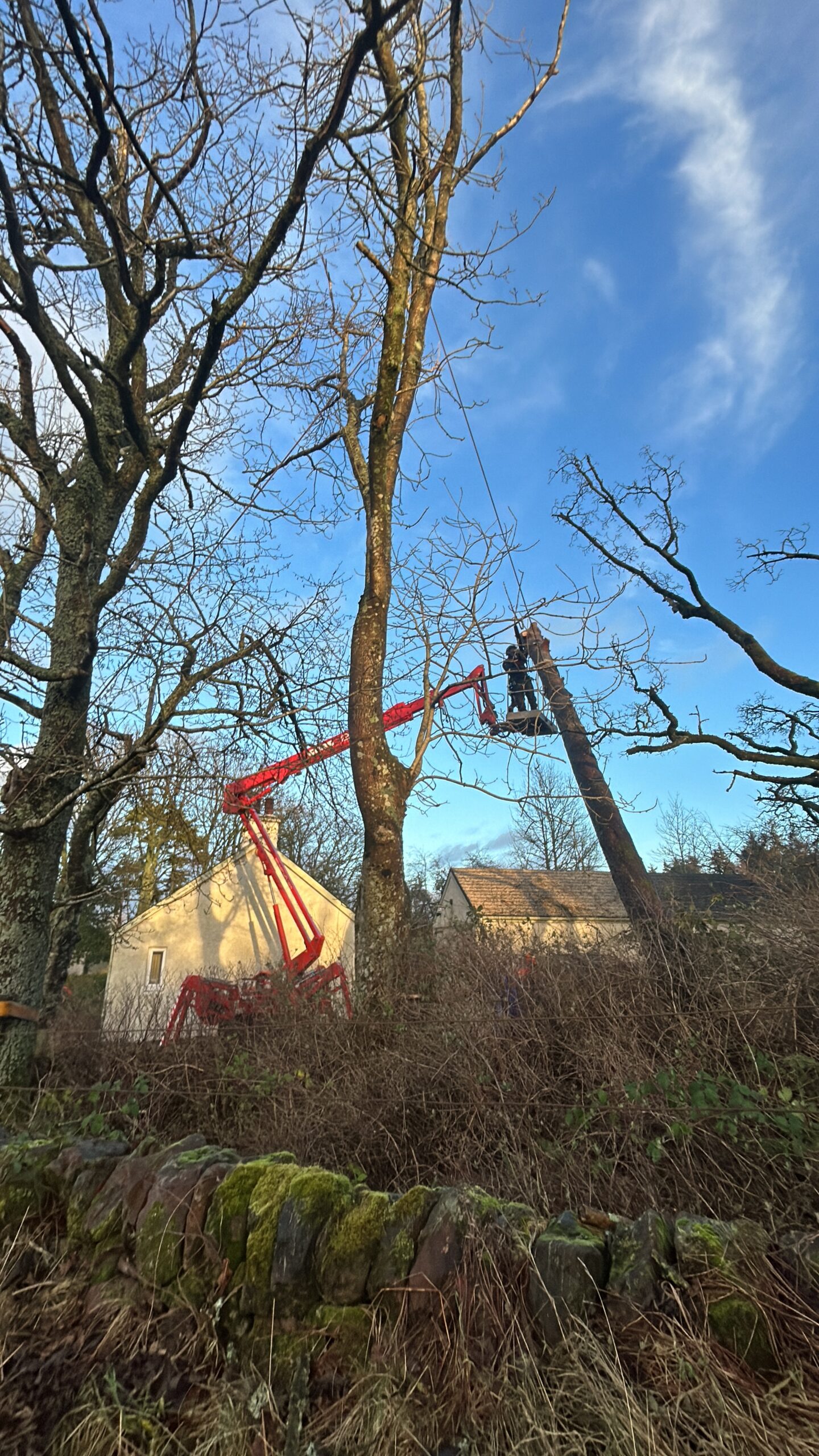
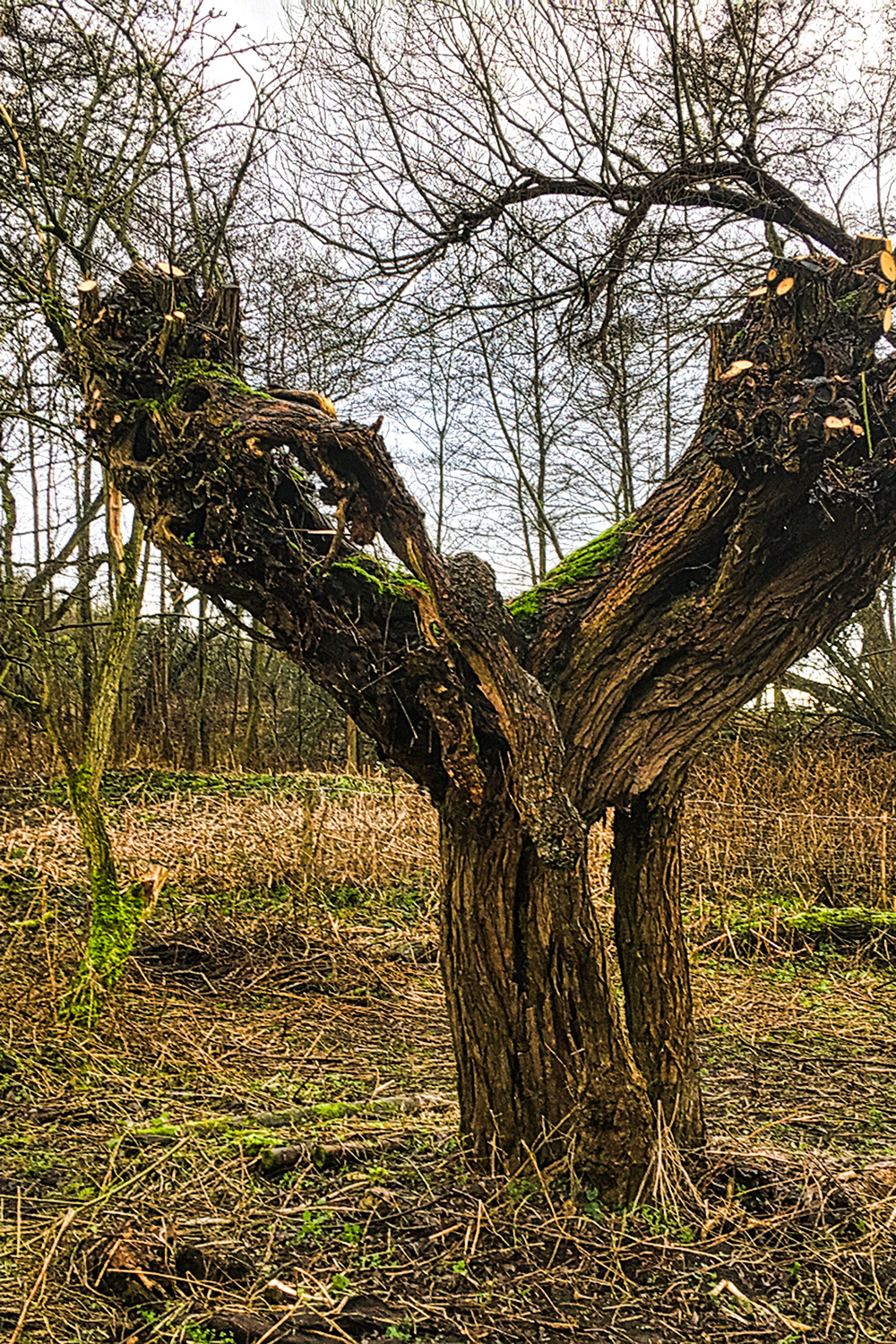
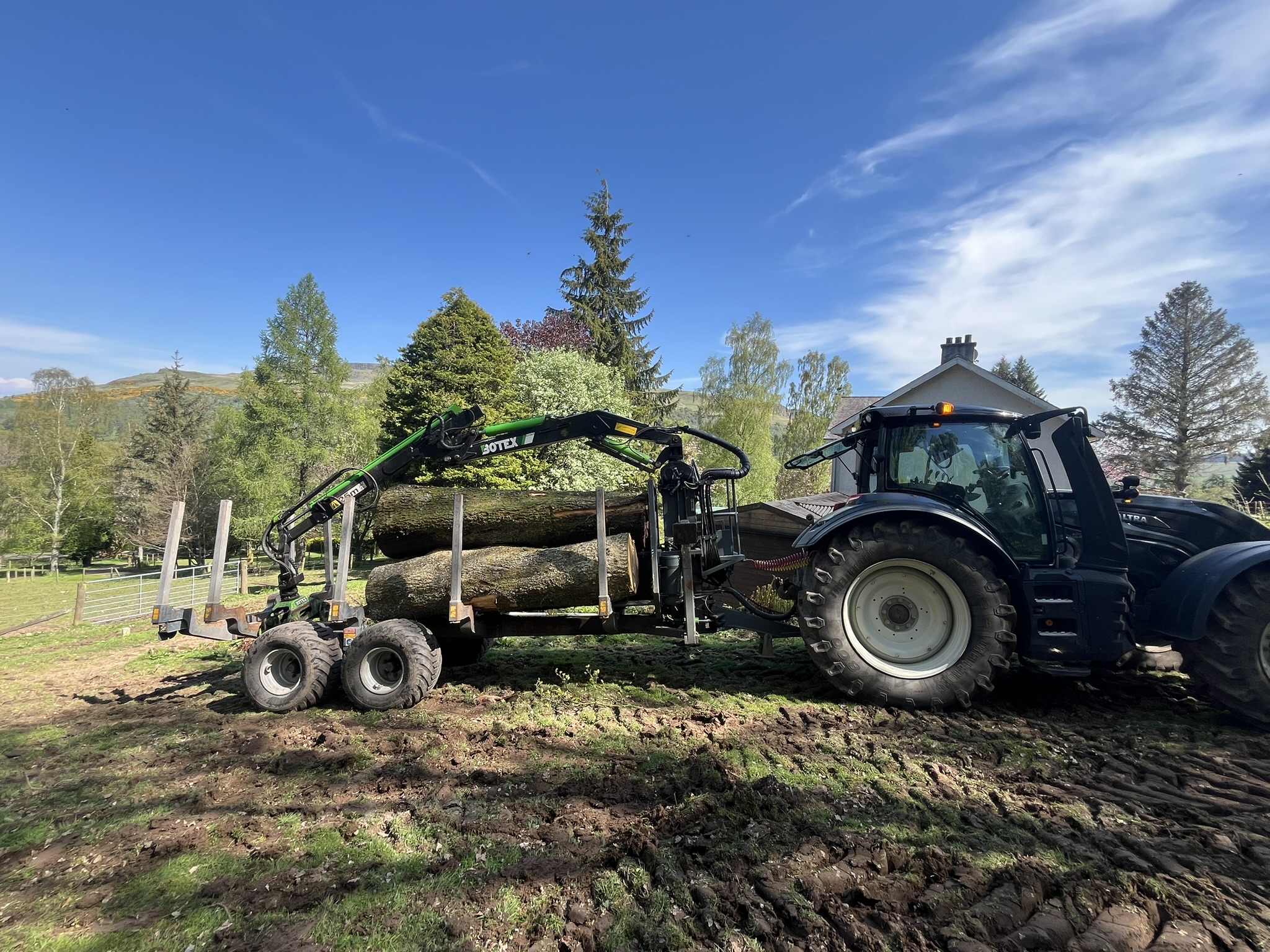
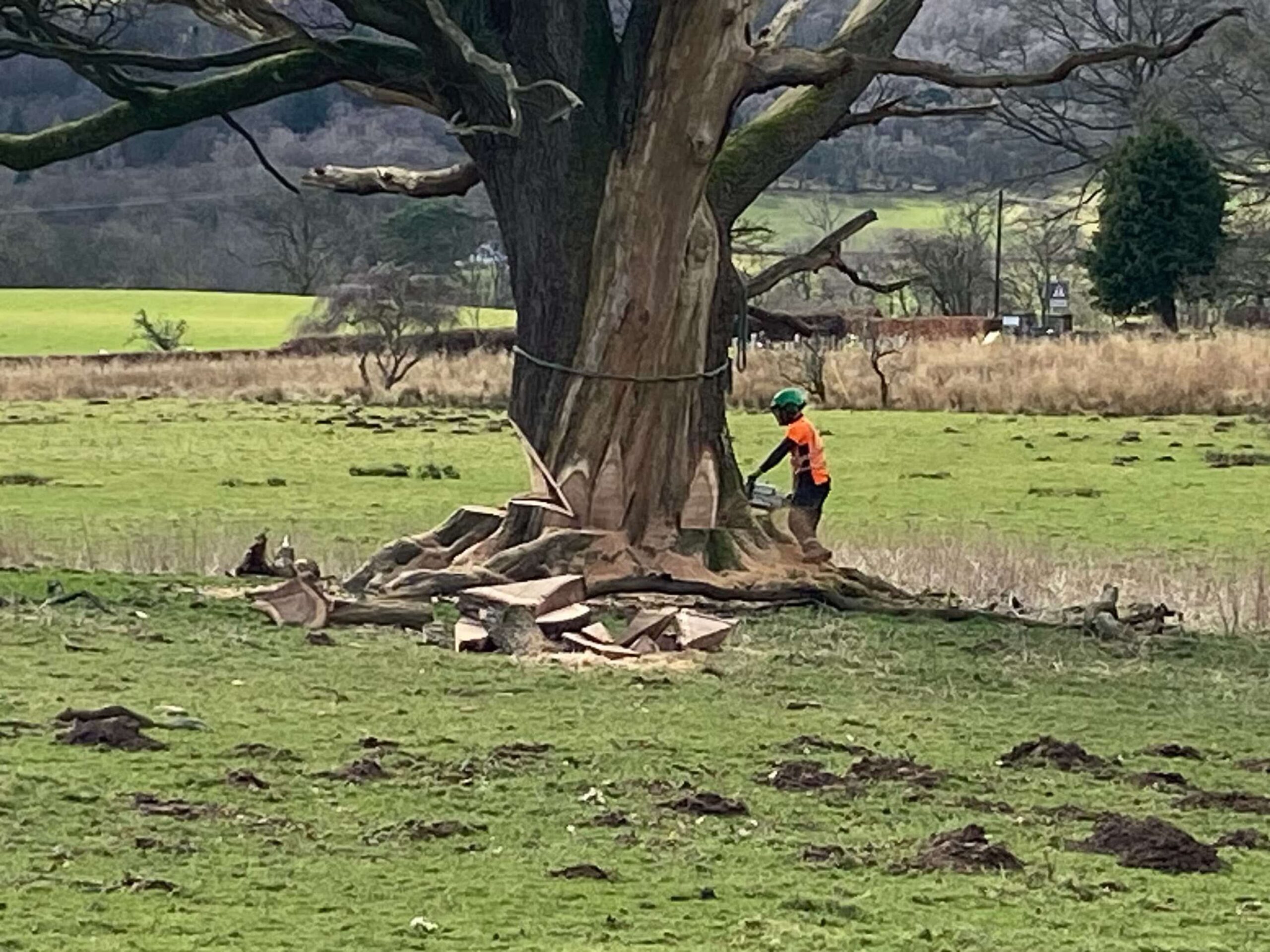
Gallery of Previous Work Done
Why Choose CNJ Tree Services?
Scotland's leading comprehensive tree and property service company.
60+ Specialist Tree Services
From basic pruning to de-vegetation and complex ecological assessments
30+ Years of Experience
Core team made up of highly experienced third-generation tree surgeons
24-hour Availability For Emergencies
Average response time under 2 hours
Up to £5M
Insurance Cover
Comprehensive cover for complete peace of mind
Professional Credentials
NPTC, Lantra, FMO and NPORS certified professionals ensuring the highest standards of safety and expertise on every project.
Environmental Expertise
Ecological surveys and compliance specialists
Our Service Areas
We Cover All of Glasgow and West Scotland
Primary Coverage
- Balfron
- East Dunbartonshire
- Glasgow City
- Killearn
- Renfrewshire
- South Lanarkshire (selected areas)
- Stirling
- Strathblane
- West Dunbartonshire
Key Locations
• Balfron • Bearsden • Bothwell • Clarkston • Clydebank • East Kilbride • Fintry • Giffnock • Hamilton • Killearn • Kippen • Kirkintilloch • Milngavie • Newton Mearns • Paisley • Strathblane • Stirling
Emergency Response
50-mile radius
Commercial Projects
We undertake commercial projects across Scotland.
Contact Us Today
What a Dangerous Tree Removal Includes – and What Costs Extra
- On-site risk assessment against BS3998 criteria with a photographic evidence report
- Sectional dismantling or felling of the hazardous tree using rope and rigging, or mechanised access where the site allows
- Safety equipment and site securing – cordoning off the drop zone, protecting neighbouring structures
- Removal of all cut timber and brash from site
- Stump grinding when the stump itself is a trip, regrowth or access hazard
- Basic reinstatement of lawns, beds or surfaces disturbed by the work
- A written risk report referenced against BS3998, in a form suitable to support a home insurance claim or a dispute with a neighbour
- Advice on whether a Tree Preservation Order emergency exemption applies before a protected tree is felled
Not Included / Costed Separately
- Crane hire for specimens too large or badly positioned for rope-and-rigging dismantling – priced once a site visit confirms it’s needed
- Repairs to fences, sheds, driveways or roofing already damaged by a falling tree or limb before we arrive
- Formal (non-emergency) TPO or planning application fees, where the situation doesn’t qualify for a dangerous-tree exemption
- Replanting or wider landscaping beyond basic site reinstatement
- Out-of-hours surcharge for genuine same-day or night callouts outside normal working hours
- Pursuing an insurance claim or dealing with your insurer directly on your behalf – the risk report is provided for you to submit yourself
From Your Call to a Cleared Site: How the Removal Actually Runs
- Call and initial triage: You describe what’s happening – a lean, a crack, deadwood over a path, storm damage overnight – and we advise whether the area needs to be kept clear before anyone arrives.
- On-site risk assessment: Callum Jackson, an NPTC Professional Tree Inspector since 2023, or a trained assessor working to his framework inspects the tree in person against BS3998 criteria – decay, cracking, root movement, crown balance – and photographs the specific defect, which becomes part of the paperwork if a TPO exemption or insurance claim is involved.
- Method and access plan: Depending on the tree’s size, lean and surroundings, the crew chooses between rope-and-rigging dismantling, a cherry picker or spider lift for canopy access, or excavator-assisted felling for a badly compromised root plate – a call usually made on site by whichever of Ron Bowes-Taylor, Neill Tannahill or Ryan Spark is running that job, each with their own specific training in rigging, machine operation or large-diameter felling.
- The removal: The tree comes down in sections, each piece lowered or placed rather than dropped, with ground protection mats used under tracked machinery on lawns or soft ground.
- Clearance and sign-off: Timber and brash are cleared from site the same visit in most cases, the stump is ground out if agreed, disturbed ground is left level, and you’re given the assessment photos and paperwork for insurance or council records – the same document you’d forward to your own insurer if a dispute over the tree comes up later.
Rope-and-Rigging Only vs an In-House Mechanised Crew
| Factor | Climbing-only tree surgeon | CNJ Tree Services |
|---|---|---|
| Reaching a compromised tree | A climber ascends the tree itself, even if it’s already cracked or leaning | Cherry picker, spider lift or excavator can often reach the canopy or root plate without anyone climbing the tree |
| Large storm-blown trees | Limited to what can be rigged and lowered by rope alone | 360 excavator and timber crane handle large trunks and fallen root plates directly |
| Waiting on plant hire | Crane or excavator work needs a separate hire booking, which can add days during storm season when demand spikes | Fleet is owned outright, so machinery is available without a third-party hire lead time |
| Ground protection | Not always available on soft lawns or landscaped grounds | Low-ground-pressure tracked machinery reduces rutting and compaction on turf |
| Risk assessment paperwork | Often a verbal opinion given on the day, with little to show an insurer if a dispute follows | Written, photographed BS3998-referenced report you can pass to your own insurer or a neighbour’s |
The Homeowner’s Liability Behind a Tree Left Standing
For a homeowner, a dangerous tree in the garden is a liability question as much as it’s an arboriculture one. A business car park sits fenced off and unused for most of the week; a domestic garden gets walked across, mowed and used by children, pets and visitors most days, which is exactly the pattern a home insurer looks at closely once they know a defect was already visible. If a leaning trunk or a hanging limb comes down onto next door’s fence, a parked car or a garden shed after the risk was already known about, the question that follows isn’t usually whether the tree surgeon eventually called in did competent work – it’s whether the homeowner acted once the problem was known. That’s the reason every hazard visit here produces a written report, photographed and referenced against BS3998 criteria, rather than a verbal opinion given at the gate: it’s the one document a homeowner can actually hand to their own insurer, or to a neighbour’s insurer, if a dispute follows a failure months or years later. Callum Jackson, the company’s founder and an NPTC Professional Tree Inspector since 2023, produces that assessment to the same standard used for planning-grade BS5837 surveys, so it reads as an independent technical judgement rather than a general opinion on how a tree looks from the lawn. The removal work itself is covered separately, by £5 million public liability insurance that protects everyone on site and anyone affected by the job while it’s under way – but that cover only starts once the work has actually been booked in. The earlier decision, acting on a known lean or crack rather than waiting for a quieter month, is the part that actually decides whether a homeowner is in a defensible position if something goes wrong beforehand. There’s a simpler point underneath all the paperwork, too: a genuine hazard dealt with is a garden that’s safe for whoever actually uses it day to day – children, pets, whoever’s cutting the grass – not just a line item cleared off an insurance policy. Anything short of an emergency, from a tree that turns out to be perfectly sound to routine seasonal work, is covered by the same crew through our full range of tree services, booked from the same visit if that’s easier than arranging a separate call-out later.
How Far We Travel for a Hazardous Tree Callout
This is a residential garden service first and foremost: routine hazard assessments and scheduled removals run within a strict 10 miles of our Newton Place base in Glasgow’s Sandyford/Charing Cross district. A large share of that work is on the doorstep – Partick, Hillhead, Hyndland, Dowanhill, Kelvinside, Shawlands, Langside, Maryhill and Dennistoun sit close enough to base that most calls from those addresses are same-week rather than needing a separate scheduling visit. The radius then runs out across three neighbouring council areas, each with its own character rather than a generic ring on a map. East Dunbartonshire accounts for Bearsden, Milngavie, Kirkintilloch, Bishopbriggs and Torrance, where gardens backing onto the southern edge of the Campsies see more exposed, wind-thrown specimens than the sheltered inner-city plots. East Renfrewshire brings in Giffnock, Newton Mearns, Clarkston, Barrhead, Waterfoot, Busby and Carmunnock, closer to the high ground at Cathkin Braes and again more prone to genuine storm hazard than routine decay. Out along the Clyde toward Renfrewshire, Clydebank, Renfrew, Paisley and Bishopton fall inside the line, and across into South Lanarkshire so do Cambuslang, Rutherglen, Uddingston, Blantyre and the northern edge of East Kilbride. A genuine emergency – a tree down overnight, or a limb left hanging over a driveway after a storm – is answered further out, up to 50 miles, with an average arrival under two hours of the call. Commercial estate and site-clearance work is a separate service covering the whole of Scotland; this radius is specifically the standard for private gardens and homes.
Garden access tends to shape a domestic job as much as the tree itself. A lot of Glasgow’s tenement back courts and narrow side passages between semi-detached houses are wide enough for a chainsaw but not a full-size excavator, so the cherry picker or a smaller tracked machine often does the work that a bigger site would give to heavier plant, and where the only way in is a shared driveway or an on-street parking bay, we plan the vehicle and cordon around that before the day rather than improvising on arrival. A good number of the larger garden trees in Conservation Areas like Pollokshields or the West End still carry a Tree Preservation Order even though they stand on private ground, so a hazard assessment there is written up to the standard Glasgow City Council needs for an emergency exemption rather than left as an informal opinion. Where a garden tree’s root plate has shifted in the clay-heavy ground common across the Clyde basin, that’s usually the first thing our assessor checks on arrival, since it affects how urgently the tree needs to come down, not just how it’s taken down.
Who actually turns up on the day depends on what the tree needs. Ron Bowes-Taylor, the team lead, has spent over 15 years in the trade since starting an NVQ Level 2 apprenticeship in forestry and arboriculture at 17, and leads on the rigging and rope work that a garden tree often still needs even with a cherry picker parked outside. Neill Tannahill, who also keeps the fleet’s excavators, cherry pickers and woodchippers running as chief fleet engineer, takes on the larger felling jobs and the 360 excavator work a storm-blown root plate sometimes calls for. Ryan Spark, a former outdoor instructor with wilderness and swift-water rescue training, is usually the one called in for anything over about 380mm in diameter, which covers a good number of the mature beech, oak and sycamore specimens found in West End and Pollokshields gardens within this radius. None of that changes the 10-mile line itself, but a hazardous tree callout here is matched to whoever on the team actually specialises in that particular problem, rather than answered by whoever happens to be free that day.
If a Tree Looks Like It Could Go, Get It Looked At Today
A tree that’s cracked, leaning or dropping deadwood doesn’t tend to get safer while you wait for a quiet week – wind and rain do the opposite. A free on-site assessment tells you honestly whether it needs to come down now, can wait a few weeks, or just needs monitoring, with a fixed price before any work starts. Genuine emergencies are taken outside normal hours too. The report from that visit is yours to keep either way – whether that means booking the removal straight away, passing it to your own insurer, or simply having it on file if a neighbour ever raises the same tree later. If the assessment turns out fine and what you actually need is routine maintenance, our tree services page covers pruning, planting and the rest of it from the same call.
What Our Clients Have Said About Us
Jackie Breen
From the first time getting in touch with Callum, the service was fantastic, he came out gave us a great quote and was able to do the job very quickly. The boys that came to carry out the work were professional, friendly and worked non stop to get the job done, they were so careful with machinery on the property as well and left the garden and paths spotless before they left. I would highly recommend them.
Alan
Callum and his team arrived on the agreed day & time, carried out the tree felling with impeccable professionalism and cleared up after. The work was done at the quoted price and they were very pleasant guys with no bad language. I highly recommend CNJ and I will certainly be using Callum and his 5 star tree fellas again.
Robin Campbell
Callum and his team felled four 40-foot+ trees in our garden, facing particular challenges (2 trees hanging over our LPG tank, one menacing a precious rhododendron). They worked incredibly hard, were great to deal with and we would thoroughly recommend them.